 Local Service Mastery
A home service owner asked this on our weekly group call: “Should I hand my Google Ads over to a marketing company, or keep learning and running it myself?” It is a question I hear all the time, and if it sounds like your business, the answer is worth getting right.
I’m Lior Vaknin. I’ve spent 15 years running marketing for home service businesses, and every week I answer questions like this one live with our members. Below are five rules that work whichever way you go, and the last one changes the question you are asking.
Asked on our weekly group call: “Should I hand my Google Ads over to a marketing company, or keep learning and running it myself?”
Short answer: Both are fine. Learning it yourself and hiring help can both work, as long as you understand how your leads are made well enough to judge the work. Never blindly trust anyone with the part of your business that makes the phone ring.
What hiring help really adds to your costs
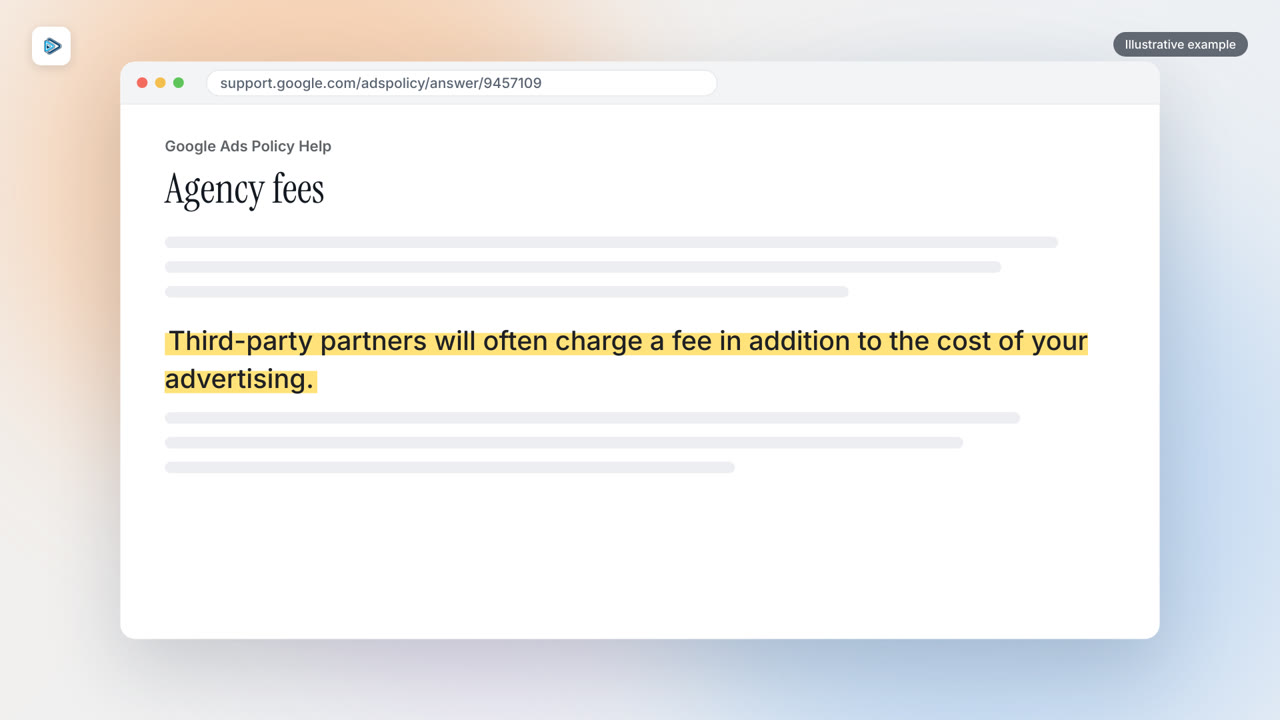
Before the rules, one quick reminder about money. An agency usually charges its own fee on top of what you pay Google for the ads themselves. Google’s own policy help says it plainly: “Third-party partners will often charge a fee in addition to the cost of your advertising.” (Google Ads Help)
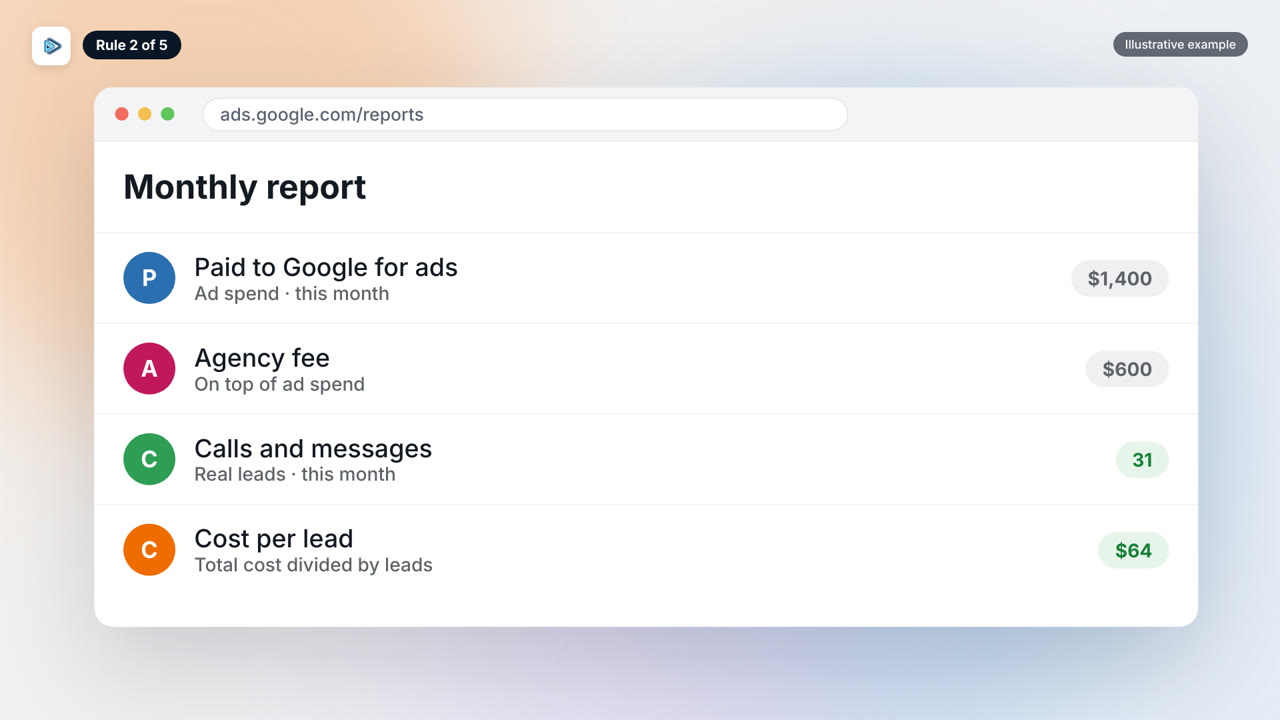
That matters because you can only judge return on investment if you count both costs, the ad spend and the management fee. Whether you hire help or do it yourself, know exactly what you are paying for before you decide whether it is working.
Rule 1: Both are fine
The first rule takes the pressure off. Learning Google Ads yourself is fine, and hiring help is fine too. There is no single right answer for every owner, and anyone who tells you there is has something to sell.
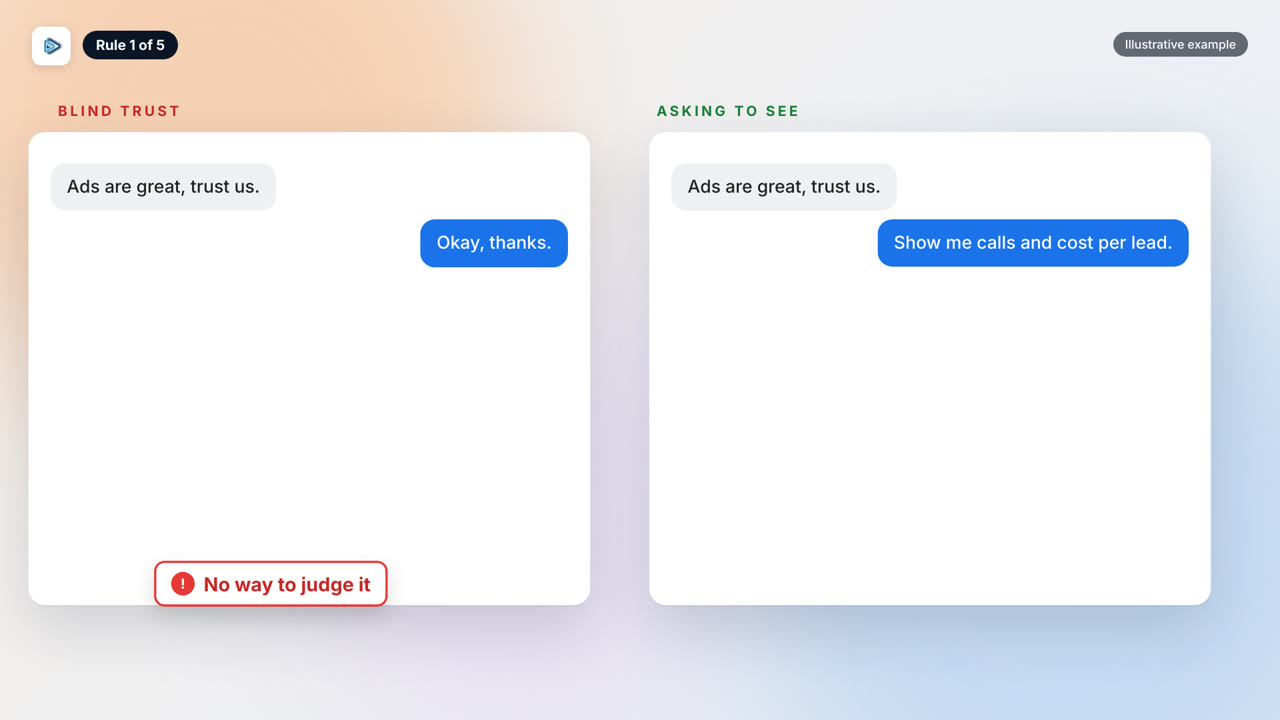
What is not fine is blindly trusting anyone with the most important part of your business: making the phone ring. In my experience, getting burned by a bad provider does not mean you have to do everything alone. It means you need to understand the work well enough to judge it.
Later on, you can add a virtual assistant or AI to the mix, and that can be a smart move. It works as long as you still understand the system underneath. Tools and helpers can speed things up, but the understanding stays with you. Think of every option as a way to get work done, not a way to stop paying attention.
Rule 2: Know how it works
Rule two is to understand how lead generation works. That understanding is what lets you see what your marketer is actually doing, and it lets you hold them accountable and judge whether they are worth what you pay.
You do not have to build the campaigns yourself. Think of an owner who knows exactly what a job needs but is not up on the roof himself. He supervises from above, and he can tell when the work is done right and when it is not.
This also protects you from big promises. Be wary of any agency that says it can put you in the top position every time. Google says that anyone promising the top position every time a user searches your keyword is misrepresenting how its ads work. (Google Ads Help) If you understand the basics, that kind of claim stands out right away.
Rule 3: Own your account
Rule three is to ask who owns the account before you sign. This one catches a lot of owners off guard. According to Google, “If a manager creates a new account, the manager will automatically become the owner of that account.” (Google Ads Help) If an agency sets up a brand new account for you, it may be the one holding the keys.
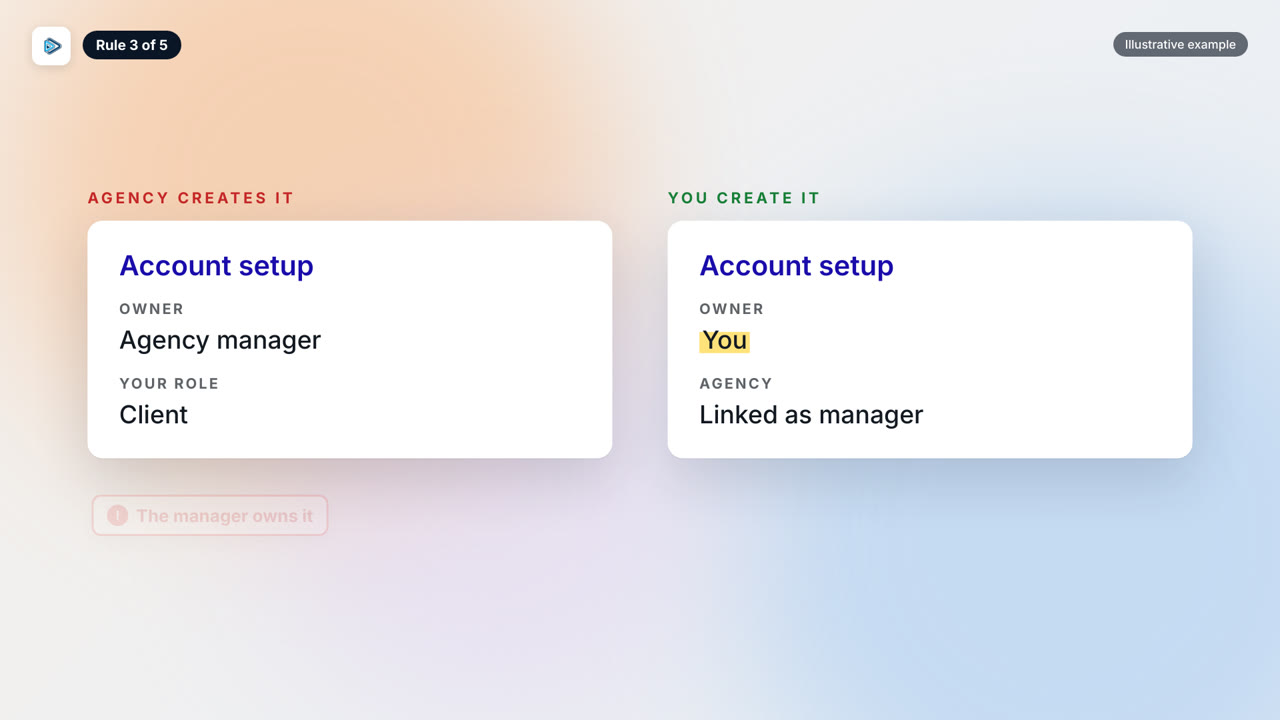
So make sure you keep administrative access. Google explains that users with administrative access can end an agency’s management at any time by unlinking their account from the manager account. (Google Ads Help) Google also notes that the client account still owns its data and can remove ownership access by unlinking. (Google Ads Help)
Set up correctly, you are never locked in. And if you bring in a contractor, you can choose their access level and change or remove it later, so you can supervise without giving up control. (Google Ads Help)
Rule 4: Check the work
Rule four is to check the work, and Google gives you a tool for it. Change history lets you “View details about changes like when you paused your campaign, who added a keyword, and the amounts of your previous budgets.” (Google Ads Help) Whoever manages your account, you can see what they did.
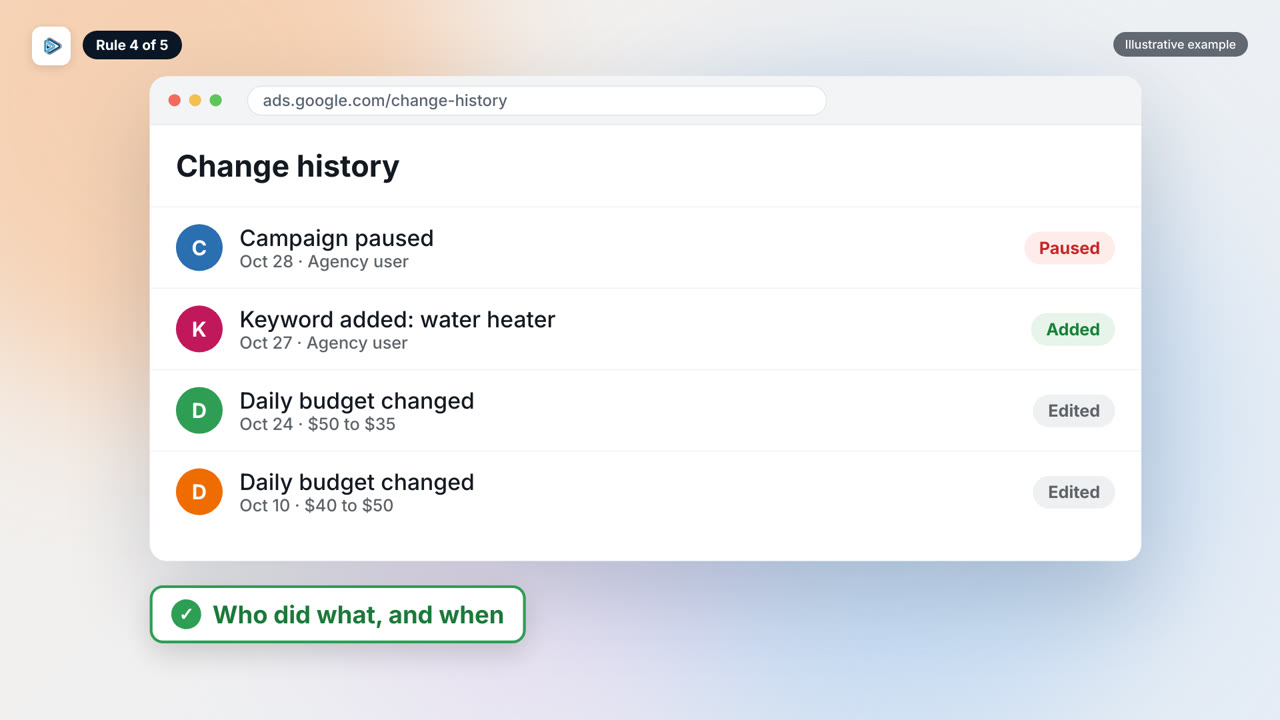
Then give a campaign time. Google’s guidance for Smart Bidding is to “Evaluate performance over 2 conversion cycles or 2 weeks whichever is longer.” (Google Ads Help) Judging sooner than that is premature. Ask whoever manages your ads to consult you before they shut anything off.
If they do pause something, ask why and make sure you understand the reasoning. Google itself says: “For day-to-day management, adjust budgets or targets rather than pausing your campaign, as unpausing can delay performance recovery.” (Google Ads Help) That makes it a fair question to put to any manager.
Rule 5: Your core business
Here is the rule I promised. The real choice is not agency or yourself. It is whether you understand how your leads are made.
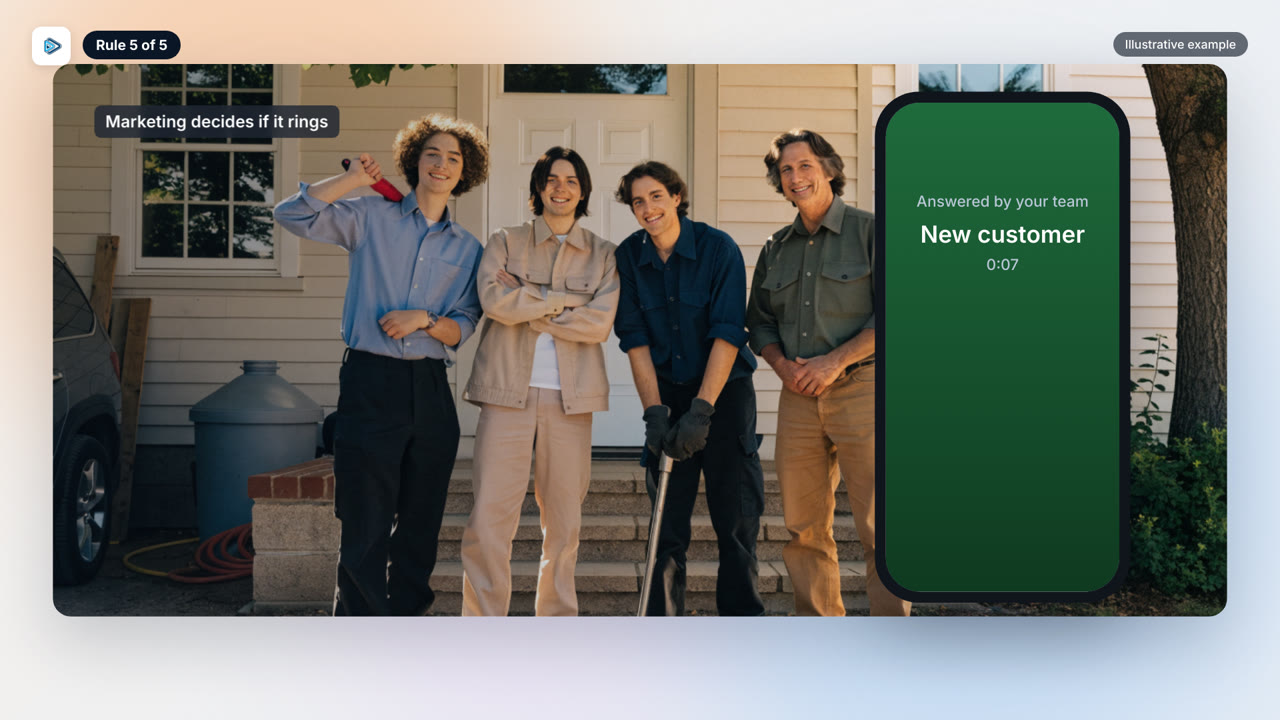
Marketing and lead generation are the core of your business, because they decide whether your phone rings. Treat them that way, not as a side experiment. Do not approach this as a casual trial. Commit, because it changes how your business runs.
Relying on any outside company, however good, puts your whole business in someone else’s hands. That is why owners who have worked with agencies often end up learning it themselves, so they stop depending on others. If you do hire, choose a partner whose interests are tied to growing your business, not just collecting a retainer.
Whether it is an employee, an agency or an AI, they do the work and you oversee it. Use tools and automation for speed, but never hand off the understanding.
Time sensitive: Google’s August 17, 2026 bidding update
One more thing you need to know. Google announced: “Starting August 17, 2026, Google is updating its bidding systems to deliver more consistent and predictable performance for campaigns that are limited by budget.” (Google Ads Help)
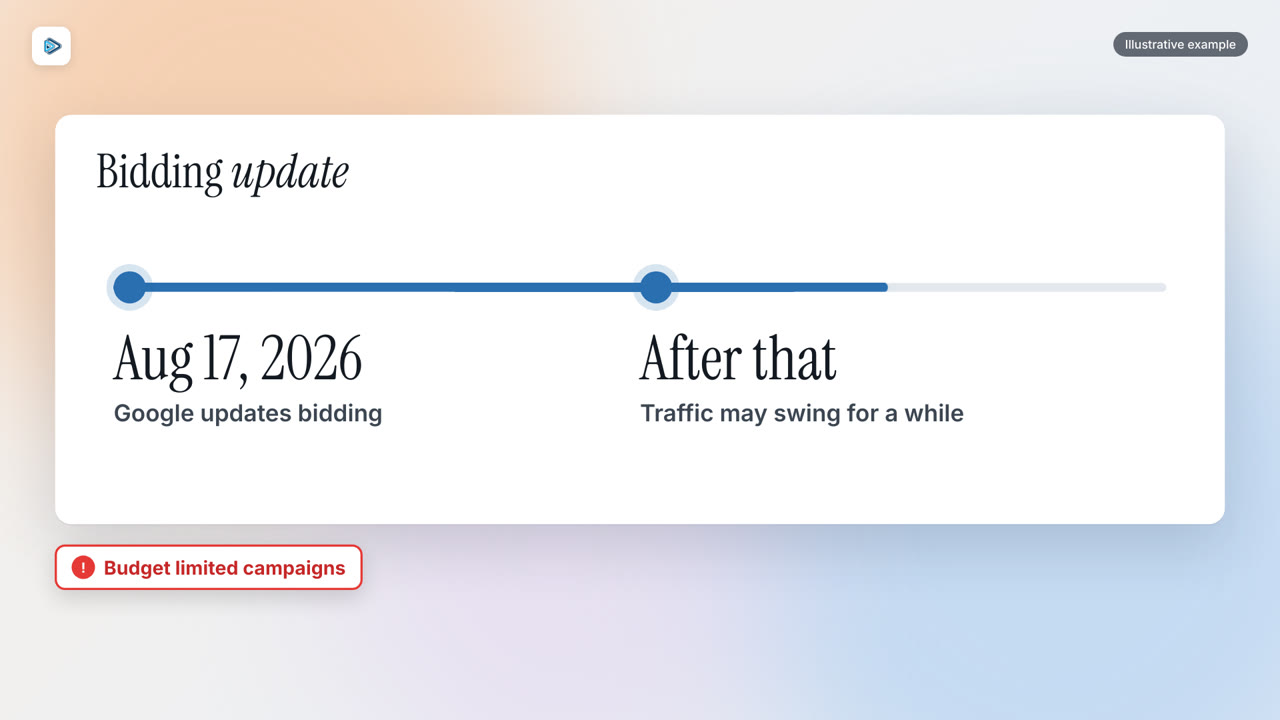
That update can cause temporary swings in performance and traffic for Target CPA and Target ROAS campaigns that are limited by budget. So if you see a dip, ask whoever manages your account whether it is a temporary swing before you blame yourself or change anything. Another reason to understand the work, so you can ask the right question calmly.