 Local Service Mastery
A home service owner asked this on our weekly group call: “Should I pay an agency that promises to handle my Google verification and everything else for me?”
I’m Lior Vaknin. I’ve spent 15 years running marketing for home service businesses, and every week I answer questions like this one live with our members. Below are five rules, and the fifth is the one that matters most if you ever part ways with an agency, so read all the way to the end.
Asked on our weekly group call: “Should I pay an agency that promises to handle my Google verification and everything else for me?”
Short answer: not until you understand your own marketing. Be careful with anyone who promises to do it all, because verification is paperwork you can complete yourself. Keep every account in your own name, and learn the work first so you can judge anyone you hire.
Rule 1: Promises mean nothing
Be careful with anyone who promises to do it all for you. Promises are easy to make, and people often can’t deliver them. An agency that says it will handle everything is selling you a feeling, not a result.
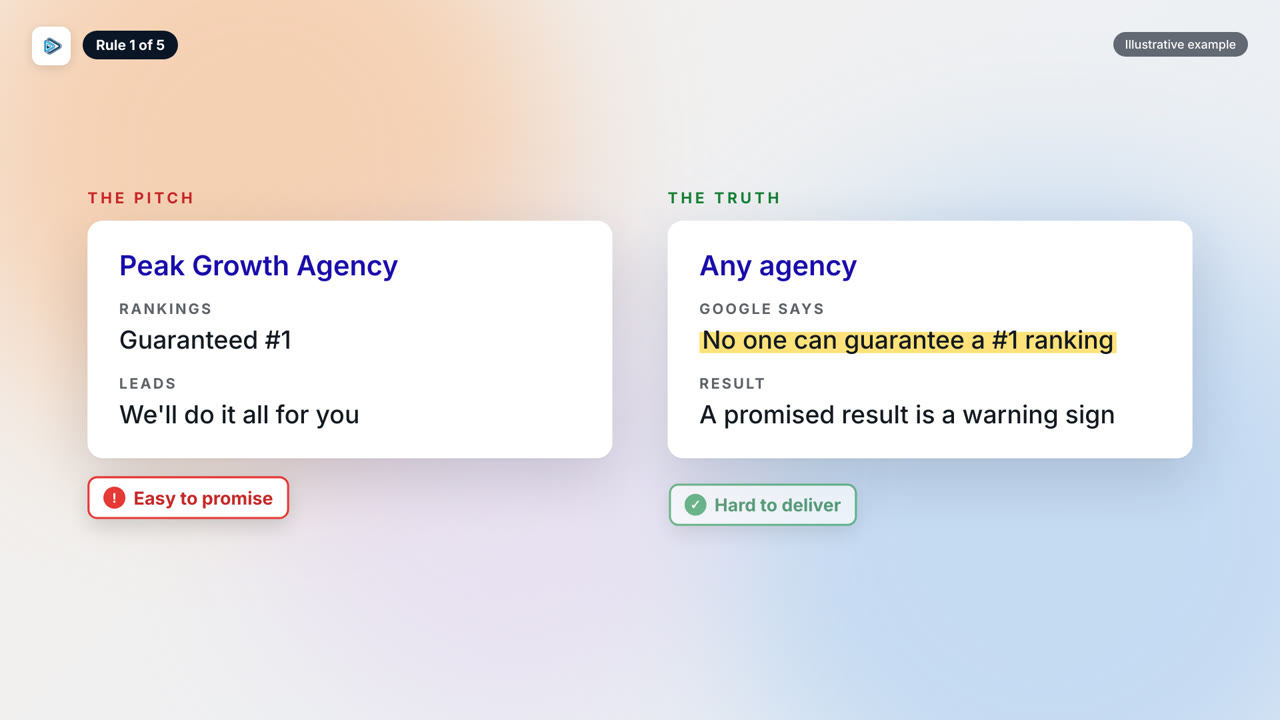
Google is clear about this when it comes to search rankings. It says no one can promise a number one ranking, and it tells you to beware of anyone who claims they can. So a promised result is a warning sign, not a selling point.
Doing things properly and legitimately matters more than shortcuts. When a pitch sounds too easy, ask exactly what they will do, how you will see it, and what happens when it doesn’t work. A good partner can answer those questions plainly. A weak one goes vague and changes the subject back to the promise.
Rule 2: Verification is paperwork
On verification, an agency can’t do anything you can’t do yourself, because it comes down to your documents. That means the “we will get you verified” pitch is not a special service. It is a form you can fill in.
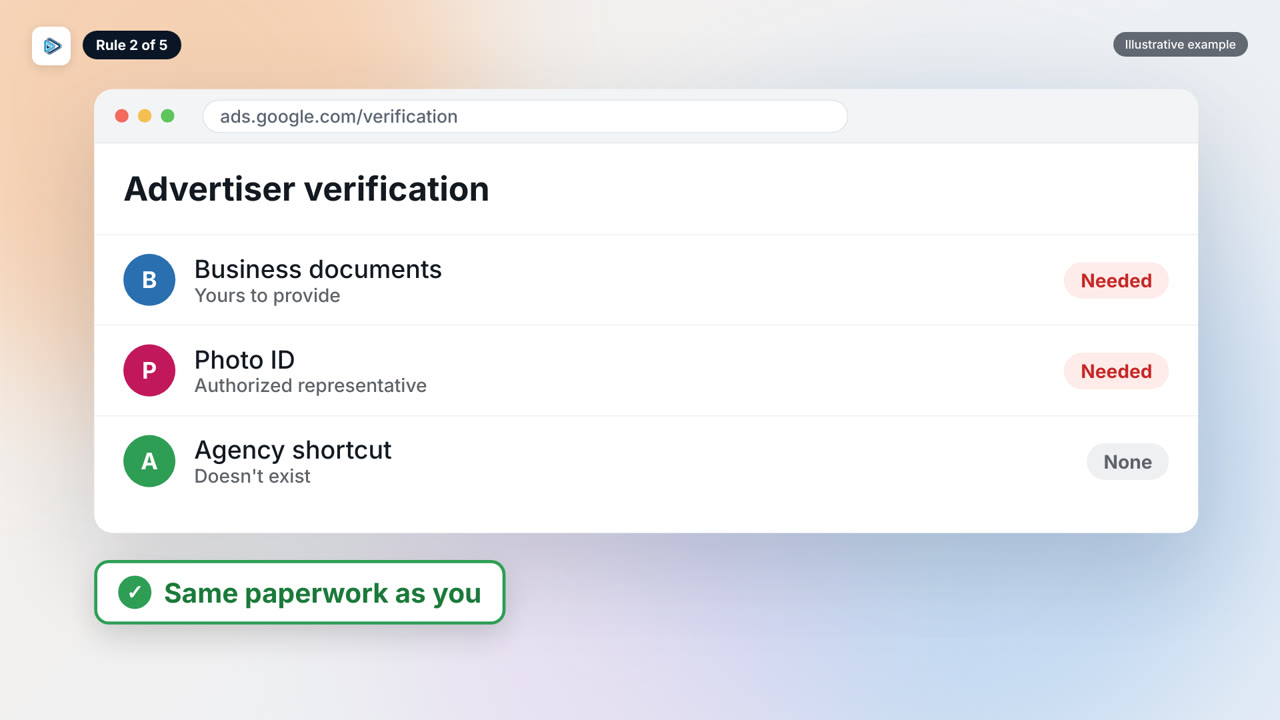
For Google Ads, verification is based on documents. For a US organization that means your business registration documents plus the photo ID of an authorized representative. Google explains it this way: “An authorized representative is an admin of the Google Ads account and/or the payments profile paying for the ads.”
For your Business Profile, Google says on its verification help page: “Do not share the verification code with anyone, even with those who manage your Business Profile.” So even the people managing your profile get no special route.
One thing does need tracking. Google says that “If the deadline passes before you complete verification, your account could be paused,” according to its advertiser verification documentation. Someone has to watch that date, and it should be you.
Rule 3: Own every account
Keep every ad account, website and asset in your own name, so you own it all. This is the rule that protects you most when things go wrong.
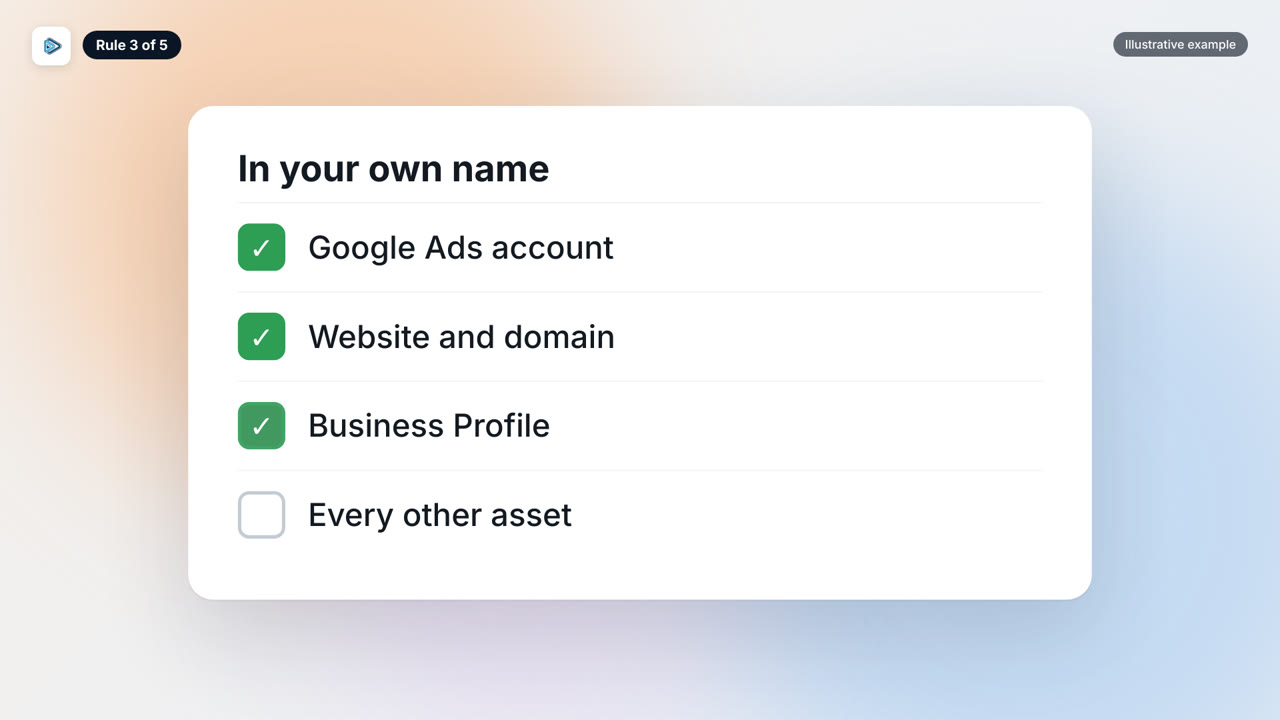
Google puts it simply: “When you verify your business on Google, you gain ownership of your Business Profile and can make sure your business info is accurate.” That is why the account doing the verifying should be yours, not the agency’s. The source is Google’s Business Profile verification page.
If an agency runs your ads, let them work through a linked manager account. Google’s manager account help says: “The client account still owns its data and has the ability to remove ownership access by unlinking.” You can end their access whenever you choose, and you keep the data.
The same thinking applies to your website. If someone wants into your Search Console, Google advises that you “only grant read access to Search Console (at this stage, don’t grant them write access).” That is Google’s guidance for the audit stage.
Rule 4: Know the work
Hiring someone does not hand the responsibility to them. Google says that “you are responsible for the actions of any companies you hire,” and it follows that with the advice to know exactly what they are doing. You can read it on Google’s page on whether you need an SEO.
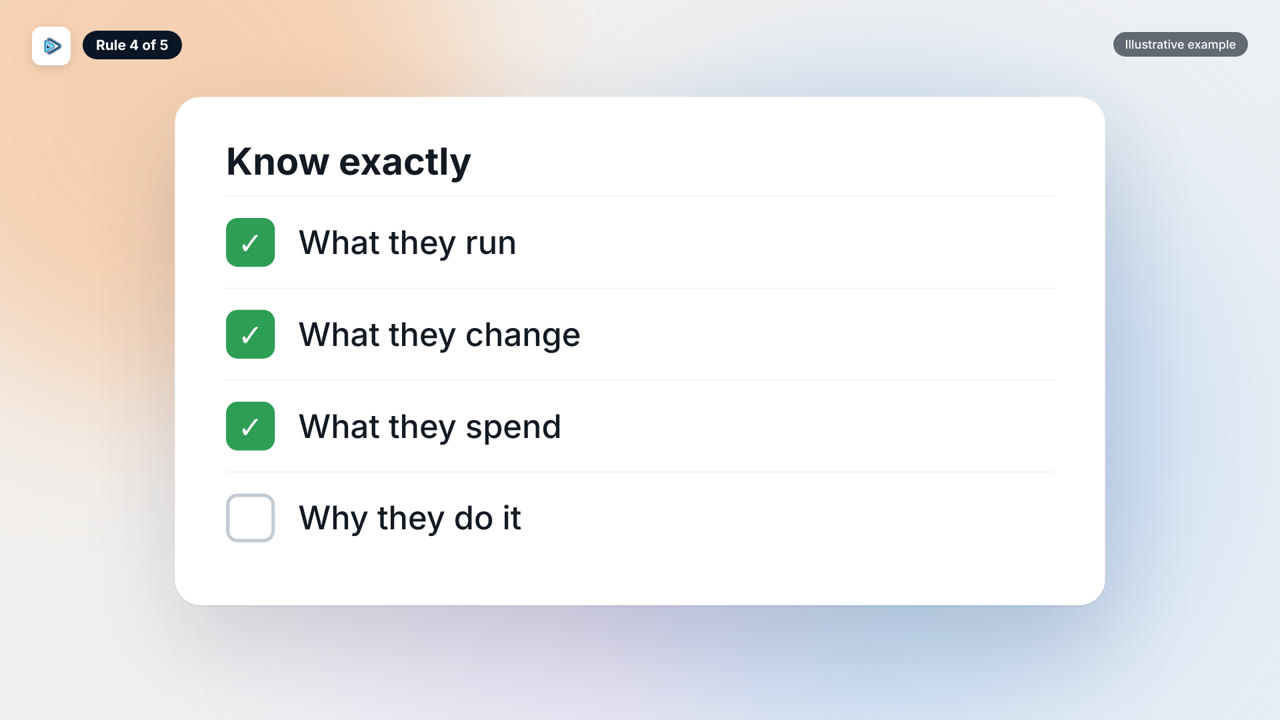
That is why the basics matter even if you plan to hire. Google says “it’s also useful to be familiar with these techniques so that you can be aware if an SEO wants to use a technique that’s not recommended.” If you don’t know the basics, you can’t spot a bad technique before it affects your business.
Google even says: “If you run a small local business, you can probably do much of the work yourself.” So learn what needs to be done and how to manage it. Then you can judge any marketer or tool, and an owner who can’t do or judge the work ends up paying many people while the business stands still.
Rule 5: Learn it first
This is the rule I promised you. Understand how your marketing works yourself first, and only then delegate it. This applies to the whole business, not only marketing.
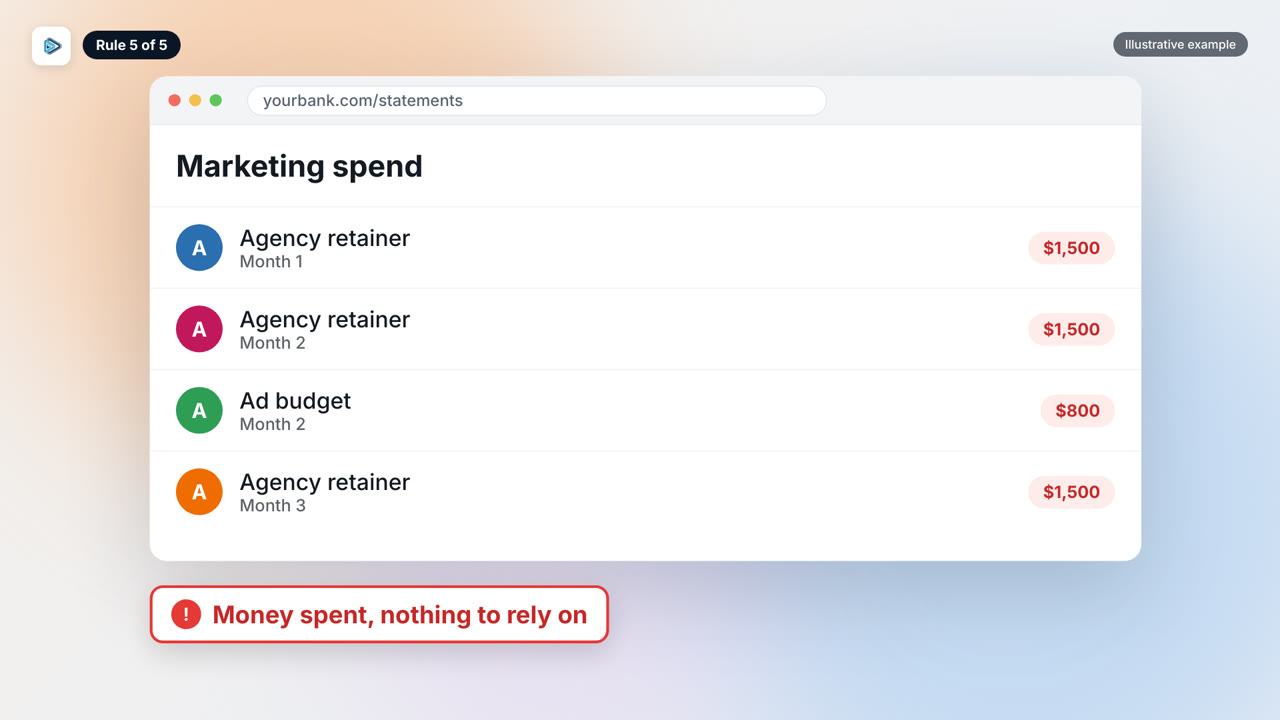
Many owners only learn they can’t rely on outsiders after burning money on marketing. Nobody cares about your business as much as you do, and an agency that couldn’t care less about you or your business will not change that.
Hand it over before you understand it, and when the relationship ends after six months or a year, you’re left with nothing. You also can’t judge the next person. So take marketing in house first, with both hands, and only then delegate.
Once you understand it, delegation works well. AI and systems mean you no longer repeat the same manual work, like building landing pages and campaigns, over and over. Delegation can cut roughly 80 to 90 percent of that manual building work, but you still stay on top of the results. Your job becomes making sure nothing breaks and giving feedback or changes to the system. The owner still needs to understand everything about lead generation, even when delegating.