LSM Video · Google Ads Not Working

Why Are My Google Ads Not Working? 5 Steps to Find the Problem

  • ✓Confirm your ads are running and your billing is active before anything else
  • ✓Judge your ads by real impressions and clicks, not by searching for them yourself
  • ✓Test your conversion tracking by filling out your own form and reading the Status
  • ✓Check budget and reach, because a low budget or narrow targeting keeps ads out of auctions
  • ✓Give it at least two weeks before you decide the ads have failed
See the 5 steps →

Watch the full video, then read the breakdown below.

A home service owner asked this on our weekly group call: “How can I tell whether my Google Ads are actually working and what to do if they aren’t?”

I’m Lior Vaknin. I’ve spent 15 years running marketing for home service businesses, and every week I answer questions like this one live with our members. Below are five steps built on Google’s own rules, and the last one is easy to overlook exactly when your ads look broken.

Asked on our weekly group call: “How can I tell whether my Google Ads are actually working and what to do if they aren’t?”

Short answer: Confirm your ads are really running, judge them by real numbers inside your account, test your conversion tracking, check that budget and targeting aren’t holding you back, and give your ads enough time before you decide. Work through the steps in that order.

How Google decides whether your ad shows

Before you troubleshoot, it helps to know that your ad doesn’t simply run because you paid for it. Whether it shows depends on an auction with six factors: your bid, the quality of your ad and landing page, your assets, Ad Rank thresholds, the context of the search and your competition. In Google’s words: “Together, these 6 factors determine when and if your ad will appear to potential customers.” You can read the full explanation on Google Ads Help.
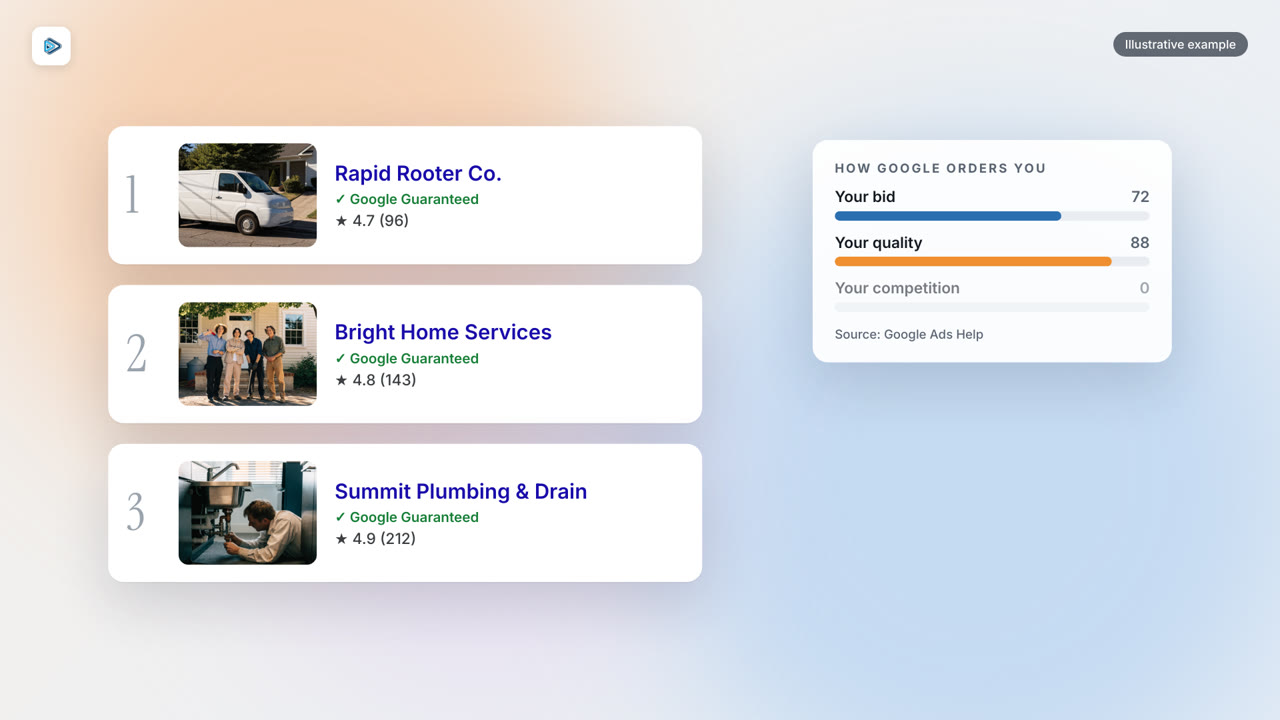
How it works: how Google orders the businesses (from the video)
First, a quick reminder of how it works: whether your ad shows depends on an auction with six factors, including your bid, your quality and your competition.

That means a low bid, weak relevance or strong competition can all keep your ad from showing, and none of them are a glitch. The five steps below help you tell the difference between a real problem and a normal auction result.

Step 1: Confirm it’s running

Start with the basics. Google is clear that “Your ads will not run until your Google Ads account is active with valid billing information.” This is covered in the Google Ads troubleshooting guide, and it is a surprisingly common cause when an owner says nothing is happening.
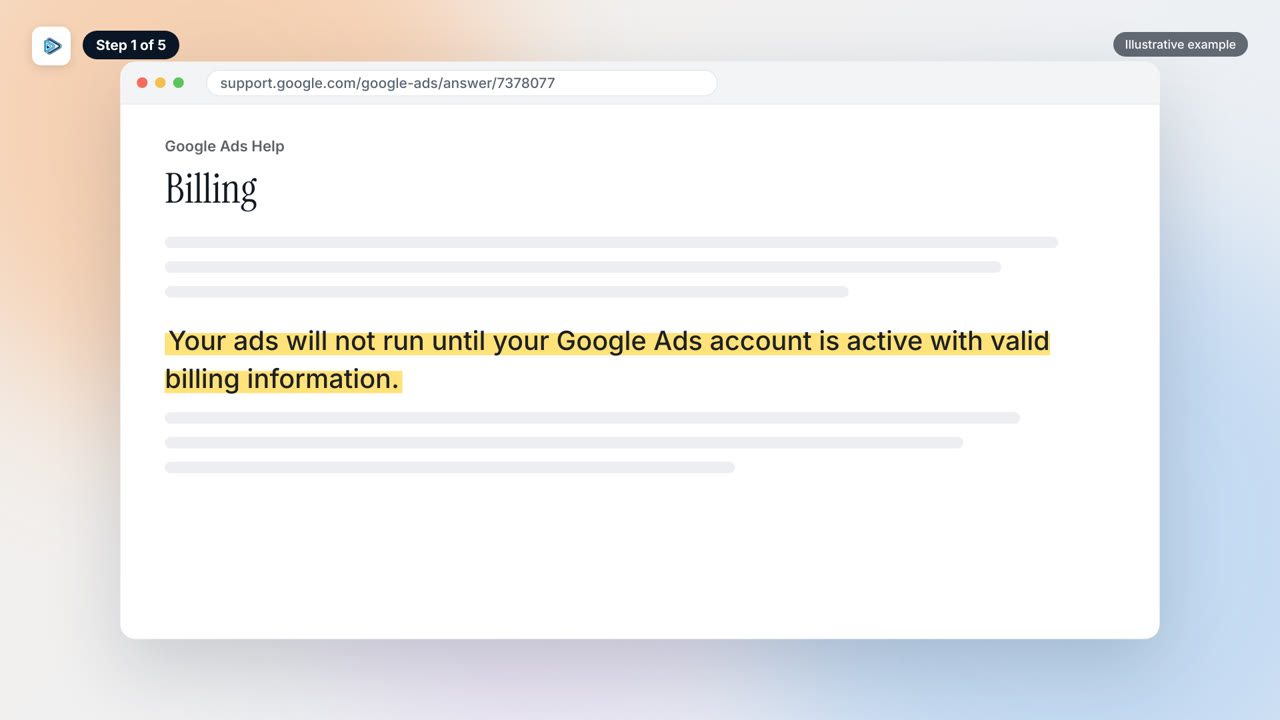
Confirm it's running: Google's own help page: Billing (from the video)
Step one is the basics: confirm your ads are actually running, because Google says they won't run until your account is active with valid billing information.

Once billing is fine, log in and click View all campaigns on the left, then Campaigns. Read the Status column. It tells you whether each campaign is eligible to show ads or held back by something. For example, a campaign marked Limited by budget means, according to Google: “The campaign is active and can show ads, but not as often as it could due to budget constraints.” So the ads are on, just showing less than they could. Five minutes here saves you from guessing about everything else.

Step 2: Use real numbers

The next step is to stop searching for your own ad. It feels like a quick check, but Google says that repeatedly searching for your own ad lowers your click through rate. If you want to confirm that an ad is running, use the Ad Preview and Diagnosis tool, which Google describes here as a way to check without affecting your impressions.
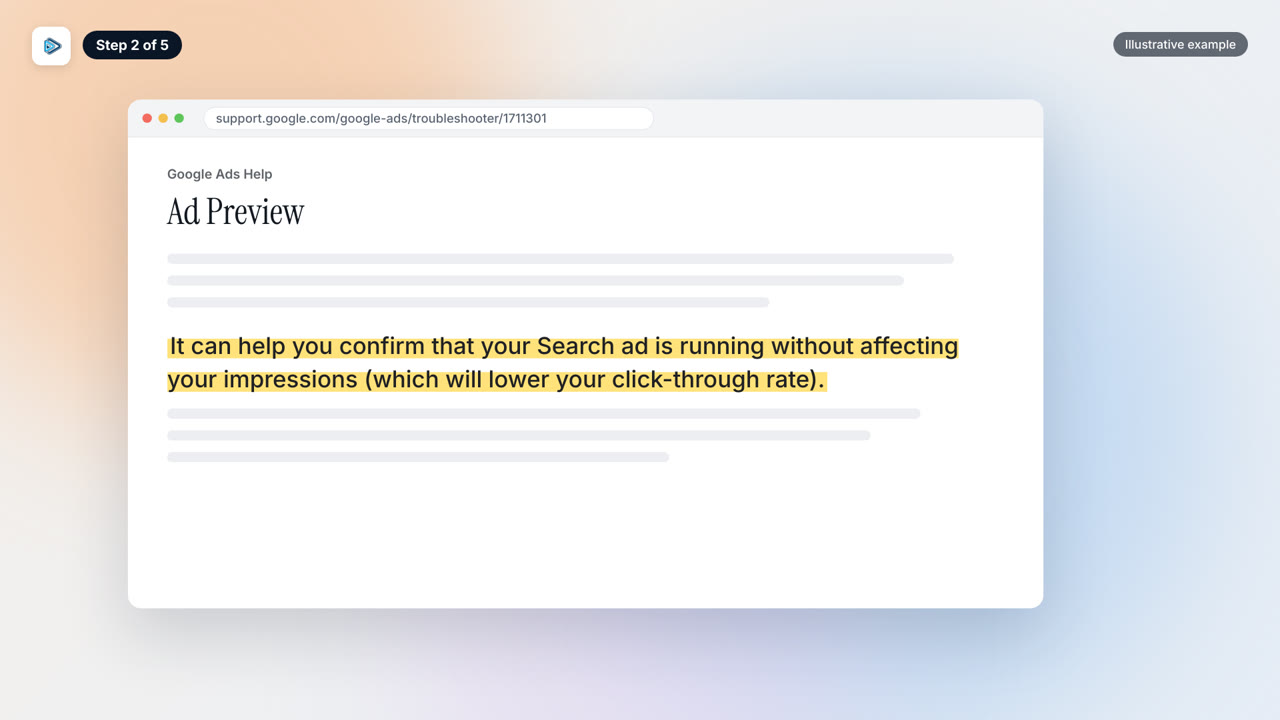
Use real numbers: Google's own help page: Ad Preview (from the video)
Step two is to stop searching for your own ad, because Google says doing it again and again lowers your click-through rate.

Even then, don’t treat the tool as your report card. Google says it only simulates one auction, so a single preview can’t tell you how your ads are doing overall. Its advice: “Instead of relying solely on the tool, check actual campaign performance metrics like impressions and clicks in your Google Ads account.” The source is the same troubleshooting guide. Real impressions and clicks inside your account are the honest answer to whether your ads are showing and getting attention.

Step 3: Test your tracking

If you can’t see results, you need to know whether tracking is working. The test is simple: fill out the form on your own website and make sure you land on your Thank You page. Do it from an incognito window. If you come directly and not through a Google ad, you might not see the changes, so incognito keeps the test clean.
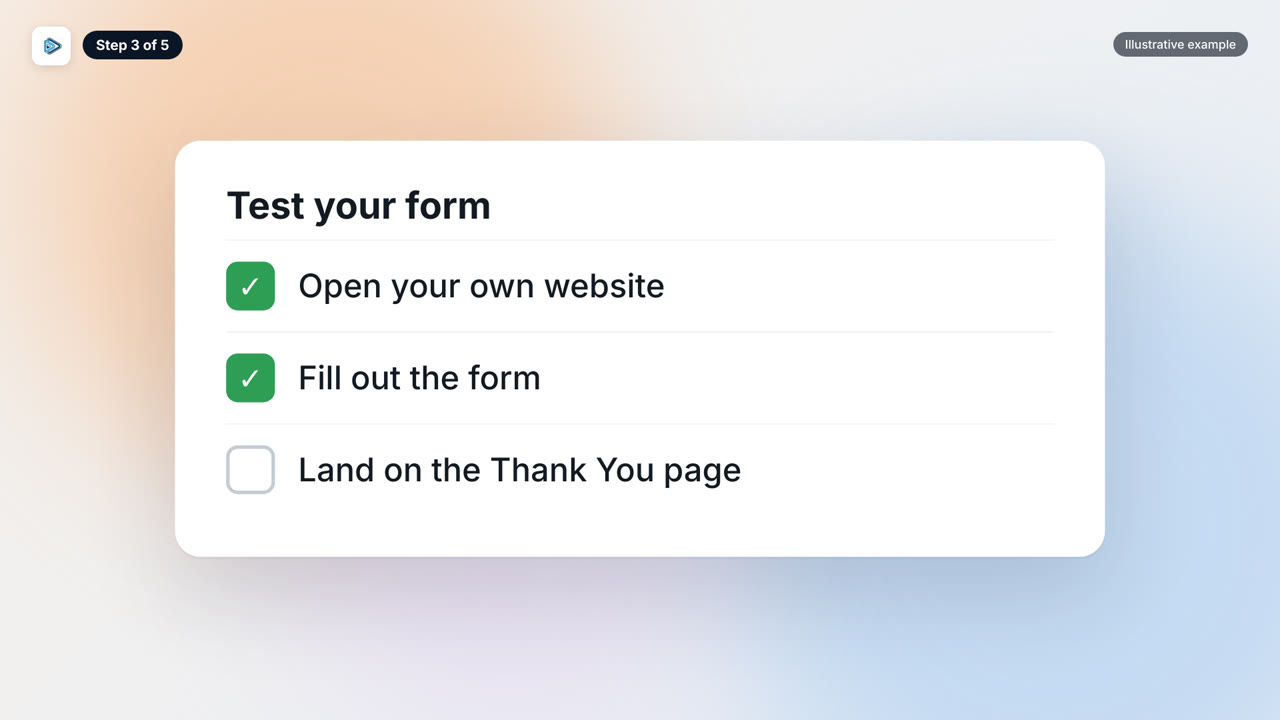
Test your tracking: the checklist (from the video)
Step three is your conversion tracking, and the test is simple: fill out the form on your own website and make sure you land on the Thank You page.

Then open the Goals Summary and read the Status of each conversion action. Give the tracking some time, and you’ll start seeing conversions if it’s active. “Awaiting conversions” means, per Google, “No conversions have been recorded in the last 7 days.” That is normal for a brand new action, paused campaigns or very low traffic. “Misconfigured” is different: “Conversions have stopped recording entirely due to a setup error or a broken tag.” That one is urgent, and fix it now. It also hurts delivery, because Google warns that with automated bidding and tracking that isn’t set up correctly, “your ad may have limited serving.”

Step 4: Budget and reach

If tracking is fine, look at how much room your ads have to run. Google says a daily budget that is very low compared to your bids means your ads “may struggle to enter auctions.” You can find that in the troubleshooting guide. If your budget can’t support your bids, the ads simply won’t get into enough auctions to produce calls.
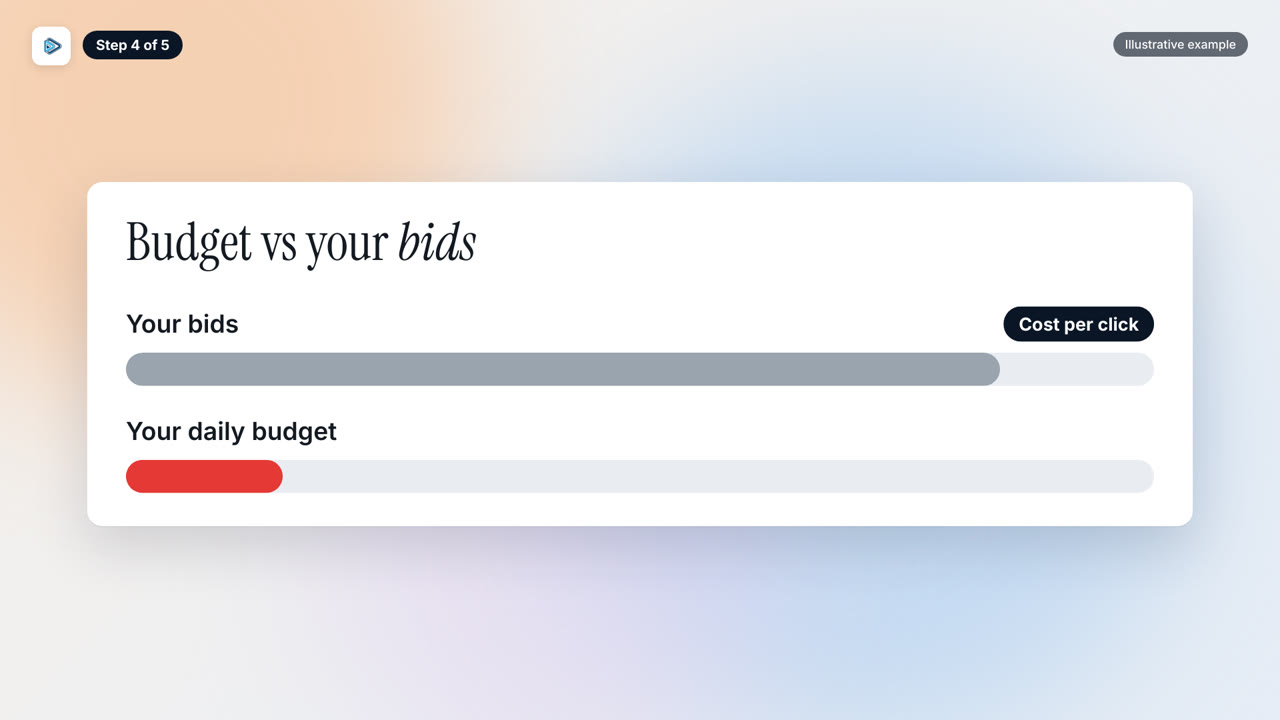
Budget and reach: a side by side comparison (from the video)
Step four is budget and reach, because Google says a daily budget that's very low compared to your bids can keep your ads out of auctions.

Targeting matters too. Google explains that “overly restrictive geographic or audience targeting can significantly limit your reach.” If your service area, audience or keyword list is very tight, widen your locations, audience or keywords. Then watch your Status column for Limited by budget, because that tells you the budget, not the market, is the bottleneck.

Step 5: Give it time

This is the step I promised you, and it’s the one people skip. Don’t judge your ads too early. After a big change, Google shows a Learning status for up to seven days, and your ads keep running the whole time. That is not a sign that something is broken, so don’t panic and start changing things again.
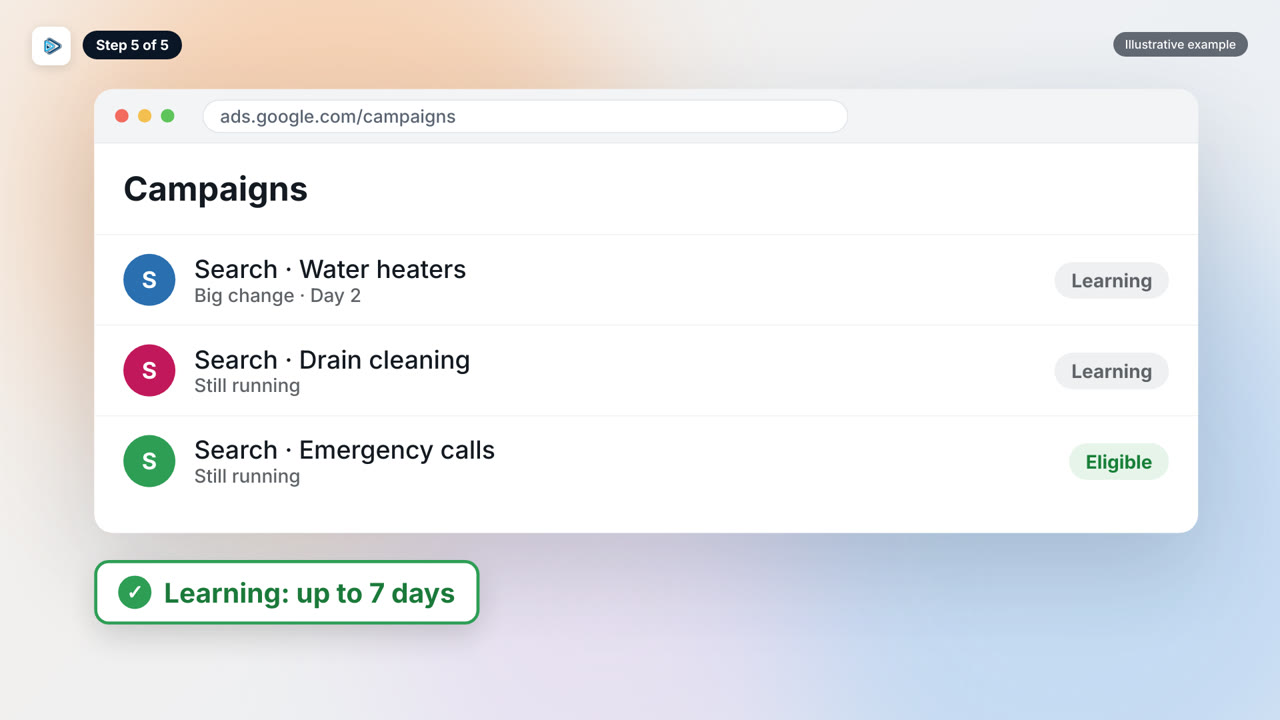
Give it time: the Campaigns screen (from the video)
After a big change, Google shows a Learning status for up to seven days, and your ads keep running the whole time, so don't panic and start changing things.

Google’s rule for judging results, from its guidance on the Learning status, is to “evaluate performance over 2 conversion cycles or a 2 week window (whichever is longer) accounting for conversion delay.” So give your ads at least that long before you decide. And if your tracking is fine and results still aren’t there after that period, go over the whole setup process again and try to do it from scratch.

Time sensitive: bidding changes for budget limited campaigns

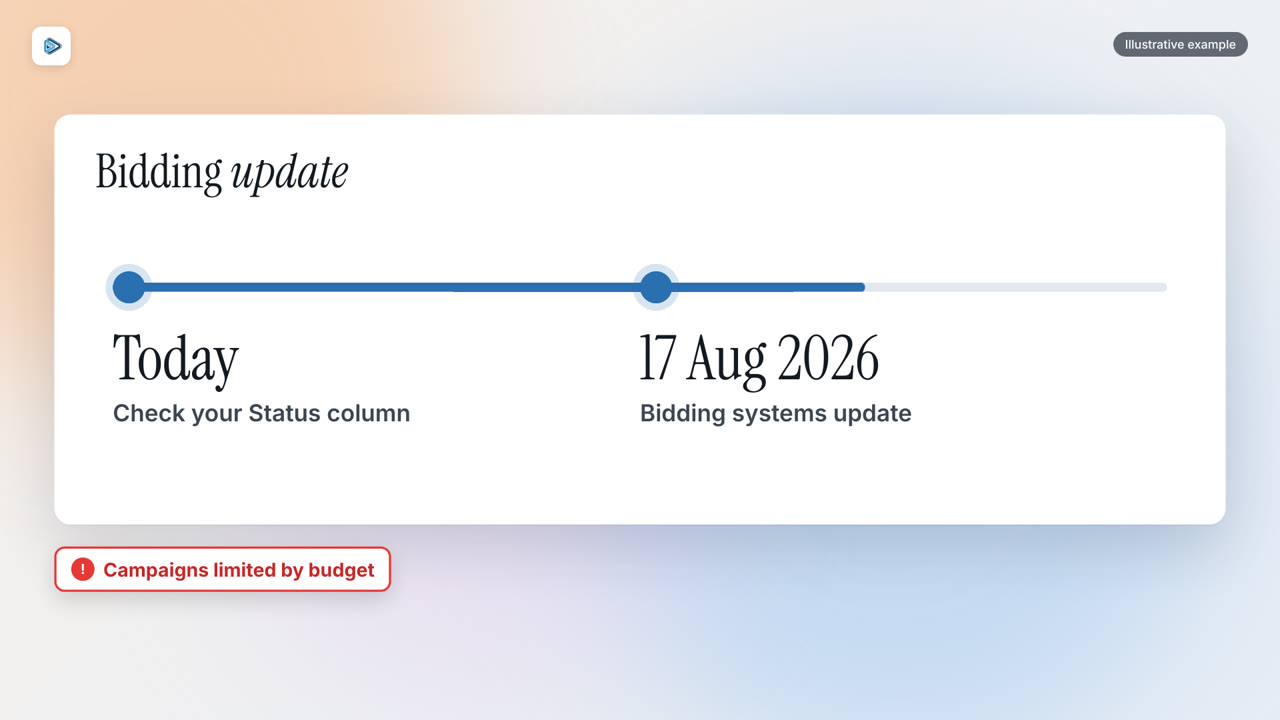
One more thing you need to know. Google says: “Starting on 17 August 2026, Google is updating its bidding systems to deliver more consistent and predictable performance for campaigns that are limited by budget.” The details are on Google Ads Help.
What's changing: the dates of the change (from the video)
One more thing you need to know: starting on 17 August 2026, Google is updating its bidding systems for campaigns that are limited by budget.

This affects Target CPA and Target ROAS campaigns. If you use one of those, check your Status column for Limited by budget and keep an eye on your results around that date.
Real owners · Real results

Don't take my word for it.

See it in action

How LSM AI Works

Still got questions?

Let's find the right fit for you.

Answer a few quick questions about your business. If it's a fit, we'll get you on a call with me. If not, I'll point you to what actually makes sense for where you're at.

— Lior

Free · Real Google data · 60 seconds

How many calls can your market get?

Real numbers — pulled straight from Google Ads. Not an agency pitch. 🎯

$ /mo

No credit card  ·  No commitment  ·  We verify your details before showing results

The honest truth

Agency vs. owning it.

The agency model
  • ✗ $2,000–$5,000/month in fees just to manage your account
  • ✗ They own your Google Ads account — you start from zero when you leave
  • ✗ Random results. No explanation of why.
  • ✗ Zero visibility into what they're actually doing
The LSM way
  • ✓ Costs less than one missed job
  • ✓ Your Google Ads account. Your campaigns. Your data — always.
  • ✓ AI manages it daily. Full transparency — you see every decision.
  • ✓ Cancel anytime. Your campaigns stay yours forever.
The LSM way

How it works.

The opposite of an agency. We build it inside your accounts. You own it all.

1

Pick your coverage

One city or your whole service area. The free audit tells you exactly what to expect in your market.

2

Your LSM AI builds everything

Your AI marketing manager builds your Google Ads, call tracking, fraud protection, and landing page — inside your accounts. You approve before a single dollar is spent.

3

Your phone starts ringing

Most clients are live within 48 hours. Your AI optimizes bids and keywords daily — results compound over time.

✓ Google Ads campaign (your account) ✓ Call tracking setup ✓ Competitor click blocking ✓ High-converting landing page ✓ Daily bid & keyword optimization ✓ Monthly performance report ✓ You own every account, always ✓ Personal LSM AI manager ✓ 24/7 Q&A in Lior's voice ✓ 7-day money-back guarantee
Real client wins and results using LSM
Included in every plan

Your own AI account manager.

Built on 8,600+ real LSM coaching sessions. Trained in Lior's exact voice.

⚡ Powered by LSM AI · Trained on 8,600+ real LSM coaching sessions
🔐

It already knows everything about you

The moment you sign up, your LSM AI knows your plan, your city, your service. No setup call. No briefing a stranger.

🏗️

Builds your entire setup — while you watch

Google Ads. Call tracking. Fraud protection. Your landing page. Built inside your accounts, step by step.

✅

Nothing goes live without your sign-off

Before a single dollar is spent, your AI walks you through everything it built. You approve. Then it goes live.

💬

On call 24/7 — in Lior's exact voice

Ask it anything, anytime. 8,600+ real LSM coaching answers. Available instantly.

► claude
✓ Membership verified — Growth plan · Dallas TX
✓ Client profile loaded — HVAC, 3 cities
Building your Google Ads campaign…
✓ Campaign created (PAUSED for review)
✓ 47 keywords added across 3 ad groups
✓ 3 responsive ads created
Setting up call tracking…
✓ 4 tracking numbers created
✓ Call tracking installed on your site
✓ Competitor click blocking active
Building landing page…
✓ Site backed up · Page builder detected
✓ Landing page live at dallas-hvac.yourdomain.com
Everything looks good. Budget: $75/day · Targeting: Dallas 25mi · Ready to go live?
You: Yes, turn it on.
✓ Campaigns activated. Your phone should start ringing.
Real session · Google Ads + Call Tracking + Landing Page built in one go
Free · 2 minutes · No call required

See what your market can do.

Real estimate — pulled directly from Google's own data. Not a made-up projection. 🎯

No credit card  ·  No call  ·  Results in 30 seconds

If this sounds familiar…

You've been burned before.

🔒

They own your accounts. Not you.

The day you leave an agency, your Google Ads account, tracking numbers, and landing page are gone. You spent $30,000 building their asset.

💸

The reports look great. The phone doesn't ring.

Impressions. Clicks. CTR. Beautiful PDF every month. But when you ask how many jobs you closed — nobody has a straight answer.

🤷

You ask a question. You get an email 48 hours later.

You need answers now. A human account manager you can never reach isn't service — it's a subscription to uncertainty.

Lior Vaknin
Who's behind this

I'm Lior. 15 years making sure you never get locked out of your own marketing again.

I built Local Service Mastery because I watched too many great contractors get burned by agencies — overcharged, locked out, left with nothing. So I flipped the model: your accounts, your data, your asset. We build it. You own it.

500+owners coached
$20M+revenue generated
15+years in the game

Peace,
Lior Vaknin

Good questions

Questions,
answered.

Why are my Google Ads not working?

The most common causes are inactive billing, a budget that is too low for your bids, targeting that is too narrow, broken conversion tracking, or judging the ads too early. Work through them in that order, starting with the Status column in your account.

How can I tell if my Google Ads are working?

Look at the real impressions and clicks inside your Google Ads account, and check your conversions in the Goals Summary. Google says not to rely only on the Ad Preview and Diagnosis tool, because it simulates just one auction.

How do I test Google Ads conversion tracking?

Fill out the form on your own website from an incognito window and make sure you land on your Thank You page. Then open the Goals Summary and read the Status of each conversion action.

Should I search for my own ad to see if it’s running?

No. Google says repeatedly searching for your own ad lowers your click through rate. Use the Ad Preview and Diagnosis tool if you want to confirm it’s running.

What does Limited by budget mean in Google Ads?

It means the campaign is active and can show ads, but not as often as it could because of budget constraints. Check the Status column on your Campaigns page to see it.

How long should I wait before judging my Google Ads?

Google says to evaluate performance over two conversion cycles or two weeks, whichever is longer. After a big change, the Learning status can last up to seven days while your ads keep running.

Which plan should I pick?

Start with Starter if you want to get your phone ringing in one city and grow from there — one new campaign gets added each month. Go with Growth if you're ready to cover your full service area right away. Pro adds local SEO, Facebook Ads, and weekly coaching with me directly. If you're still not sure, run the free audit — it'll tell you what to expect in your market.

How fast will my ads go live?

Most clients are live within 48 hours of completing setup. Your LSM AI builds everything, you review and approve, then it goes live. The only exception is if Google requires advanced verification for your category (locksmith, garage door) — that's a direct process between you and Google, and we walk you through it.

What results can I expect?

Depends on your trade, your city, and your ad budget. The free audit gives you a real estimate pulled directly from Google's own Ads data — not a made-up projection. In a medium-to-large market with a $1,000/month ad budget, most clients get 15–40 qualified calls per month. Run the audit first to see what's realistic in your specific area.

Do I really own everything?

Yes. The Google Ads account, the call tracking numbers, the landing page — all built inside your accounts, in your name. If you ever cancel, you walk away with everything you paid to build. That's not a policy. That's the whole point.

Is there a contract?

No contract, ever. Every plan is month-to-month. Cancel anytime — if we stop earning your business, you should stop paying.

What if I already have my own call tracking or fraud protection?

No problem. You can connect your existing accounts, or we set everything up fresh for you. Your call — you pick during onboarding.

I'm a locksmith or garage door company. Anything I should know?

Yes — Google requires advanced verification for locksmith and garage door services before ads can run. We build your campaign and all your keywords, but you'll need to complete that verification with Google directly (we walk you through it). If for any reason you can't complete it, you're covered by our full 7-day refund.

Do you work with my trade?

We specialize in home and local services — HVAC, plumbing, electrical, roofing, locksmith, garage door, pest control, carpet cleaning, water damage, tree service, and more. Run the free audit and you'll instantly see if we're a fit.

What exactly is my LSM AI account manager?

It's your personal AI marketing manager — trained on 8,600+ real LSM coaching sessions. Sign up and it's ready to go: builds your full campaign setup inside your accounts, reviews everything with you before anything goes live, and stays on 24/7 to answer any question about your campaigns, leads, or marketing strategy. In Lior's exact voice.

What's the 7-day money-back guarantee?

If you sign up and decide within 7 days that this isn't right for you — for any reason — you get a full refund. No hoops. We'd rather lose a bad fit early than keep a client who isn't seeing value.

The bottom line

Check the basics before you change anything

When your Google Ads look like they’re not working, the answer is usually in one of five places: billing and campaign status, real impressions and clicks, conversion tracking, budget and reach, or timing. Check them in order, and fix a Misconfigured tracking status right away.

Resist the urge to keep changing things. Give your ads at least two conversion cycles or two weeks, and if tracking is fine and results still aren’t there, go over the setup again from scratch.

Rather not keep track of all this yourself?

LSM AI connects to your Google Ads, Google Business Profile, Facebook ads and website, finds what costs you leads and makes the fixes in your own accounts once you approve them.

Answer 5 quick questions to see if it’s a fit →

Stop renting leads.

Check your market, pick your plan, or grab 15 minutes with me. Let's get your phone ringing.

See what your market can do

Your trade