 Local Service Mastery
“I spend on Google, Facebook, Yelp and magazines. How do I decide which platforms to cut or put more money into?” A home service owner asked me exactly that on one of our weekly group calls, and if it sounds like your business, this article is for you.
I’m Lior Vaknin. I’ve spent 15 years running marketing for home service businesses, and every week I answer questions like this one live with our members. I’ll give you five steps that work for any mix of platforms, and the last one decides whether you should cut anything at all.
Asked on our weekly group call: “I spend on Google, Facebook, Yelp and magazines. How do I decide which platforms to cut or put more money into?”
Short answer: judge your overall marketing ROI, not each platform alone. Track where every lead comes from, work out what you can afford to pay per lead and per closed job, and give it time. If the overall ROI is positive, don’t touch it.
Why one platform can look better or worse than it really is
Before the steps, a quick reminder of how reporting works. Last click reporting gives all the credit to the final ad that was clicked. Google puts the weakness plainly in its own help pages: “However, this ignores the other ad interactions customers may have had along the way.”
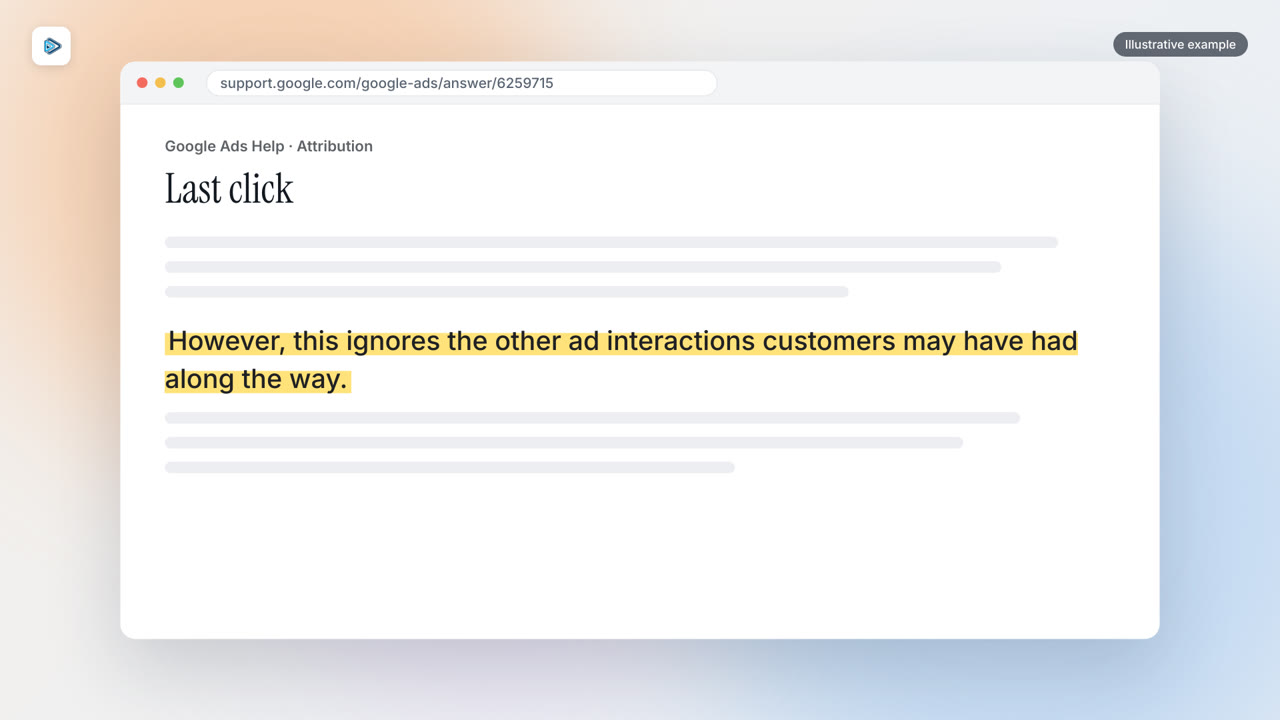
In a home service business that happens all the time. Someone may see your Facebook ad, never contact you there, and later call after seeing a magazine promotion. On paper, Facebook looks useless and the magazine gets all the credit. If you cut Facebook based on that report, you may be cutting the thing that started the job.
Step 1: Track every lead
This is the step most owners skip. Many owners don’t track the first touchpoint versus the last touchpoint, so every budget decision turns into a guess.
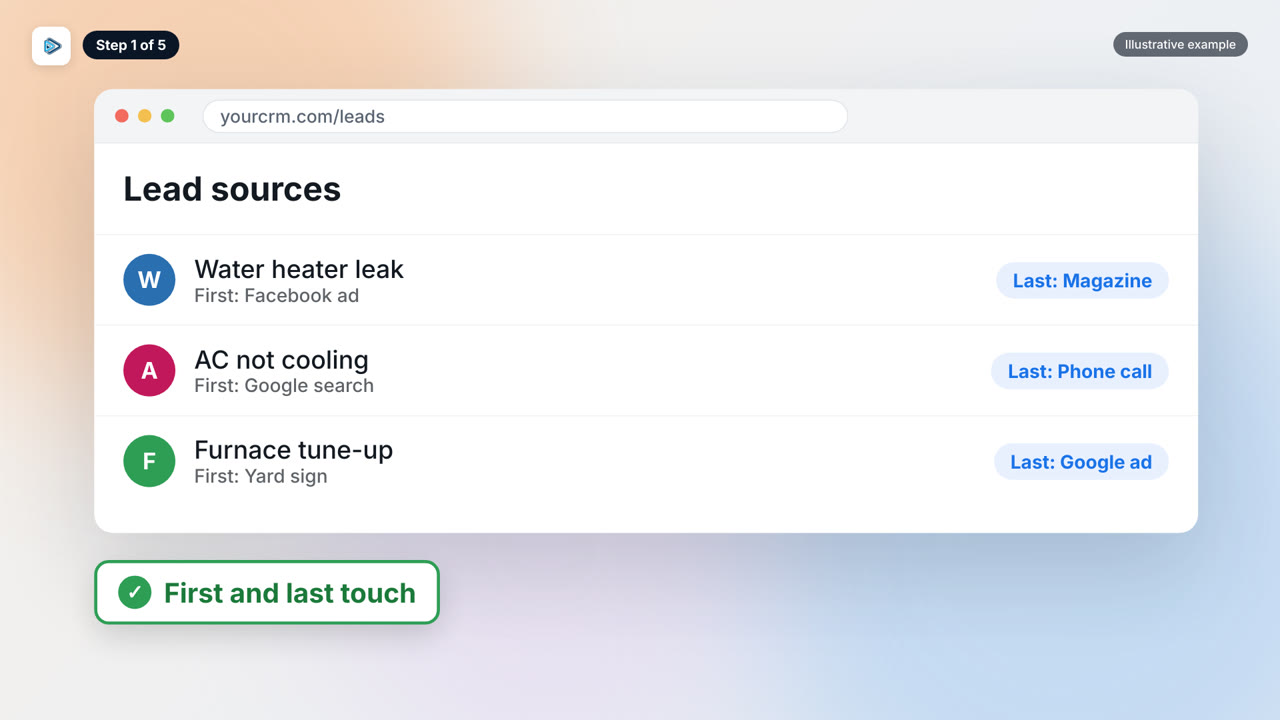
For every new lead, write down two things: where the person first came across your business, and what they touched last before they called or filled in a form. A simple column in a spreadsheet or your CRM is enough. Do it for every platform you pay for, including Yelp and the magazine.
Go back to the Facebook example. With only a last touch column, Facebook shows zero and the magazine looks like a hero. With both columns, you can see that Facebook started the conversation and the magazine finished it. Tracking where each lead comes from is the base for every other step, and without it you are deciding in the dark.
Step 2: Know how many dollars come back
Step two is knowing how many dollars come back for every dollar you spend. That single number tells you whether your marketing is paying for itself.
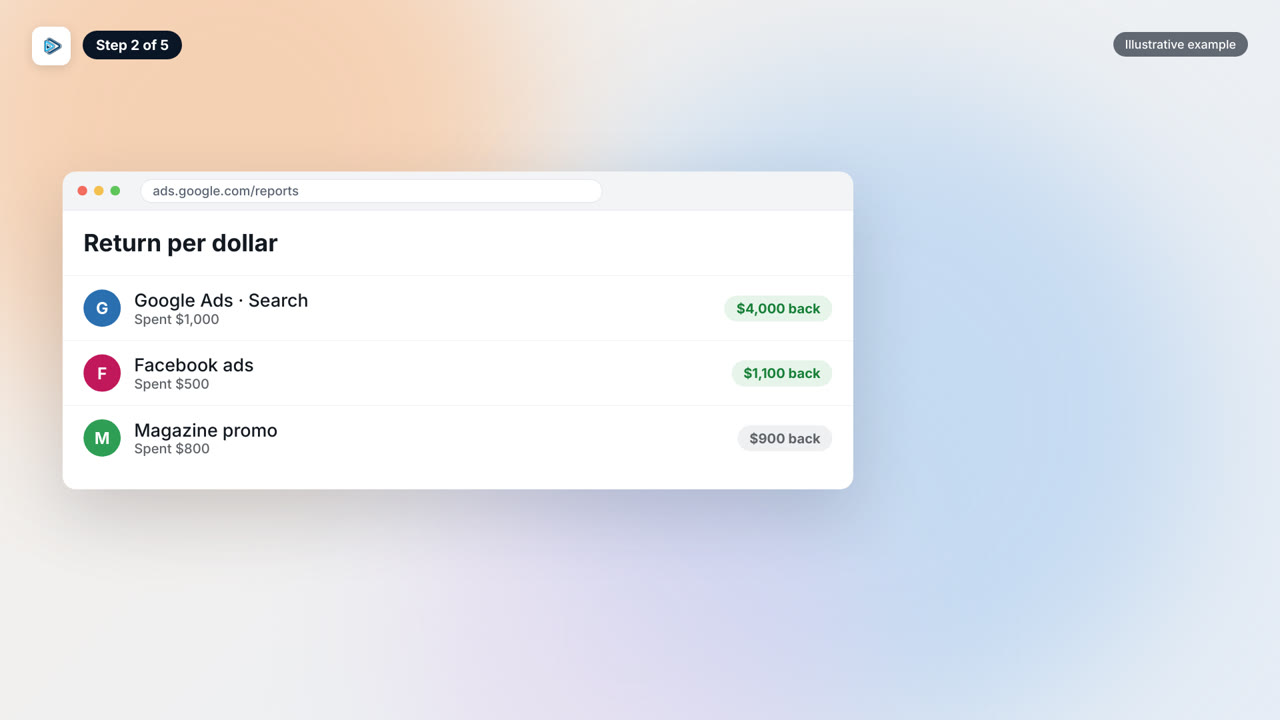
Google calls it return on ad spend, or ROAS: “ROAS is the overall measure of attributed conversion value divided by total spend”. It is a useful starting point, and I’d go one step further.
Don’t stop at revenue. Look at net profit after the costs of your technicians, the office and so on. A job that brings in good revenue but leaves almost nothing after labor is not a win, and a channel that feeds you those jobs deserves a hard look. Judge it at the level of the business’s overall marketing ROI, not each platform on its own.
Step 3: Wait for the jobs to close
Step three is patience. If your jobs take weeks to close or come with big deposits, judging your results after a few days will mislead you. The money simply hasn’t shown up in the numbers yet.
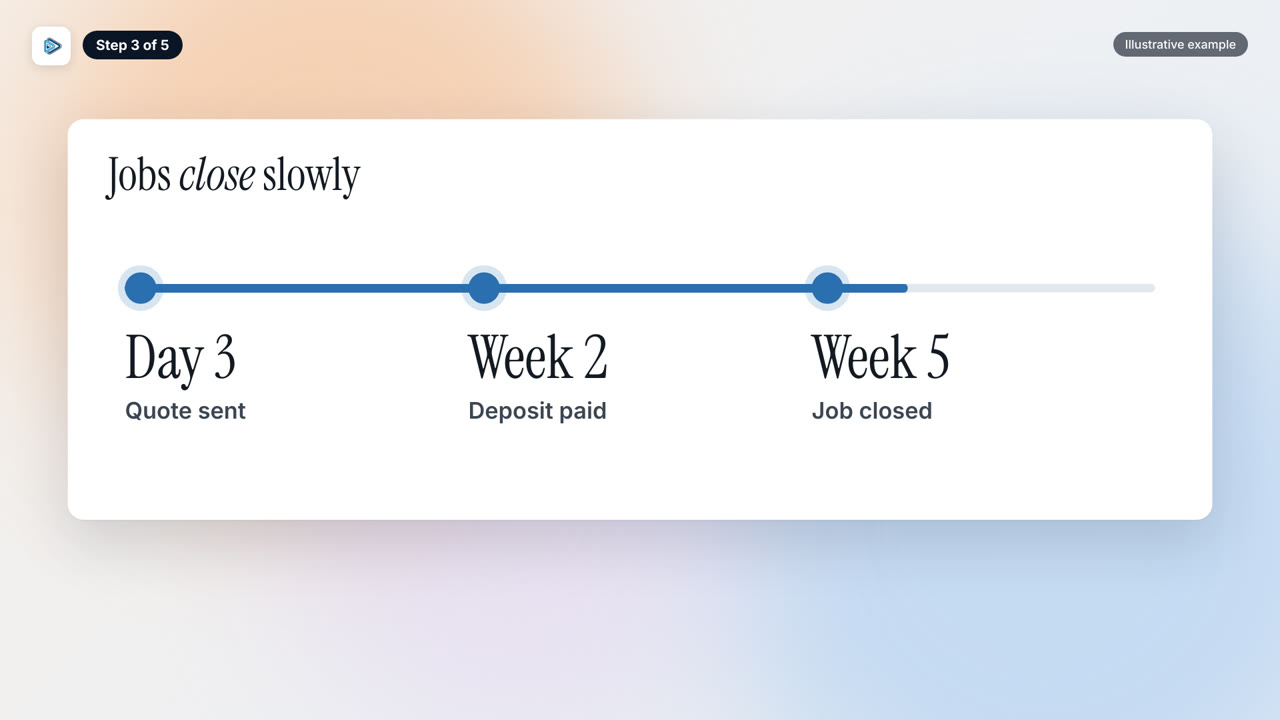
Google says the same thing about reading results: “Ensure the time frame of ROAS evaluation excludes the most recent conversion delay period to get an accurate view of campaign performance.” In plain words, leave out the most recent days, when jobs haven’t closed yet.
My rule for slow jobs is to wait a month or two, then check your average ticket and your profit. A channel that looks weak in week one may look very different once the estimates turn into signed work. Cutting early means you are cutting on incomplete numbers.
Step 4: Find your cost limits
Step four answers the question of how much you can spend per lead. Work out the cost per lead and the cost per closed job at which you are still profitable. Once you know those two numbers, you know how much you can spend.
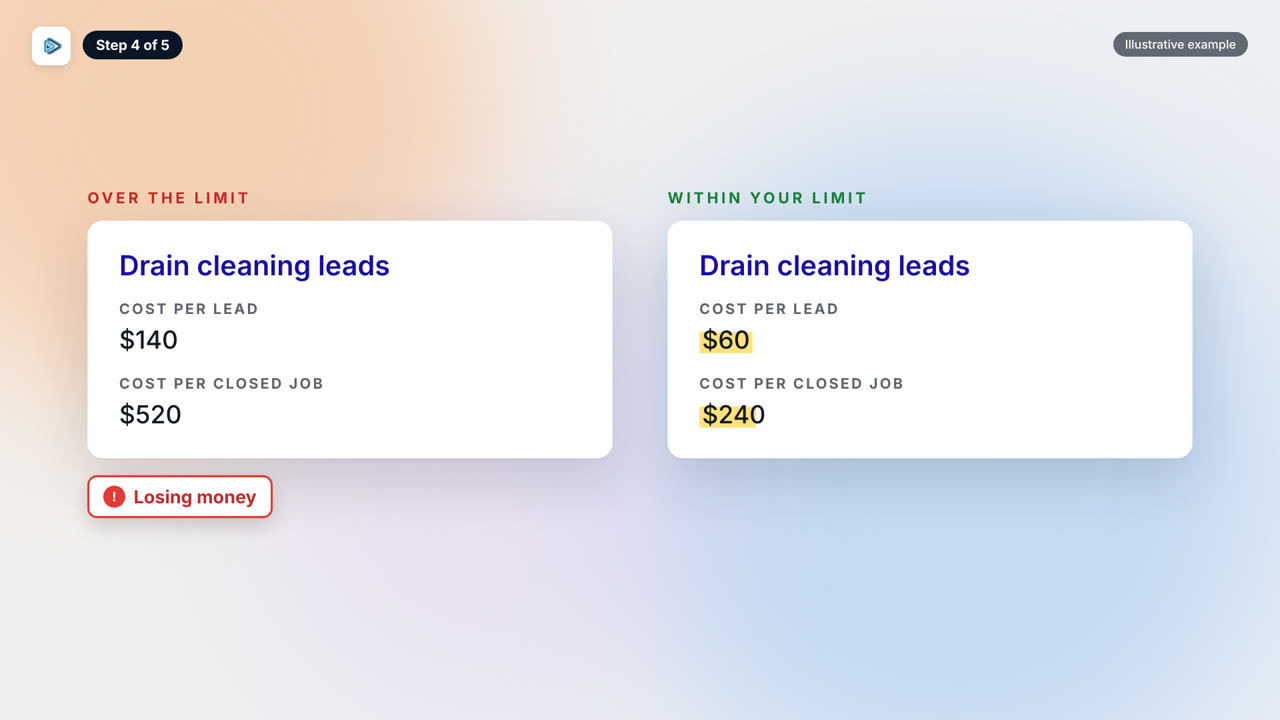
This even shapes your budget on Google. With Local Services Ads, “Set an average weekly budget based on the average number of leads you want to receive in any given week.” Your target cost per lead and the number of leads you want decide the spend.
To see cost per real customer instead of cost per lead, Google lets you import offline conversions, like closed jobs, back into Google Ads. As Google puts it, “By importing offline conversions, you can measure what happens in the offline world after your ad results in a click or call to your business.”
Step 5: Look at the whole business before you cut
Now the step I promised. If your overall marketing ROI is positive, don’t touch it, and don’t spend less.
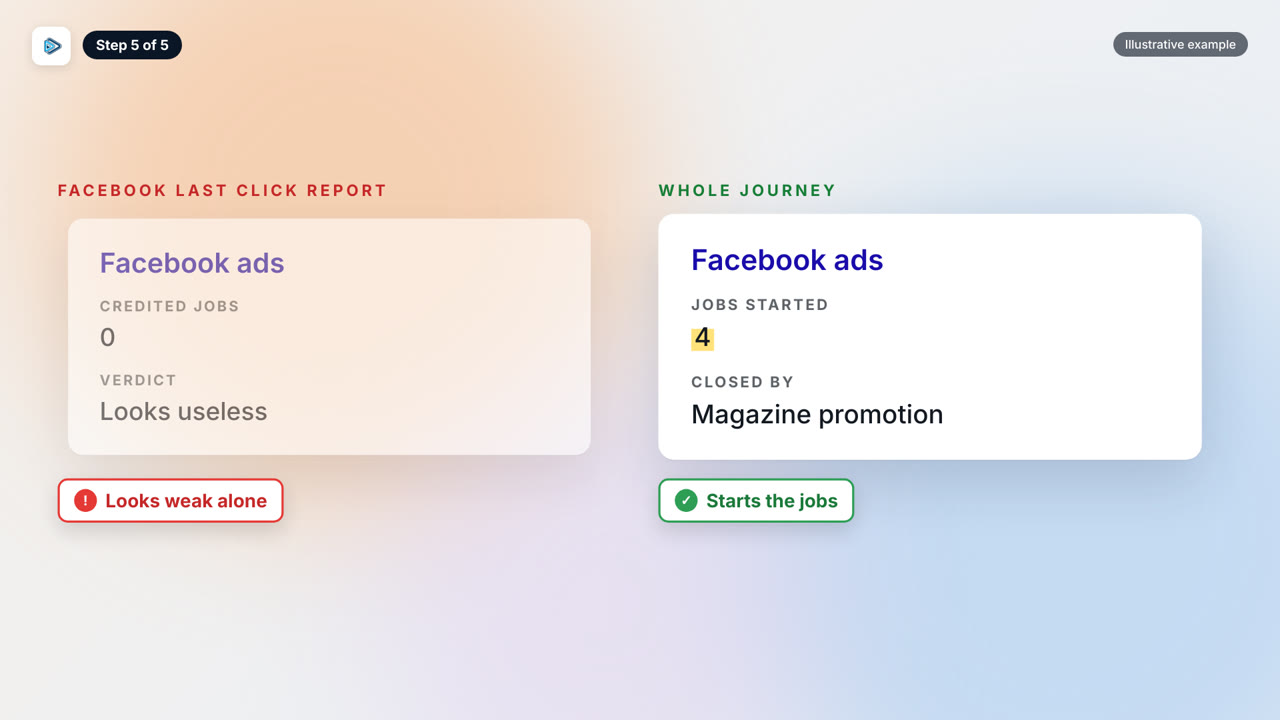
The reason is that your platforms work together. A channel that looks weak on its own report may be the one starting the jobs that another channel closes. Google’s attribution reports can show a keyword or campaign that rarely gets the last click but often helps a sale happen, and Google’s suggestion is that “you may choose to test increasing investment for these keywords to check whether you can drive more conversions for your business.”
So if one channel is clearly working, put more money into it, but don’t cut the others. And if results dip, test new creatives and new offers instead of cutting the budget. Cutting only gives you fewer leads and fewer jobs.
One more thing: check how your closed jobs reach Google
If a CRM or an agency sends your closed jobs to Google, check how it does it. Google has announced a change to the route those uploads take. Its help page says: “Starting June 15, 2026, offline conversions import and enhanced conversions for leads uploads will be migrated to the Data Manager API and blocked in the Google Ads API.”
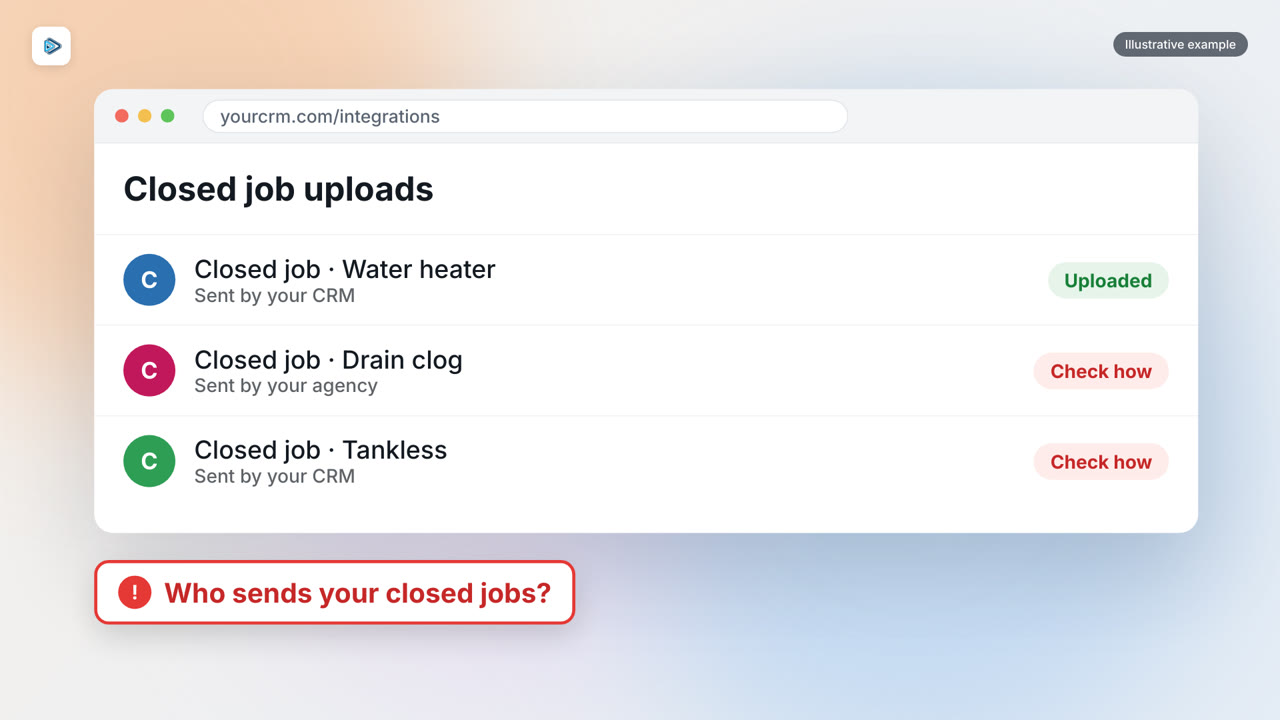
If your closed job data goes to Google through the old route, ask whoever sets it up whether it has been moved. Without that data, you lose the cost per real customer view from Step 4, and that is the view that makes your cut or add decisions reliable.