 Local Service Mastery
“How can local podcasts help me build my brand as a contractor, and how do I get on them?” A home service owner asked exactly that on our weekly group call, and if it sounds like your business, this article is for you.
I’m Lior Vaknin. I’ve spent 15 years running marketing for home service businesses, and every week I answer questions like this one live with our members. Below are five steps to build your local brand through podcasts, and the last one decides whether the interview was worth your time.
Asked on our weekly group call: “How can local podcasts help me build my brand as a contractor, and how do I get on them?”
Short answer: Podcasts are a powerful and often overlooked way to build brand authority. Find local shows, pitch yourself as a guest, and turn that one interview into content you can reuse.
How a podcast appearance helps your brand
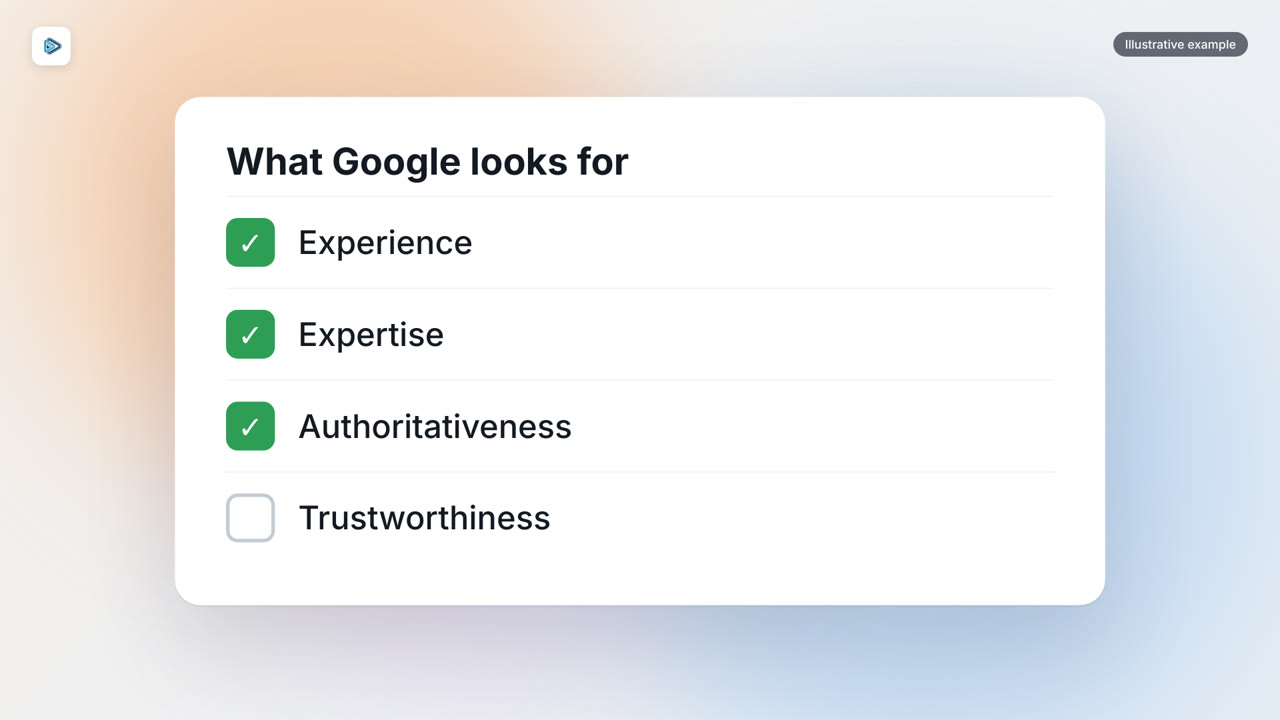
Google’s systems look for signals of experience, expertise, authoritativeness and trustworthiness. In its helpful content guidance, Google says it uses a mix of factors to “determine which content demonstrates aspects of experience, expertise, authoritativeness, and trustworthiness.” Visible expert content supports those signals, and a podcast interview is visible expert content.
There is also a local angle. Google explains on its Business Profile help page that local results are driven partly by prominence, which is how well known a business is. A podcast appearance builds name recognition, and name recognition is what that factor is about.
Step 1: Find local shows
Start by making a short list of the shows your future customers already listen to. Podcasts are a powerful and often overlooked way to build brand authority, and most of your competitors are not even thinking about them.
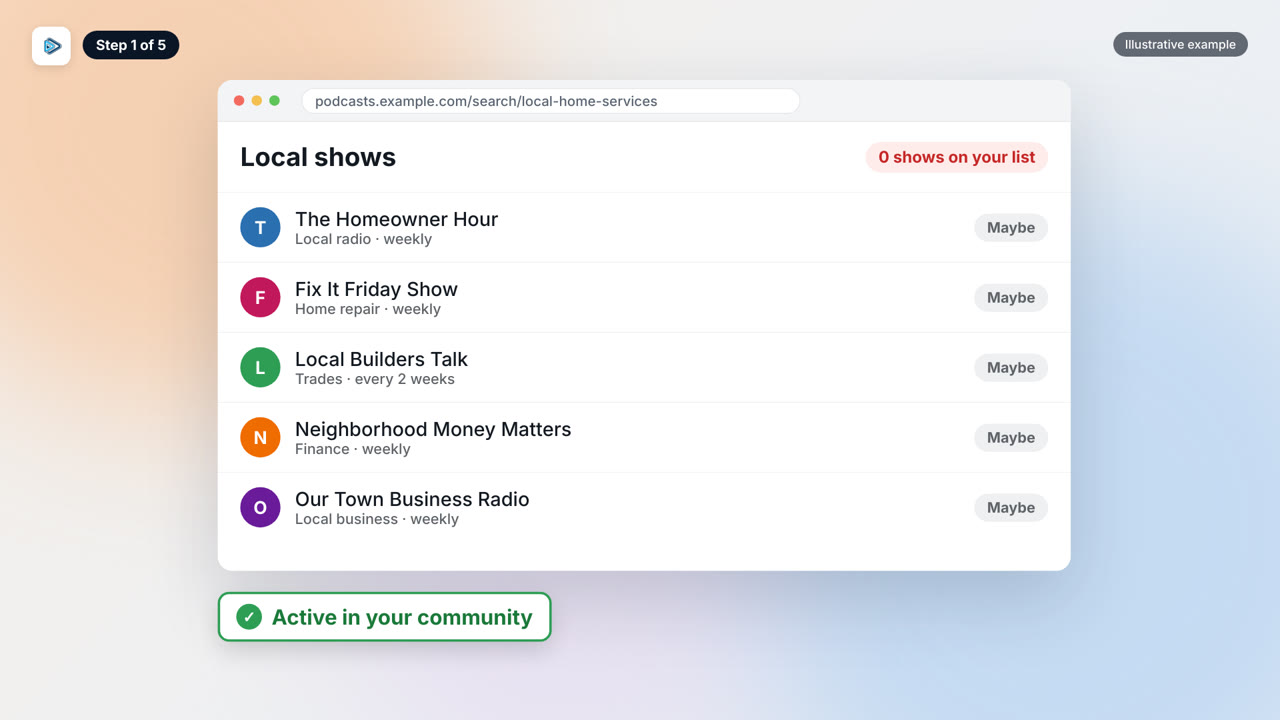
This also lines up with Google’s own guidance. In its search essentials, Google says: “Tell people about your site.” It also says to “Be active in communities” where you can tell people about your services. Guesting on a local show is one way to do exactly that.
Keep the list focused. A handful of local shows that your real customers hear is worth more than a long list of shows that have nothing to do with the people who hire you.
Step 2: Pitch yourself
Once you have the list, contact each host and offer yourself as a guest who can talk about real jobs you’ve done. Don’t pitch a sales message. Pitch a story the listeners can use.
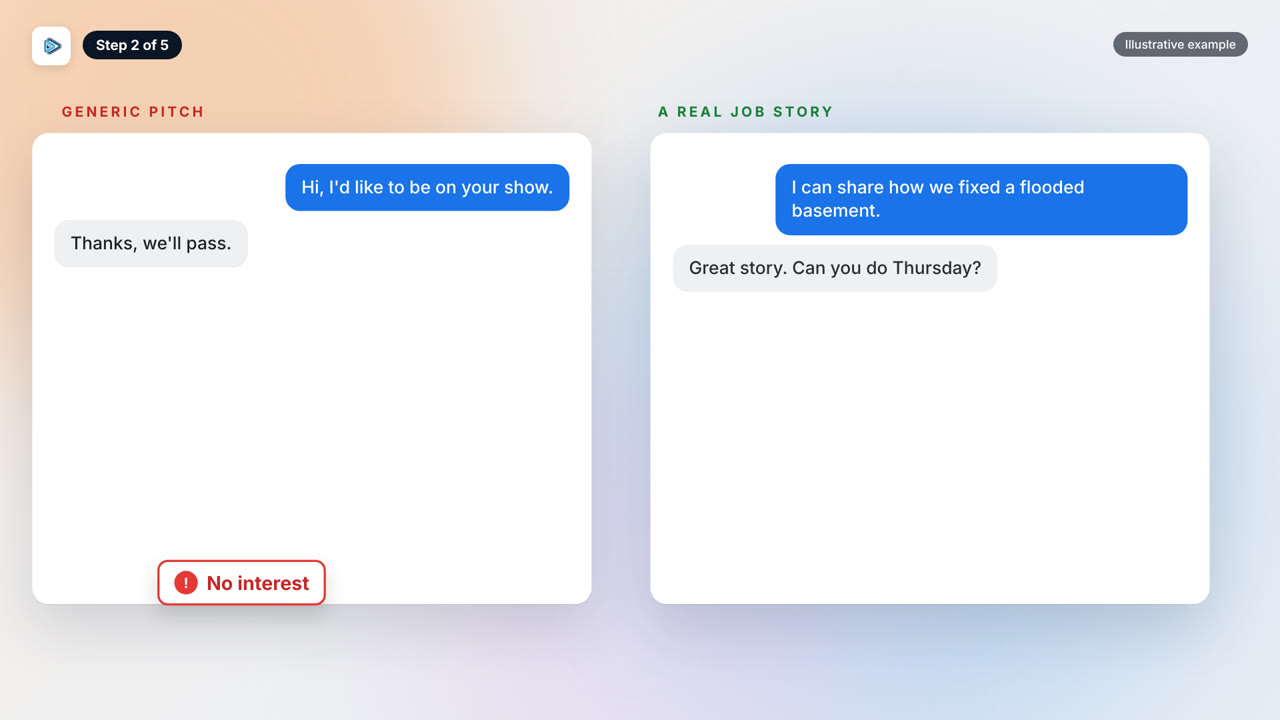
That approach also matches what Google looks for. Its helpful content guidance asks whether your content shows “expertise that comes from having actually used a product or service.” Google rewards content that shows first hand experience, and a contractor describing real jobs is exactly that.
So lead with a job you handled, what went wrong or what surprised you, and what you did about it. Hosts want guests who give their audience something concrete, and that is the easiest way to get a yes.
Step 3: Share real expertise
When you’re on the show, give specific, expert advice instead of generic tips. Google’s guidance for AI search says to develop expert content that “provides value beyond common knowledge.” Anyone can repeat what every website already says, and the listener learns nothing from it.
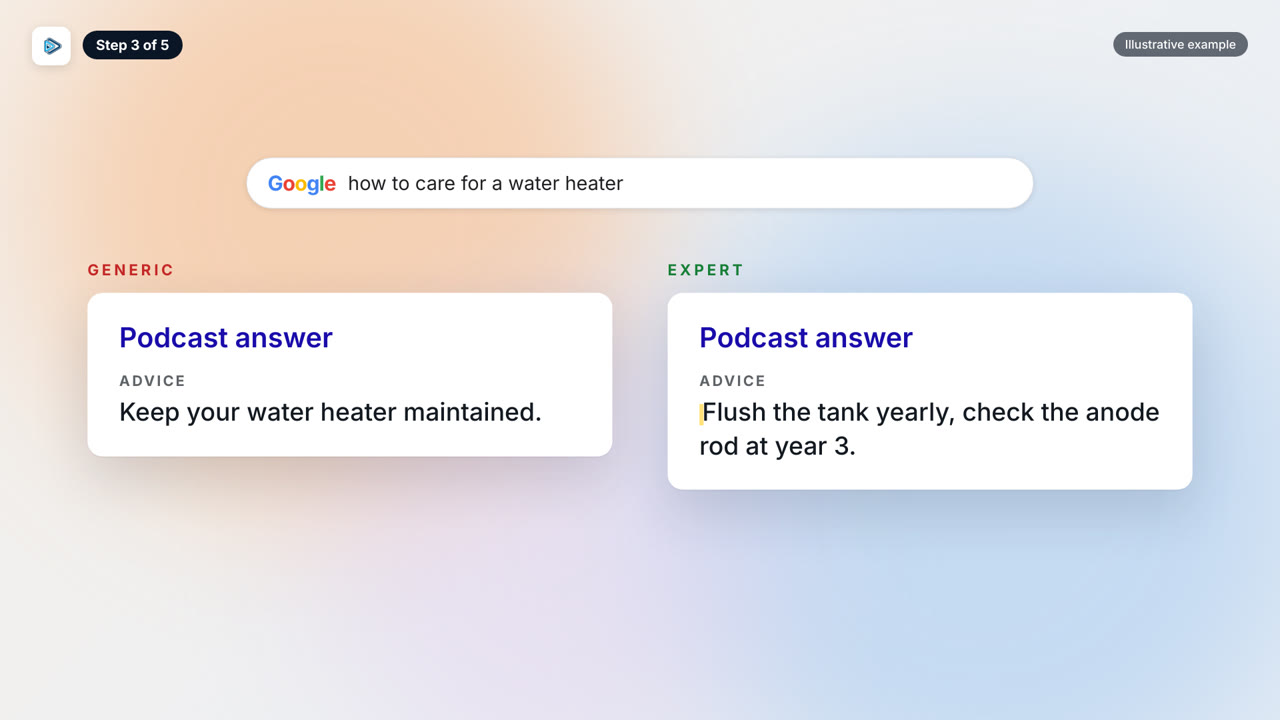
Talk about what you actually see on the job and what customers should know before they hire anyone. That is the kind of content that sets you apart.
Being seen builds visibility and recognition, and that puts you ahead of competitors who never show up anywhere. Every time a listener hears you explain something clearly, you become the name they remember when they need help.
Step 4: Get the link
Ask the host to put your website in the show notes. This matters because Google’s prominence factor draws on “how many websites link to your business,” along with your reviews, as explained on the Google Business Profile help page. A show notes page that links to your site is one such link.
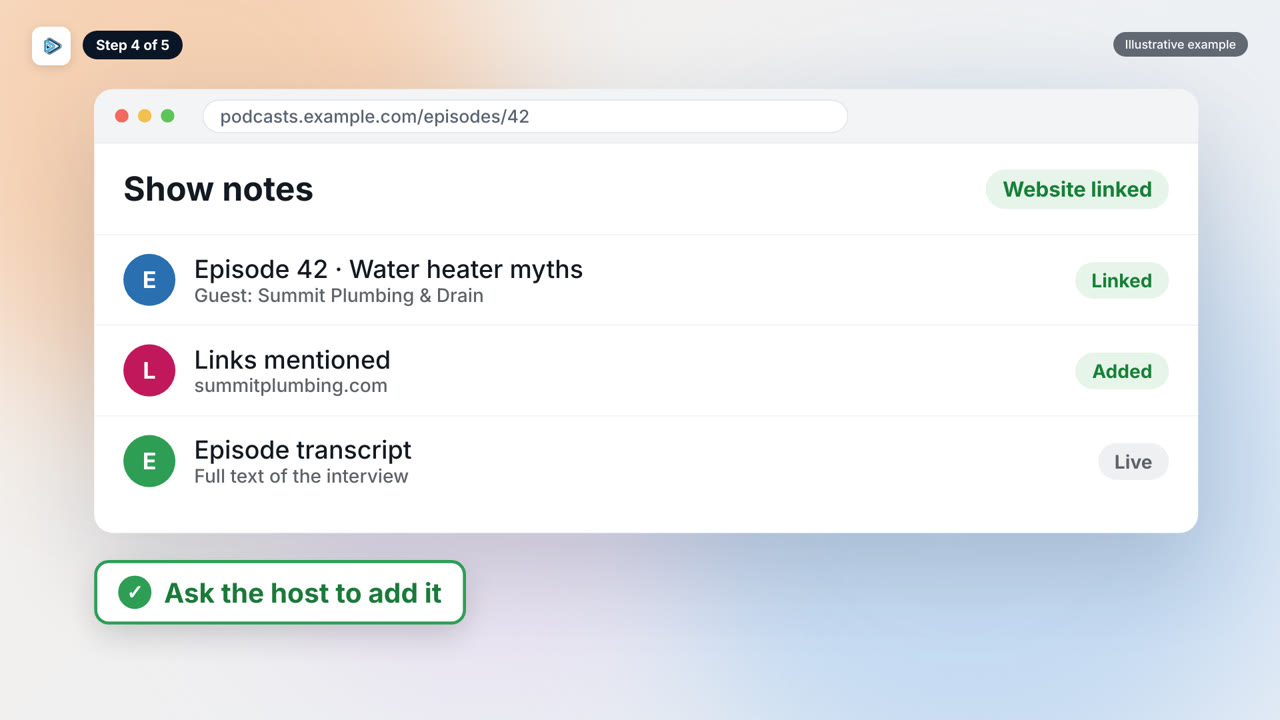
The same page says it plainly: “Prominent places are more likely to show up in search results.” Prominence means how well known a business is, so every appearance helps.
Make it easy for the host. Send your website address and the name of your business the way you want it written, so the link goes to the right place and your name is spelled correctly.
Step 5: Reuse the interview
Here is the step I promised you. One interview is not the win. The content you make from it is. One interview becomes reusable content you can turn into more opportunities.
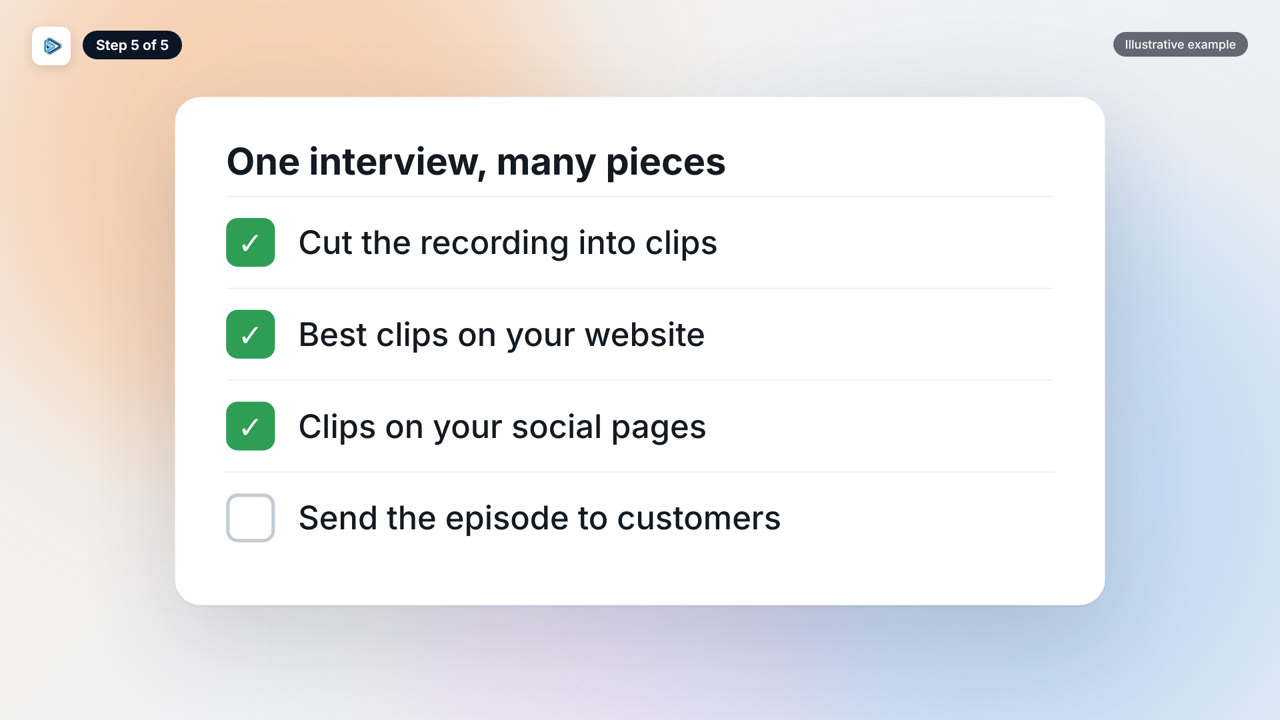
Take the recording and cut it into short video clips. Put the best ones on your website and social pages, and share the episode with your customers. Content that showcases your expertise is how you build a local brand, and creating content is a top priority if you want to position yourself as a major company over the next three to five years.
Then track the results. The SBA says: “Measuring ROI will help you know which part of the plan is working and which part needs to be updated.” Check whether each appearance brings calls or leads, so you know which shows are worth your time and which to drop.
What Google’s May 2026 update means for your clips
One more thing you should know. Google’s documentation update for May 2026 added guidance on noncommodity content, plus “tips about providing local, shopping, image, and video content.”
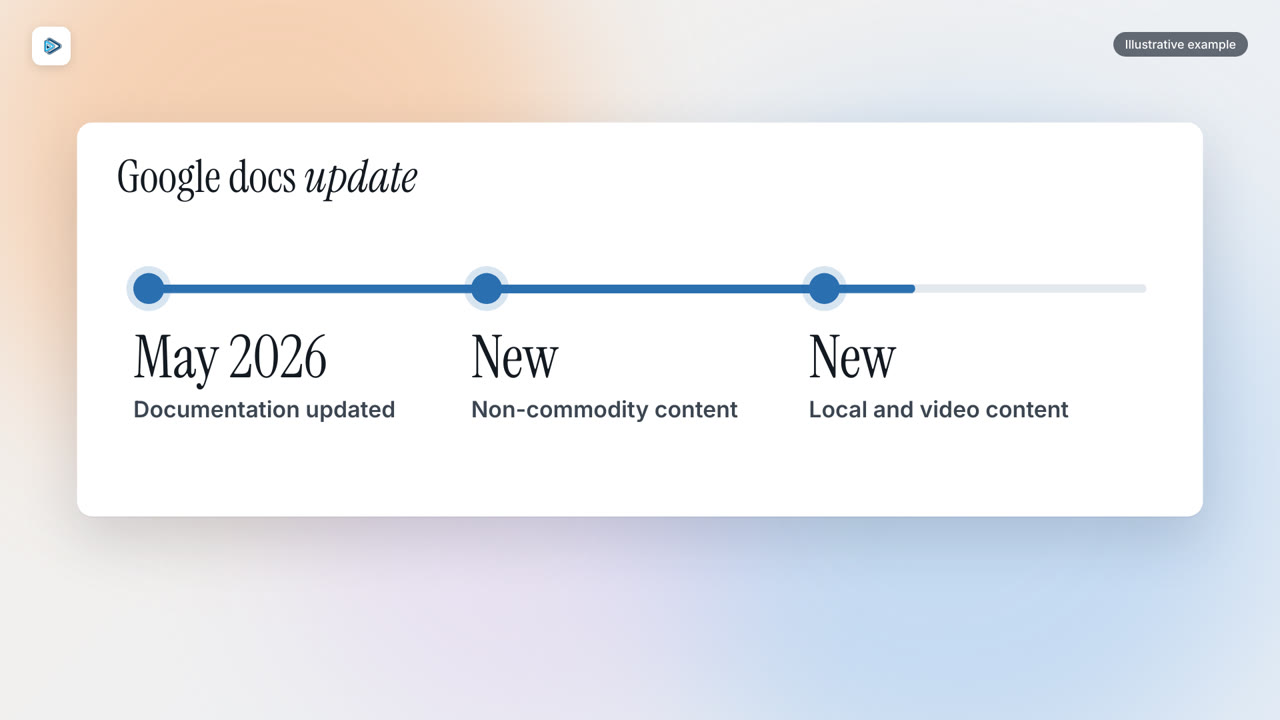
That is good news if you turn your podcast interview into video clips, because that is the kind of content the update covers. It’s one more reason not to let the recording sit on a hard drive after the episode goes live.