Full video review — Mullen & Mullen Law Firm, Dallas TX.
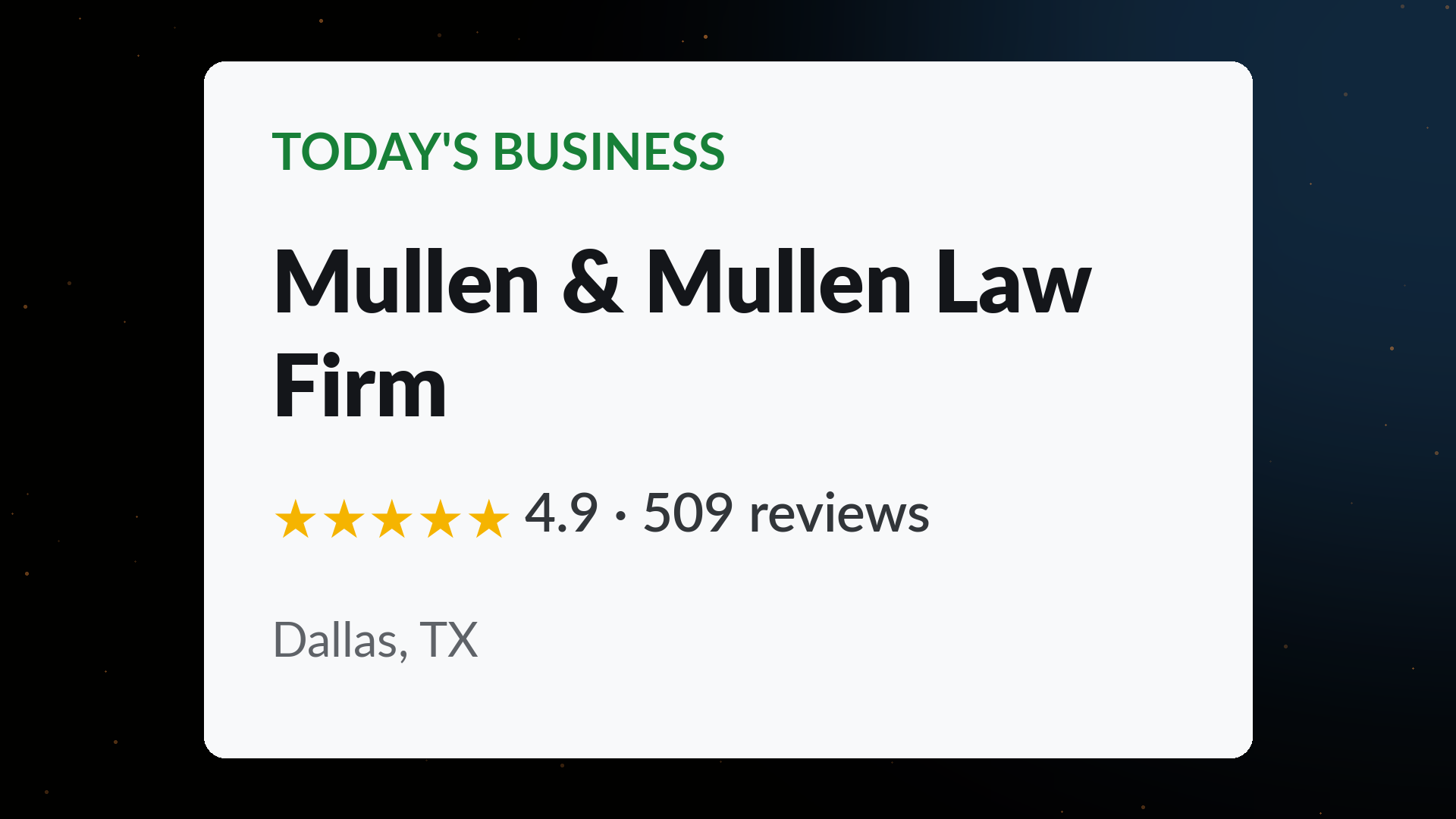
The earned praise comes first: Mullen & Mullen Law Firm holds a 4.9 rating across 509 Google reviews. Personal injury is a business built entirely on trust — clients hand over the worst day of their lives — and a record like that, at that volume, is genuinely hard to build. None of what follows touches their legal work.
What we examined is only what’s publicly visible — the firm’s own website source code and their public Google listing, checked on August 5, 2026. Six gaps came up, and together they trace the exact checklist Local Service Mastery works through before any budget goes out the door.
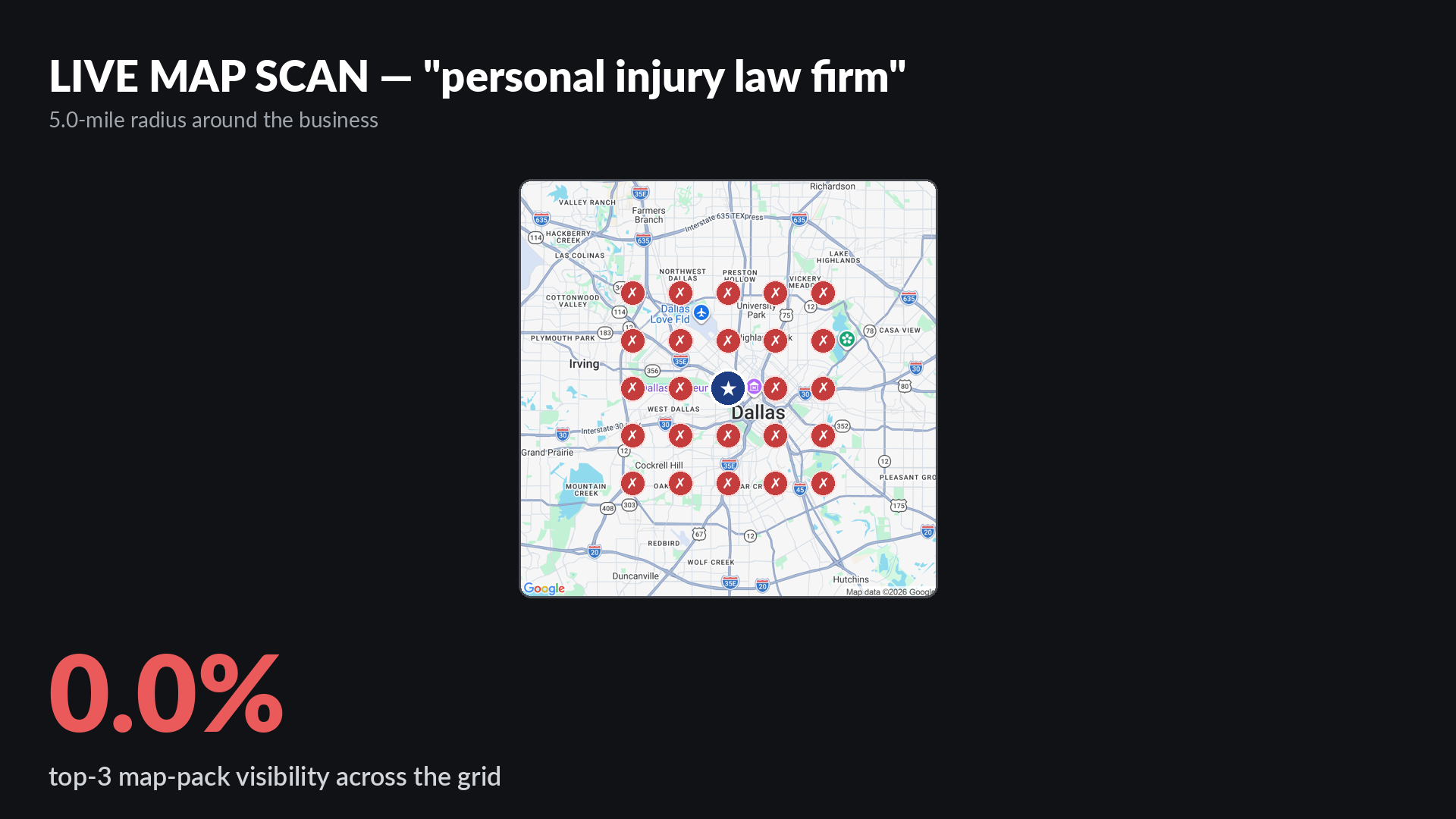
Verified with a live map-grid scan on August 5, 2026.
What’s visible
We ran live searches for “personal injury law firm” across a five-mile radius around their Market Center Boulevard office. The firm hit the top-three map results 0% of the time — not once, anywhere around their own location.
Why it costs leads
Most searchers never look past those three map listings — they pick one and call. Someone injured five minutes from this office would never learn the firm exists. And a 4.9-star, 509-review profile is precisely what the map pack is built to reward, which means this is an optimization gap on their Google Business Profile, not a reputation problem. Closing that gap is the foundation of lead generation for local service businesses done right.
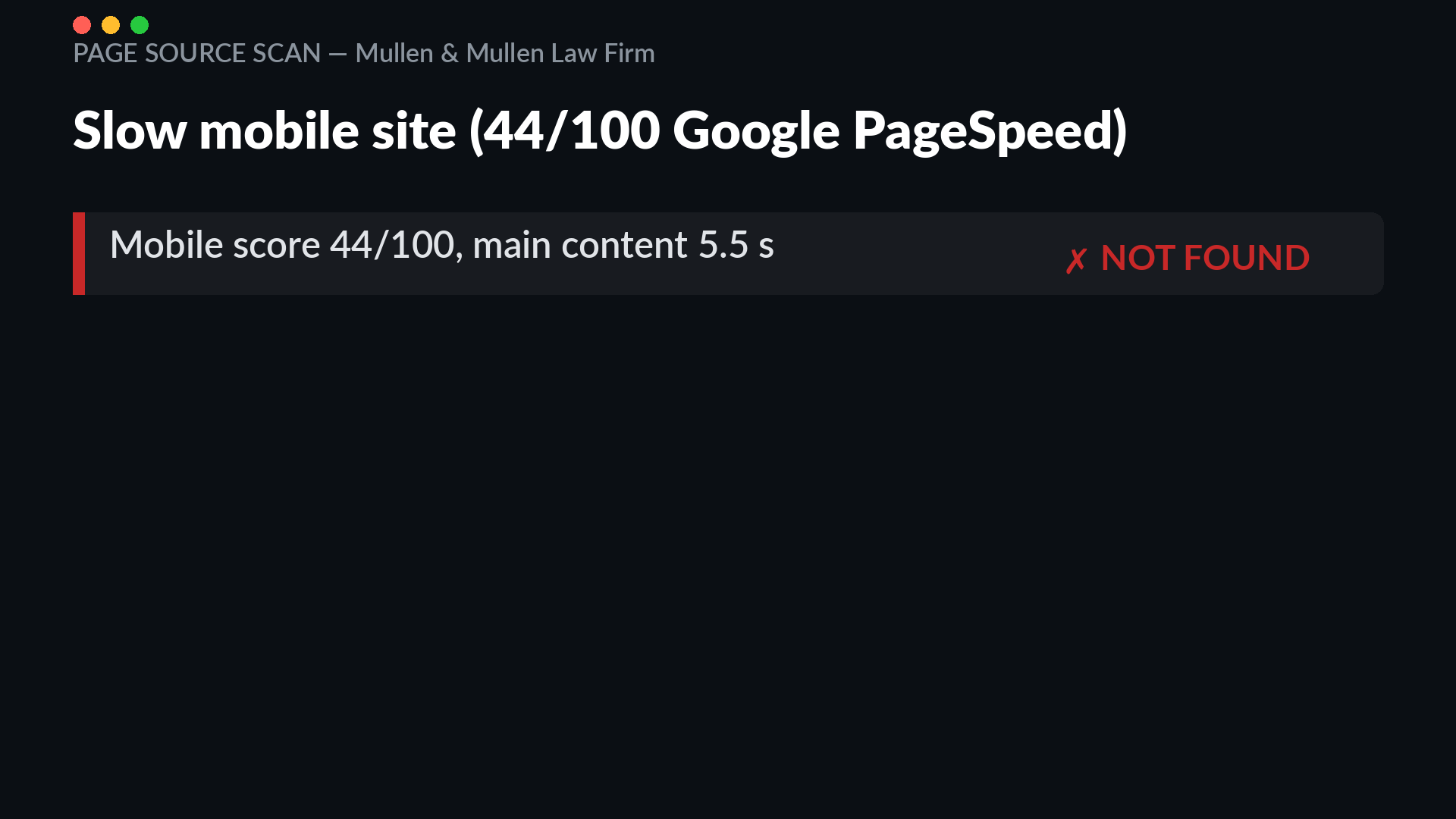
Verified with Google’s PageSpeed test on August 5, 2026.
What’s visible
Google’s speed test gives the mobile site a 44 out of 100, and the largest piece of content takes five and a half seconds to show up on a phone.
Why it costs leads
Picture the actual visitor: someone just injured, searching from their phone, often from a hospital or a roadside. That person is not waiting five and a half seconds — they tap back and dial the next firm on the list. Every slow load quietly hands a case to a competitor, and the firm never knows it happened.
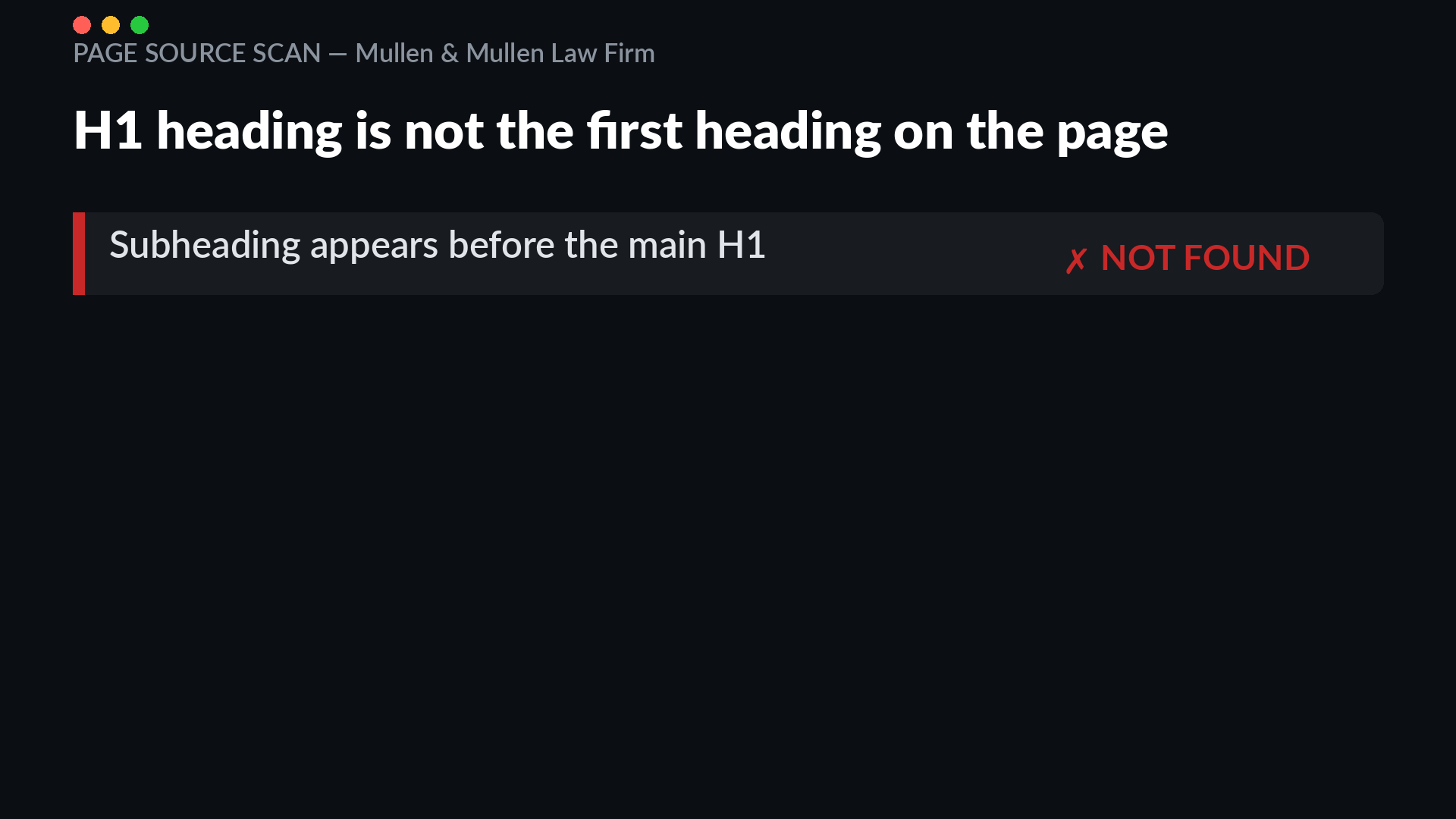
Verified from the homepage HTML on August 5, 2026.
What’s visible
In the page source, a lower-level heading shows up ahead of the H1 — the single heading that’s supposed to announce what the page is about.
Why it costs leads
Search engines read headings in order to make sense of a page, and heading order is one of the simplest ranking signals there is. Weakening it costs nothing to fix and quietly suppresses the page in a market as competitive as Dallas personal injury.
Verified from the homepage HTML on August 5, 2026.
What’s visible
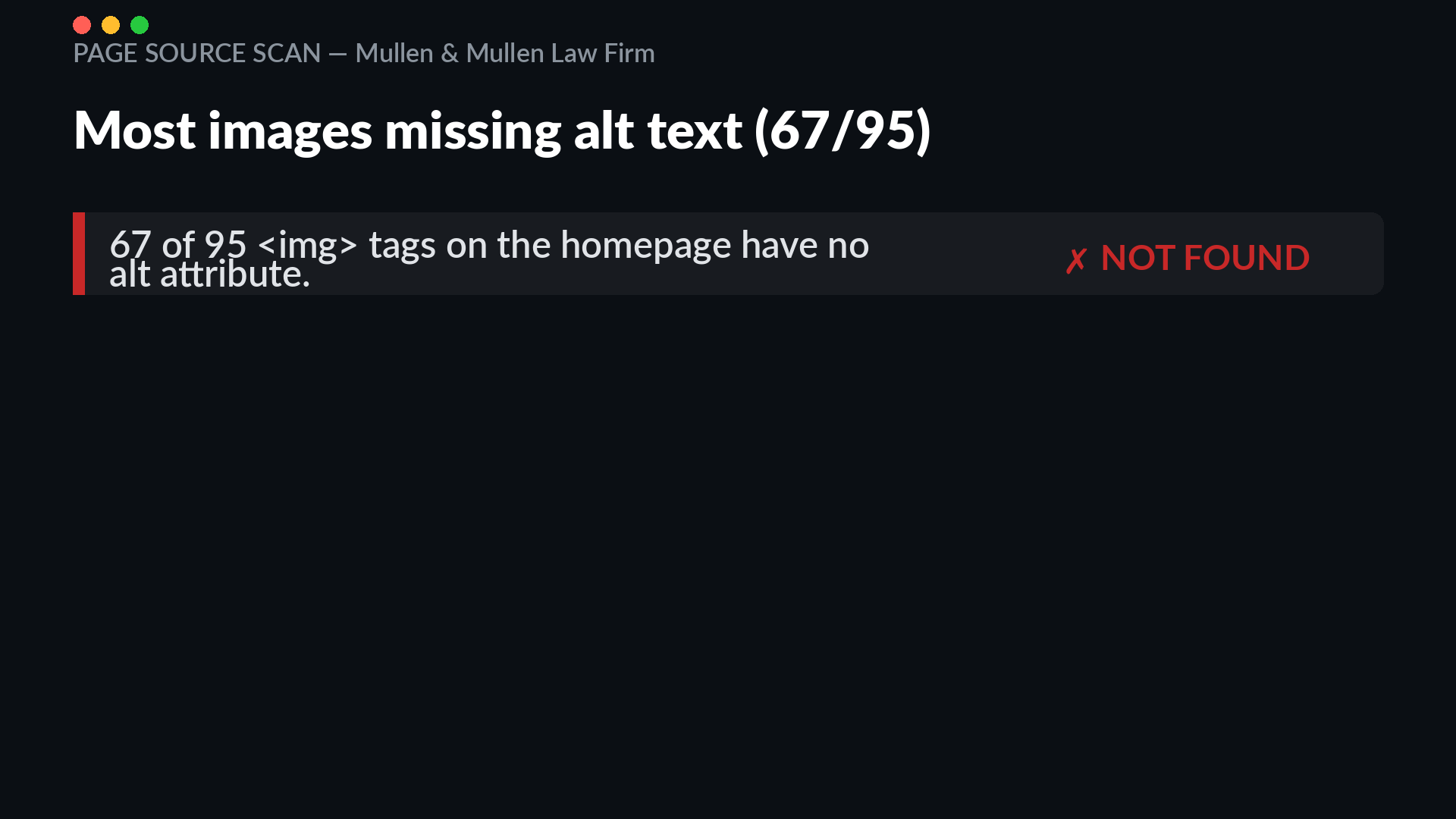
Sixty-seven of the ninety-five images on the homepage have no alt text — the short written description Google and screen readers rely on to understand an image.
Why it costs leads
Alt text is free and takes minutes per image. Beyond the accessibility gap for visually impaired visitors — worth taking seriously on its own for a law firm — every missing description is a small ranking signal left unused across most of the page.
Verified from the page source on August 5, 2026.
What’s visible
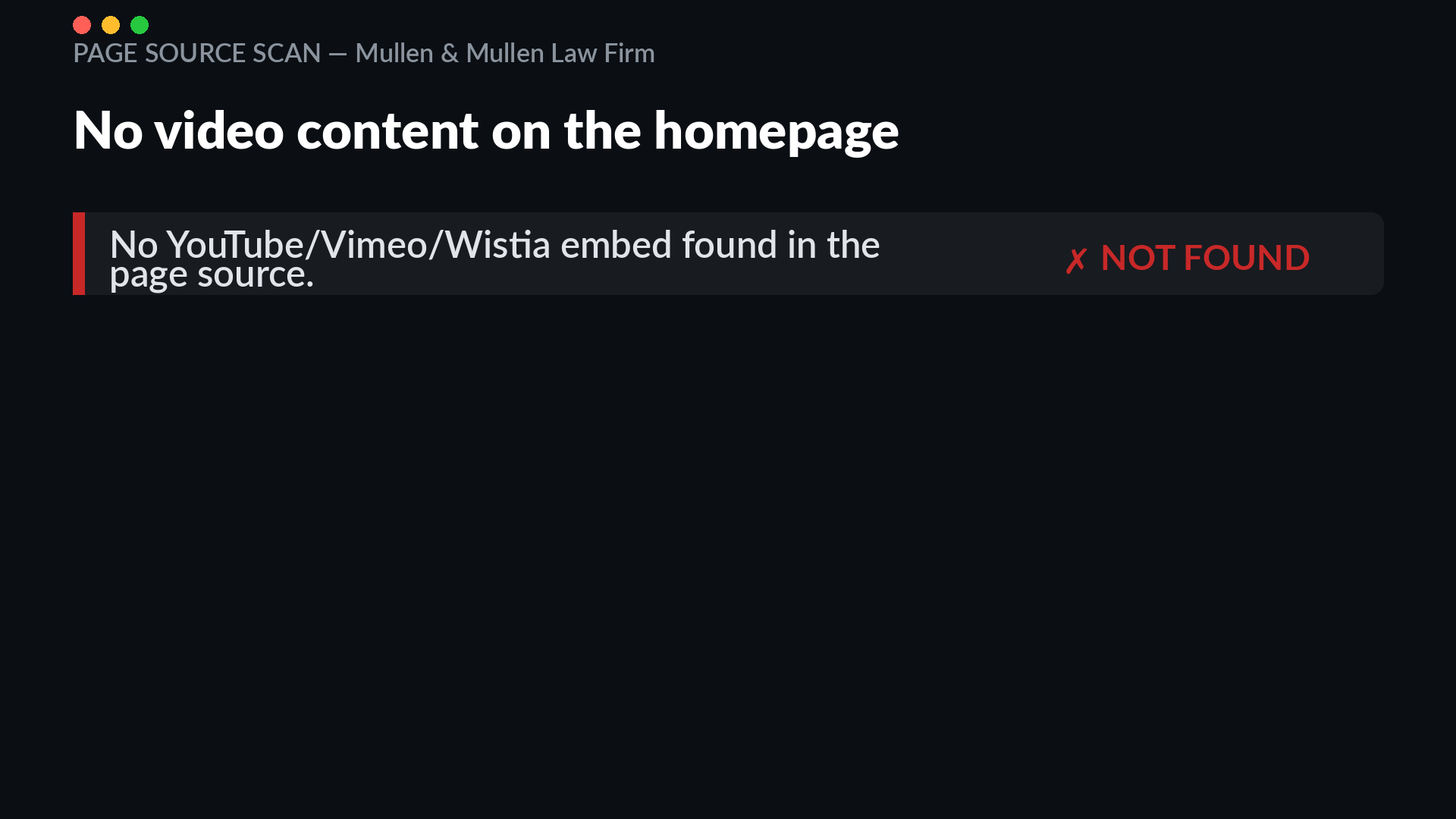
No video embed of any kind appears in the homepage source — the page is entirely text and photos.
Why it costs leads
For a firm where trust is the entire product, a short attorney video or a client testimonial clip does more than any paragraph of copy. A potential client deciding who to call with their case wants to see a human being. Right now, that moment never happens on this page.
Verified from the public channel on August 5, 2026.
What’s visible
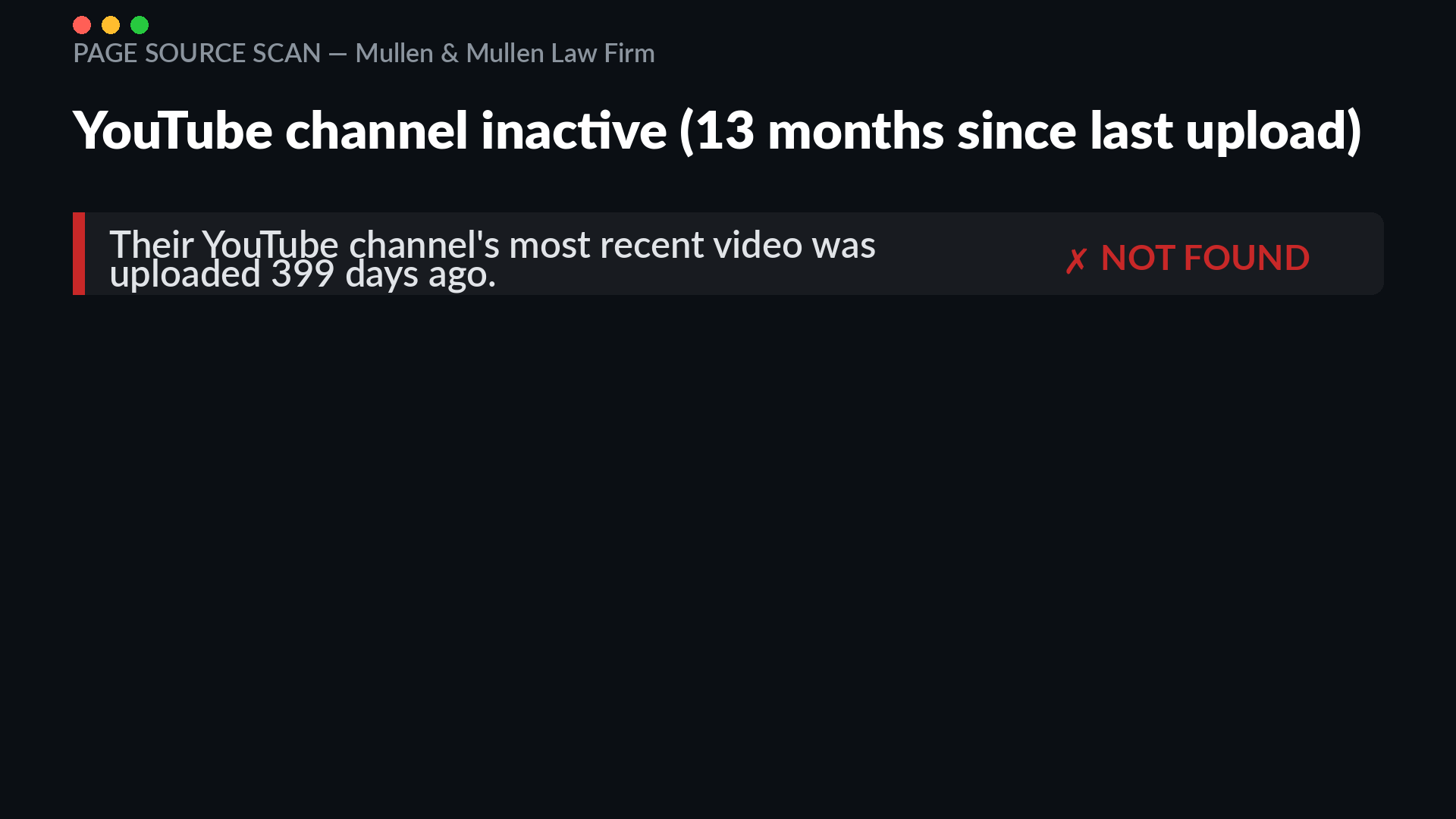
The firm has a YouTube channel, but its most recent upload is 399 days old — well over a year of silence.
Why it costs leads
To a potential client checking the firm out — and to Google, which reads freshness as a sign of life — a year-old channel looks like nobody’s home. Worse, it’s a wasted asset: the channel exists, so the hard part was already done once. Letting it sit idle hands the “helpful local attorney” search space to whichever firm bothers to show up.
| Hiring an agency | DIY, unaided | Local Service Mastery (LSM AI) | |
|---|---|---|---|
| Map-pack visibility across the whole service area | Often reported as “impressions” — rarely grid-scanned | You’d have to know a grid scan exists to run one | Measured on a live grid, then worked point by point |
| Mobile site speed, tested Google’s own way | Checked at launch, rarely re-tested after redesigns | Easy to never run the test at all | Re-tested continuously — a slowdown gets flagged, not forgotten |
| On-page basics (heading order, alt text) | Set up once, quietly broken by later edits | Easy to break without ever noticing | Monitored every day, regressions caught the week they happen |
| Trust-building video content | Usually an expensive add-on most retainers skip | Falls off the to-do list within a quarter | Part of the system, so the channel stays alive |
| Who owns the account & the data | Varies — ask in writing before you sign | You, by definition | You. In your name from day one, kept if you cancel |
These findings describe Mullen & Mullen Law Firm’s own public website and public Google Business Profile, reviewed August 5, 2026 — they are not a claim about who manages their marketing; we don’t know, and make no claim either way. The “hiring an agency” and “DIY” columns describe general patterns observed across the local-service marketing industry over 15 years — opinions and generalizations, not statements about Mullen & Mullen or any named provider. Local Service Mastery is not affiliated with, endorsed by, or sponsored by Mullen & Mullen Law Firm.
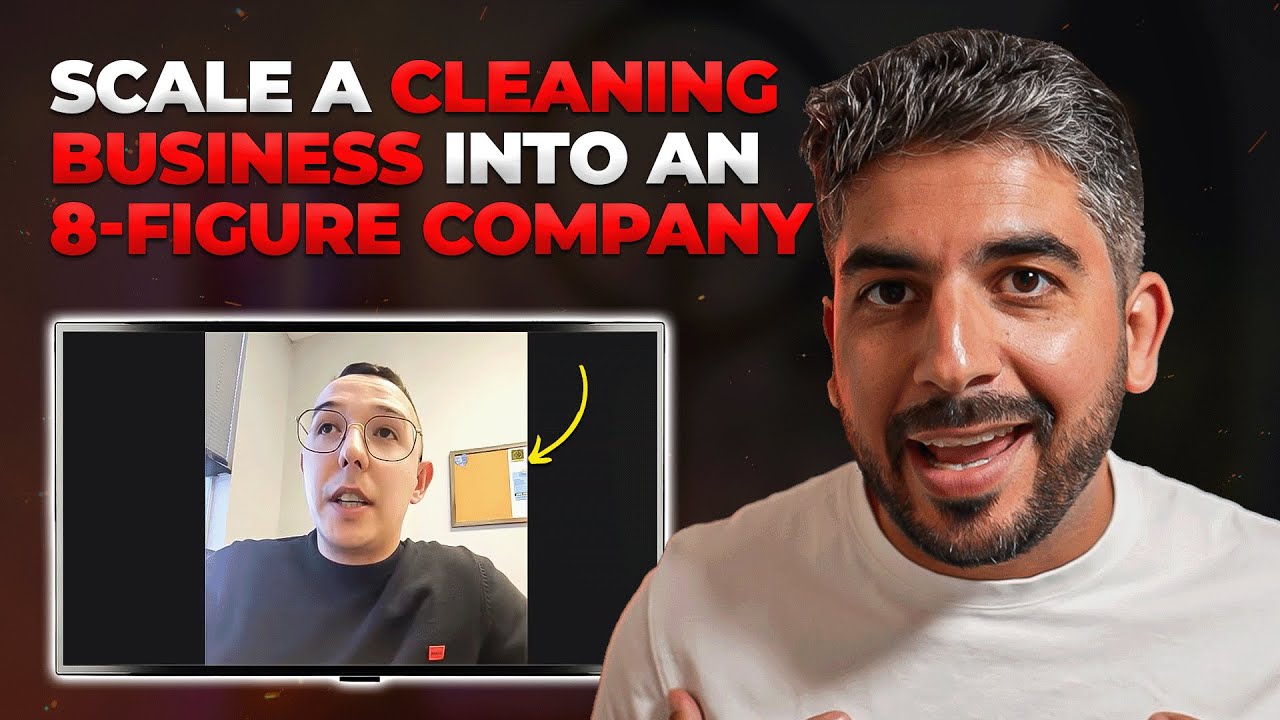



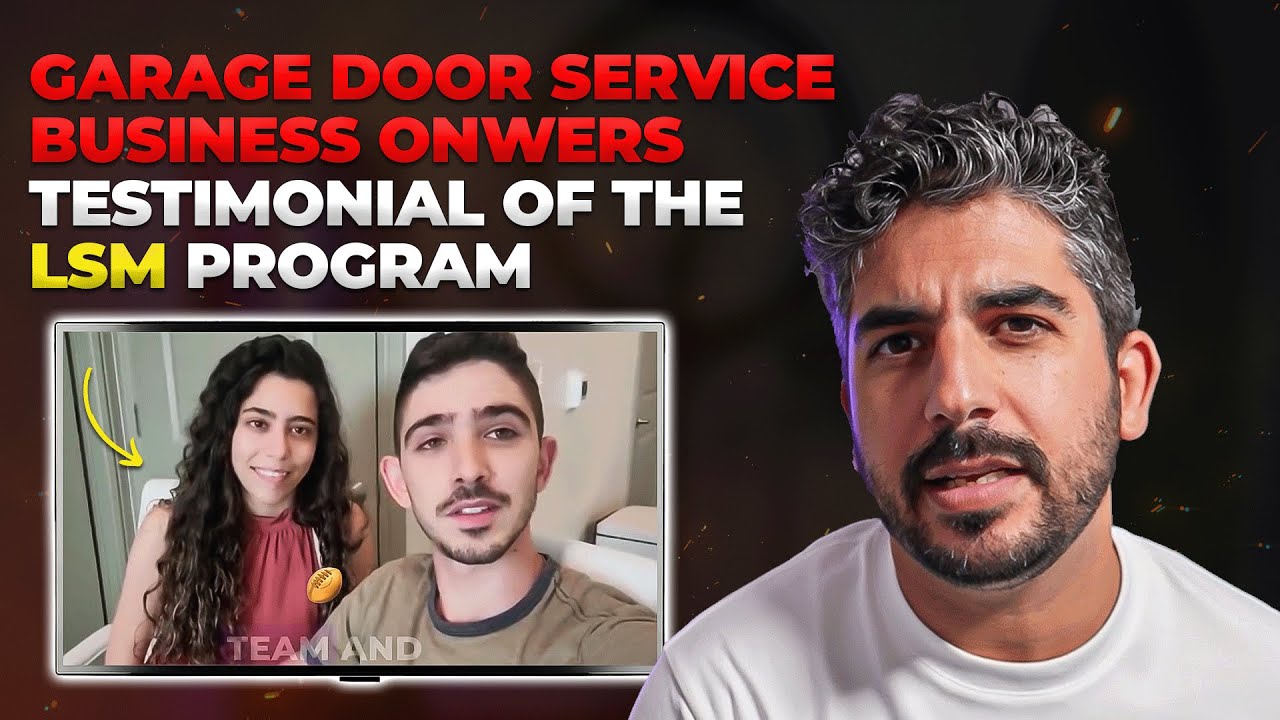
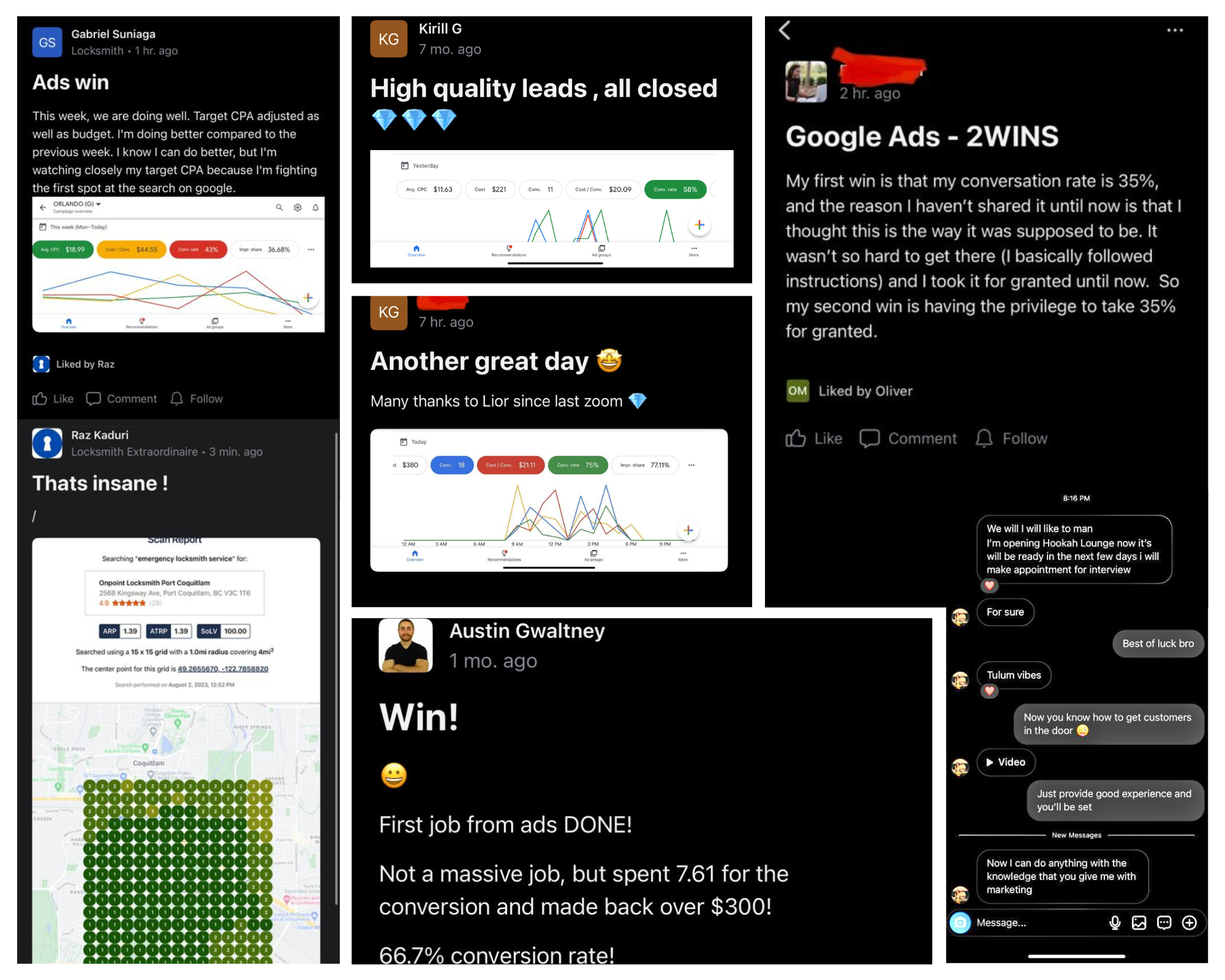

I built Local Service Mastery because I watched too many great contractors get burned by agencies — overcharged, locked out, left with nothing. So I flipped the model: your accounts, your data, your asset. We build it. You own it.
Peace,
Lior Vaknin
No. This is independent, educational commentary based entirely on publicly available information — the firm’s own website source code and their public Google Business Profile, reviewed August 5, 2026. We are not affiliated with, endorsed by, or sponsored by Mullen & Mullen Law Firm.
Because ratings and visibility are two different systems. The 4.9 reflects what clients experienced after they found the firm; the map pack decides who finds them next. A strong rating makes the invisibility more frustrating, not less — the listing already holds the trust signals the map box rewards, it’s simply not being surfaced because the optimization work around it hasn’t been done.
Think about when someone searches for an injury lawyer: right after an accident, on a phone, often in pain and comparing two or three firms at once. A page that takes five and a half seconds to show its main content loses that race before it starts. Speed isn’t a vanity metric in this trade — it’s the front door.
Each one alone is a small leak. But marketing rarely fails in one dramatic place — it fails in half a dozen quiet ones at once. Heading order, alt text, page speed, video: each shaves a few percentage points off a different stage of the funnel, and they compound. Fixing them is cheap; leaving them is what gets expensive.
Because injured people research. A channel whose last upload is over a year old reads as “nobody’s home” to a potential client — and to Google, which treats freshness as a sign the business is active. The firm already did the hard part by starting a channel; a light, consistent upload rhythm is all it takes to make it an asset again.
Yes — attorneys, plumbers, HVAC, locksmith and roofing owners all run their marketing through our coaching program. One city, a fully optimized Google Business Profile, a fast dedicated page, and clean tracking — every gap on this page gets checked and closed during onboarding.
To be clear about what we do and don’t know: we have no idea who maintains Mullen & Mullen’s website or marketing, or whether anyone outside the firm touches it. Nothing in this review claims otherwise.
Speaking about the industry in general, not this firm — this is my opinion, formed over fifteen years inside local-service accounts. A retainer gets paid whether or not anyone re-opens the account. A junior manager juggling sixty or eighty clients isn’t grid-scanning one Dallas firm’s map visibility or re-running a speed test after the last redesign. If someone is being paid to run this marketing, heading order, alt text and a 44/100 speed score are the kinds of things that should have been caught in week one.
Here’s what has genuinely changed. Grid-scanning the map pack, re-testing site speed, checking heading structure and alt text, watching whether the channel’s gone quiet — this is repetitive, rules-based work, and AI now runs it every day, automatically, no retainer attached. Owners never handed marketing to agencies because agencies knew a secret formula. They handed it over because of the hours. AI has the hours now.
And that flips the ownership question on its head. With a bit of guidance, an owner can run all of this in-house and hold the whole thing outright: the Google Business Profile, the site, the content channels, the history that compounds month after month. Everything in your name — nobody can hold it hostage, and nobody takes it with them when a relationship ends. That’s the wedge behind Local Service Mastery: done for you, owned by you.
Everything above came from public information in a single afternoon. If you run a local service business and want to know what’s leaking in your own marketing, we’ll run the same audit on you at no cost.
Book a live demo →This review’s video uses AI-generated narration.
This review is independent educational commentary, produced for informational purposes under fair use. All observations are based on publicly available information — Mullen & Mullen Law Firm’s own public website source code and their public Google Business Profile — reviewed on August 5, 2026. We are not affiliated with, endorsed by, or sponsored by Mullen & Mullen Law Firm. Nothing here is a criticism of their legal work; their 4.9 rating across 509 reviews speaks for itself. Marketing setups change — anything described here may have been updated since the review date.
Music in the video: “Deliberate Thought” by Kevin MacLeod (incompetech.com), licensed under Creative Commons: By Attribution 4.0 License — creativecommons.org/licenses/by/4.0/
 Local Service Mastery