 Local Service Mastery
Genco Injury Attorneys in Denver, Colorado. Five stars across 315 reviews. In personal injury law, that only happens when clients genuinely felt fought for. The hardest part of marketing — building a reputation people actually trust — is already done.
But here’s where the marketing setup doesn’t match the reputation. We ran a live map scan, searching “personal injury law firm” across a five-mile radius around their office. What came back is the kind of thing I see constantly when I look under the hood of local service businesses: a great company being made invisible by completely fixable problems.
Let’s walk through each one — and more importantly, why each one is costing real clients and real revenue.
| Finding | What the audit found | Why it matters |
|---|---|---|
| Slow mobile site (27/100 Google PageSpeed) | Google PageSpeed mobile performance score 27/100, LCP 10.4 s. | Homeowners on phones bounce before the page loads — paid clicks included. |
| H1 heading is not the first heading on the page | A lower-level heading (H2/H3) appears in the HTML before the page’s own H1 tag. | Search engines weight heading order — burying the H1 under other headings weakens it as a ranking signal. |
| Most images missing alt text (55/78) | 55 of 78 <img> tags on the homepage have no alt attribute. | Alt text is a direct on-page SEO signal for image search — and it’s what screen readers use for accessibility. |
| Insecure content on a secure page (1 resources) | 1 asset(s) loaded over http:// on an https:// page | Mixed content triggers browser security warnings and can silently block images or scripts from loading at all. |
| Reviews shown but not marked up for Google | Review content on the page with no aggregateRating/review schema | Marked-up reviews can show star ratings directly in search results, which lifts click-through on a listing you already rank for — free clicks you’re currently leaving behind. |
| Weak local map-pack visibility (8.0% within a 5.0-mile radius) | Geo-distributed Places searches for “personal injury law firm”: appears in the top-3 map pack at only 8.0% of 25 scan points; average rank 8.3. | Most injury clients pick from the map pack — low visibility there means competitors take the call. |
The Map Pack Problem: 8th Place Might as Well Be Invisible
Across a five-mile radius around their office, Genco shows up in the top 3 map results just 8% of the time, with an average rank of 8.3.
Why does that matter so much? Because the map pack is exactly where injury clients choose from. Someone gets rear-ended, pulls out their phone, searches for a personal injury law firm, and Google hands them three names with reviews and a call button. That shortlist is the market. The calls go to whichever firms are showing up.
Eighth place might as well be invisible. The calls go to whichever firms are showing up.
And this isn’t a law-firm-only problem. If you’re an HVAC company, a plumber, a roofer — same math. The homeowner with a flooded basement is picking from the map pack too. If your business is sitting at position eight while your competitor sits at position two, it doesn’t matter how good your work is. You never get the call.
A Mobile Site That Loses the Client Before It Even Loads
Their mobile site scores 27 out of 100 on Google’s own speed test. And the main content takes 10.4 seconds to appear.
Now picture the actual customer. Someone at a crash scene. Someone in an ER waiting room, phone in hand, trying to figure out what to do next. They’re not waiting ten seconds. They hit back and call the next firm on the list.
This is why I hammer on site speed with every local service business owner I work with. It’s not a technical vanity metric for developers to argue about. In the trades, your customer is almost always searching in a moment of urgency — burst pipe, dead furnace in January, locked out of the house. Every extra second of load time is a slice of your leads walking to a competitor. Ten seconds isn’t a delay. It’s a closed door.
315 Five-Star Reviews — Showing Up in Search as Plain Text
Here’s the one that stings. Their reviews are shown on the website, but they’re not marked up in the format Google reads.
That markup is what puts star ratings directly inside search results — on listings you already rank for. You’ve seen this a thousand times without thinking about it: one result has gold stars and a review count under the title, the others don’t. Your eye goes straight to the stars. So does everyone else’s.
So right now, a firm with 315 five-star reviews shows up in search as plain text. All that proof, all those clients who felt fought for — invisible at the exact moment a potential client is deciding who to call.
If this were my firm, that’s fix number one. The reviews are already earned. The markup is what makes Google actually show them.
And notice the sequence here. The hard part is getting 315 people to leave five stars — that takes years of doing right by clients. The markup is a technical task. Earning the reputation is hard; displaying it is easy. And it’s the easy part that never got done.
The On-Page Basics That Got Skipped
55 of 78 images with no alt text
On the homepage itself, 55 of the 78 images have no alt text — the short description that tells Google what an image shows and that screen readers read aloud for visually impaired visitors.
It’s a ranking signal and an accessibility basic, missed on most of their images. Google can’t see images; it reads the description attached to them. No description, no signal. Multiply that by 55 and you’ve got a homepage that’s mostly mute to the search engine trying to rank it.
A smaller heading sitting on top of the main one
And in the page code, a lower-level heading loads before the page’s main H1. Google reads headings in order to work out what a page is about. The H1 is the clearest statement on the page — “this is what this page is” — and here it’s sitting underneath smaller ones.
Think of it like a proposal where the cover letter is buried on page three. The information might be in there somewhere, but you’ve made the reader work to find it. Google doesn’t work to find it. It just ranks someone else.
Why Do Agencies Miss Stuff This Basic?
None of this is advanced stuff. After reviewing hundreds of local service accounts, these are the basics I’d expect any marketing agency to catch in week one. Alt text. Heading order. Review markup. Mobile speed. This is the checklist, not the advanced course.
So why does it get missed? Usually because of the math behind the retainer. The typical setup at a home service marketing agency looks like this: the agency collects the monthly retainer while junior staff juggle 80 accounts and nobody actually looks. Your account gets a templated report once a month and maybe an hour of real attention. Nobody opens your page code. Nobody runs your site through a speed test. Nobody checks whether your reviews are marked up.
If someone’s being paid to run this marketing, they should have caught it. Every single item in this breakdown.
The Part Most Owners Don’t Know Yet
Here’s what most owners don’t know yet: with AI, these exact fixes can now run automatically. The same checks I ran in this breakdown — map visibility, review markup, alt text, heading structure, speed — can be handled without a retainer, without a junior account manager, without hoping someone at an agency actually looks this month.
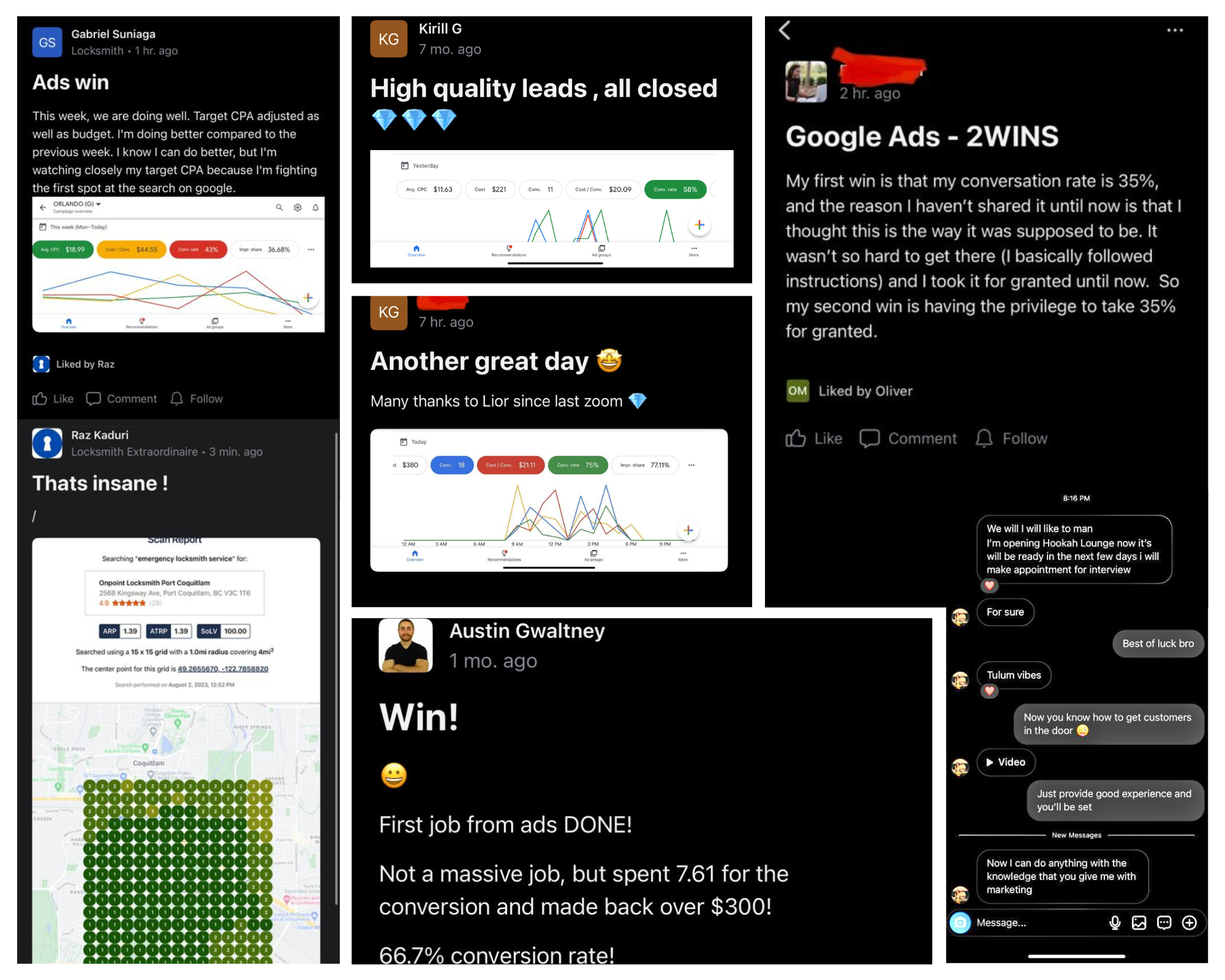
With a bit of guidance, you can bring this in-house and own the whole thing — never depending on an agency again. That shift is the entire reason I built Local Service Mastery: owners shouldn’t have to rent back control of their own marketing. And it applies to everything, not just local SEO basics — the same ownership model works for Google Ads management for contractors too.
If you run a local service business and want us to find what’s leaking in your marketing — free audit, link below. Worst case, you find out your marketing is actually being looked after. Best case, you find out exactly what’s been missed and fix it before it costs you another year of calls.