 Local Service Mastery
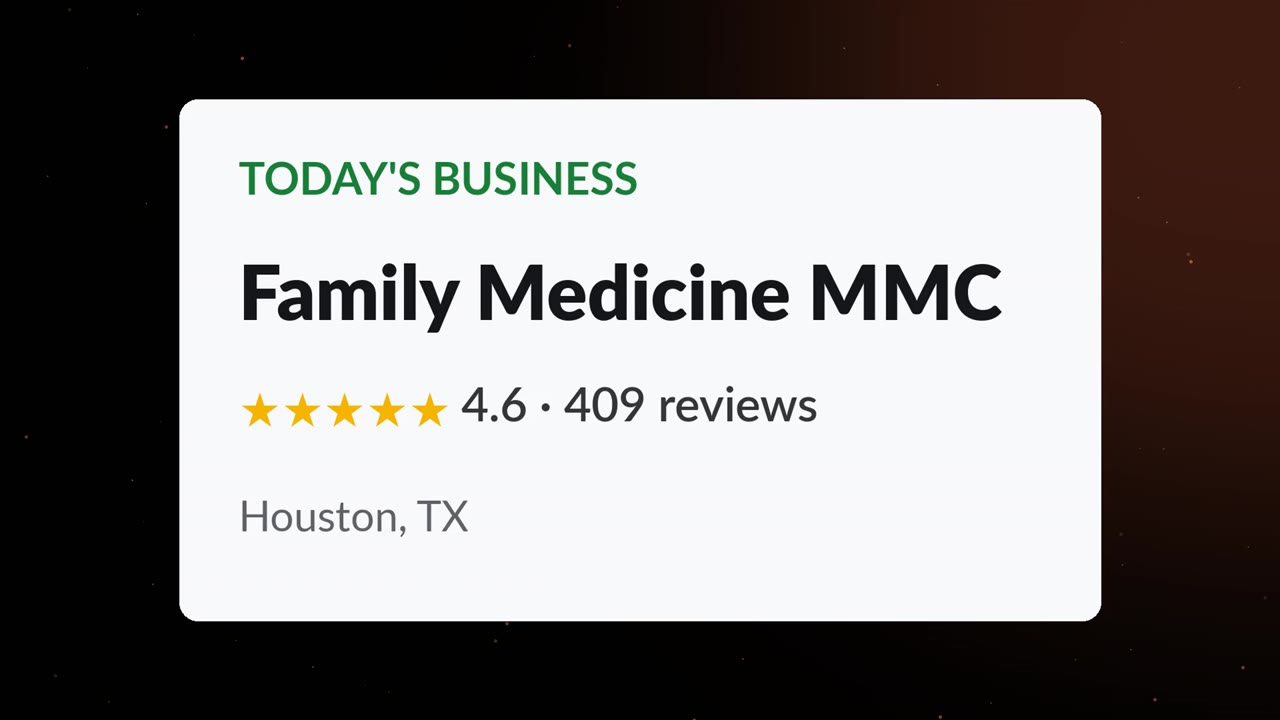
Some businesses have the hard part figured out. Family Medicine MMC has 409 reviews and a 4.6-star average. You can’t fake that. Patients trust these people, and nothing in this breakdown is about the care they give.
It’s about the online marketing setup wrapped around that reputation. And right now, that setup is quietly leaking patients. I see the same pattern in plenty of local service businesses, not just clinics. Great work, great reviews, and a website and ad setup that undersells all of it.
| Finding | What the audit found | Why it matters |
|---|---|---|
| Slow mobile site (46/100 Google PageSpeed) | Google PageSpeed mobile performance score 46/100, LCP 17.7 s. | Homeowners on phones bounce before the page loads — paid clicks included. |
| No click-fraud protection (click here) detected alongside Google Ads | Site carries a Google Ads conversion tag, but no click-fraud protection script was found in the page source. | Competitors and bots clicking ads burns budget with zero leads — typically 10-20% of local-service ad spend. |
| No contact form on the homepage | Zero <form> elements found in the page source | Anyone who isn’t ready to call has no way to reach you. That’s the entire after-hours and comparison-shopping audience gone. |
| No video content on the homepage | No YouTube/Vimeo/Wistia embed found in the page source. | Video builds trust fastest and keeps visitors on the page longer — a homepage with zero video is a missed, low-cost opportunity. |
| No service+city pages | No internal links matching a service-in-city URL pattern | People search “emergency plumber in <city>”, not “Family Medicine MMC”. With one generic services page there’s nothing for Google to rank against those searches, and paid clicks land somewhere too generic to convert. |
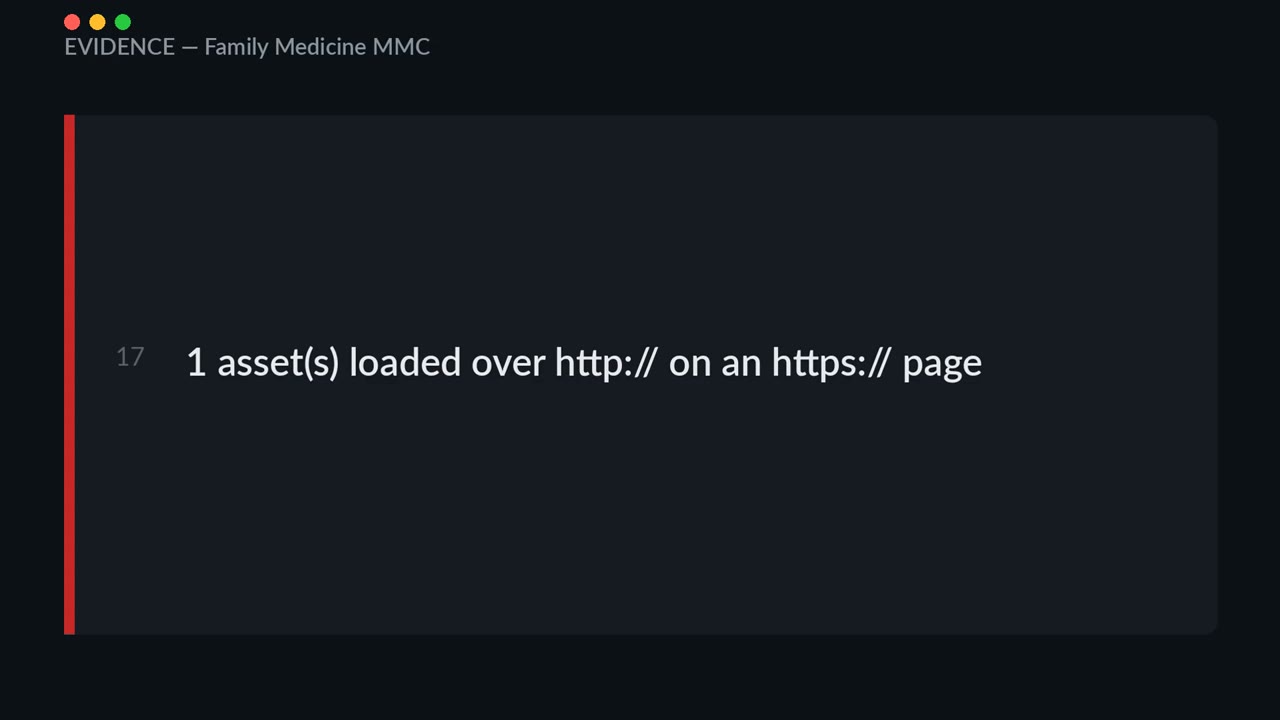
| Insecure content on a secure page (1 resources) | 1 asset(s) loaded over http:// on an https:// page | Mixed content triggers browser security warnings and can silently block images or scripts from loading at all. |
| Multiple H1 tags on the homepage (2) | 2 <h1> tags found in the page source. | Multiple H1s dilute the page’s main topic signal instead of reinforcing one clear keyword focus. |
The biggest leak: a home page that takes 17.7 seconds to load
We ran their home page through Google’s own speed test. On mobile, it scored 46 out of 100. The main content took 17.7 seconds to load.
Picture the real situation. Someone feels sick. They’re on the couch with their phone. They tap the link and they wait. Close to 18 seconds. Most people are gone in three or four. They’ve already hit the back button and clicked the next clinic.
Here’s why this worries me most. If you’re paying for that click through Google Ads, you paid for a visitor who never even saw the page. You bought the click, and the page threw it away. That’s not a small leak. It sits right at the front door of everything else you do.
Paid ads are running, but no click fraud protection
Their site carries a Google Ads conversion tag. That tells me paid ads are in the picture. But I couldn’t find any click fraud protection software on the page.
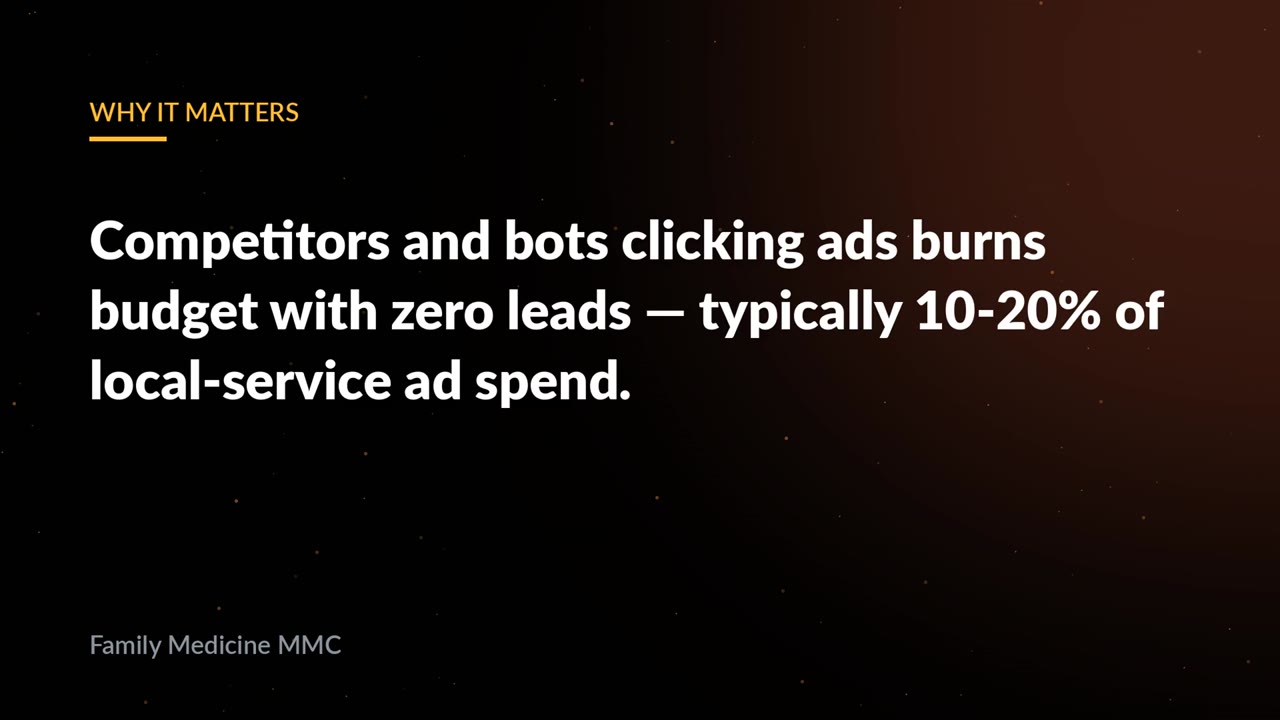
That’s the tool that blocks bots and competitors from clicking your ads over and over. Every junk click costs real budget, and it never turns into a single patient. If this were my account, that’s the first thing I’d lock down. Stack that on top of a slow page and you’re paying twice: once for clicks that aren’t real, and again for real clicks that leave before the page loads. Add call tracking (click here) and you can also see which of those clicks turn into actual phone calls.
This applies to any service business running ads. If you’re paying per click, make sure the click is real and the page loads fast enough for the visitor to see it.
No contact form on the home page
I went looking for a contact form on the home page and found zero. Not one.
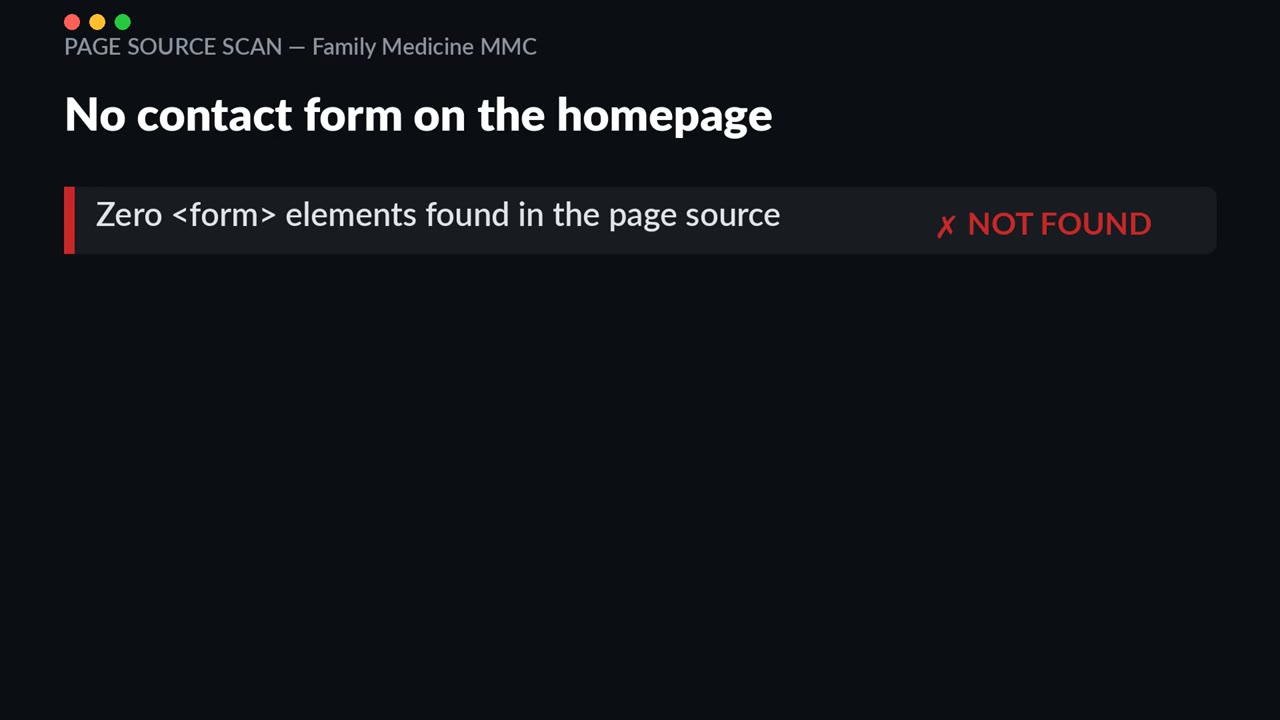
Think about the person browsing at 11 at night, comparing three clinics before they decide. They’re not ready to call yet. They might just want to leave their name. A simple form on the home page is the lowest-pressure way for that crowd to raise their hand. Without one, they’re more likely to move on to a competitor who made it easy.
The lesson goes beyond clinics. Not everyone who visits your site wants to pick up the phone. Give the quieter buyers a way in.
No video anywhere on the page
There’s also no video on the home page. No embed at all. I’d call this an opportunity more than a problem.
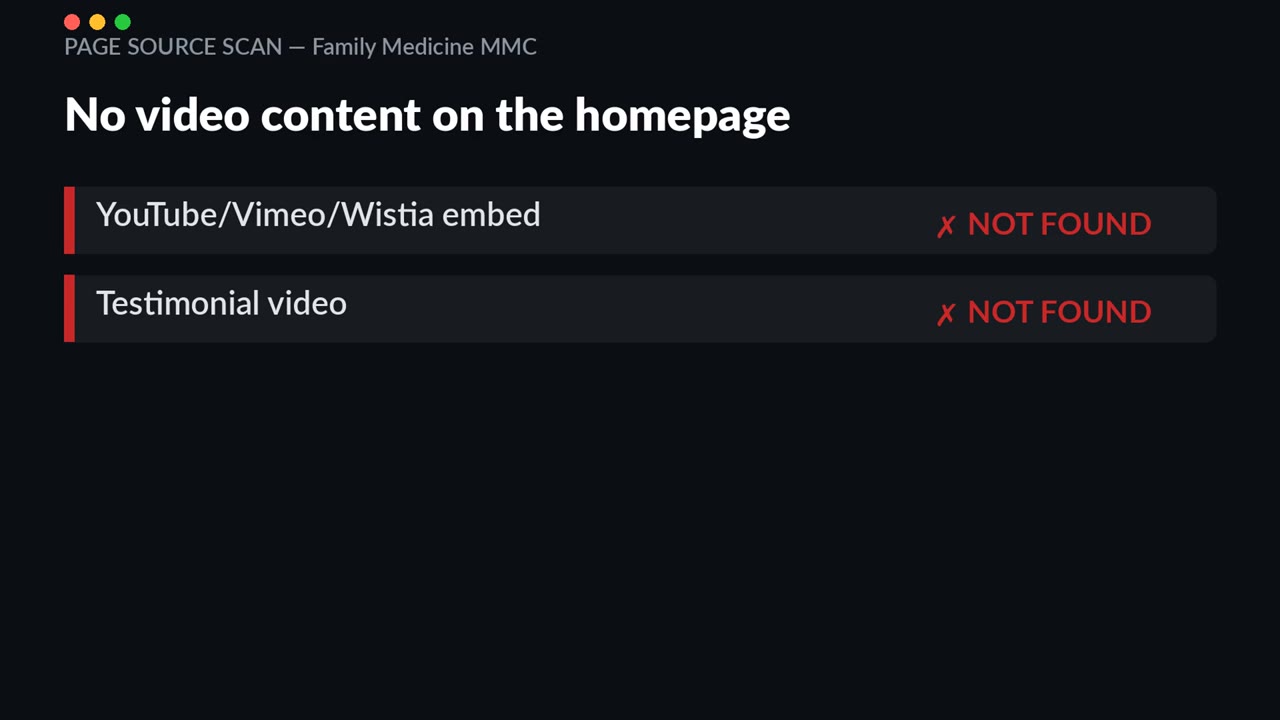
A short welcome video, with the doctor saying hello, or a quick office tour, builds trust faster than any paragraph of text. It also keeps people on the page longer. For a clinic with a reputation this good, that’s a cheap, easy win they’re leaving on the table. Your reviews say you’re trusted. A face and a voice let the visitor feel it in seconds.
No pages built around a service in a specific city
Here’s a bigger one.family doctor near me or walk-in clinic plus their city.
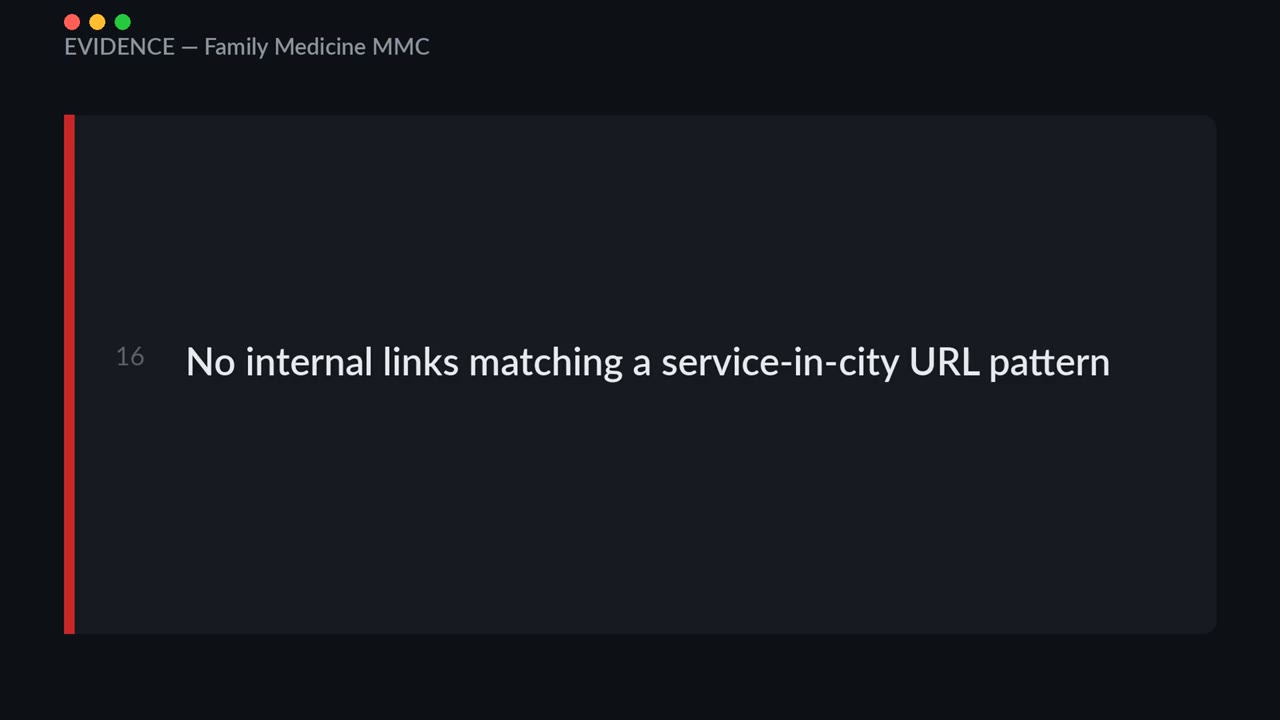
I didn’t find any pages on their site built around a service in a specific city. The service pages don’t have the city in them. So nothing is aimed at those searches, and Google has very little to rank. On the paid side it’s the same story: any paid click lands on a page too generic to convert.
Local search rewards specificity. A page that clearly says what you do and where you do it gives Google something to rank and gives the visitor a reason to stay.
Two quick technical problems
Mixed content on a secure site
One file on the page loads over an insecure connection on an otherwise secure site. That mixed content can trigger a browser security warning or silently stop images from loading. Either one makes a trusted clinic look sloppy.
Two H1 tags on the home page
There are two main headlines, two H1 tags, when there should be one. That splits the signal to Google about what the page is about. Instead of reinforcing one clear topic, the page sends mixed messages.
Why basics like these get missed
Every one of these is basic: speed, click protection, a contact form, clean page structure. This is the stuff any competent home service marketing agency should catch in week one.

When they get missed, it’s usually because agencies collect a monthly retainer while junior staff juggle 80 accounts, and nobody ever actually opens the hood. You keep paying, and the leaks keep running. That’s not unique to one clinic. It’s how a lot of agency relationships work.
What most owners don’t know yet
With AI, these exact fixes can now run almost automatically. With a little guidance, you can take this in-house, own your marketing yourself, and stop depending on an agency to notice. The speed problem, the missing form, the page structure and the city-specific pages are all fixable without a big retainer. The owner just has to know what to look for.

That’s exactly what we teach at Local Service Mastery: how to run lead generation yourself instead of hoping someone else is watching your account.