 Local Service Mastery
Some roofing companies have the hardest thing to earn already locked in. Customers love them. In this breakdown I looked at Buck Roofing, and right out of the gate I have to tip my hat: 216 reviews with a perfect five-star rating. That is really hard to do. The work is clearly great.
So let me be clear. Everything below is about the marketing setup behind that reputation, not the roofing. And that is the point. A great reputation can carry a business a long way. But when the marketing underneath is full of holes, you are leaving jobs on the table every single week.
| Finding | What the audit found | Why it matters |
|---|---|---|
| Site looks abandoned — copyright still says 2024 | Footer copyright reads 2024; current year is 2026 | It is the first thing a careful customer checks to see if you are still in business. A stale year quietly tells them the site — and maybe the company — is neglected. |
| No contact form on the homepage | Zero <form> elements found in the page source | Anyone who isn’t ready to call has no way to reach you. That’s the entire after-hours and comparison-shopping audience gone. |
| No analytics detected | No GA4/Google Tag Manager script found in the page source. | No way to know which marketing produces leads and which burns money. |
| No paid-ads tracking detected at all | No Google Ads conversion tag, no Meta pixel in the page source. | Either no paid acquisition, or ads running blind with no conversion measurement. |
| No LocalBusiness structured data | No JSON-LD structured data at all | Structured data is how Google reads your hours, service area, phone and rating. Without it Google guesses — and competitors who publish it get the rich result instead. |
| No video content on the homepage | No YouTube/Vimeo/Wistia embed found in the page source. | Video builds trust fastest and keeps visitors on the page longer — a homepage with zero video is a missed, low-cost opportunity. |
| No Facebook/Meta pixel detected | No fbq(‘init’) / connect.facebook.net script found in the page source. | Without a pixel, there’s no way to retarget people who already visited the site — one of the cheapest ad channels available goes unused. |
The smallest thing that does the most damage: a stale copyright year
I started with the footer. The copyright still says 2024, and we are in 2026. It looks trivial. It is not.
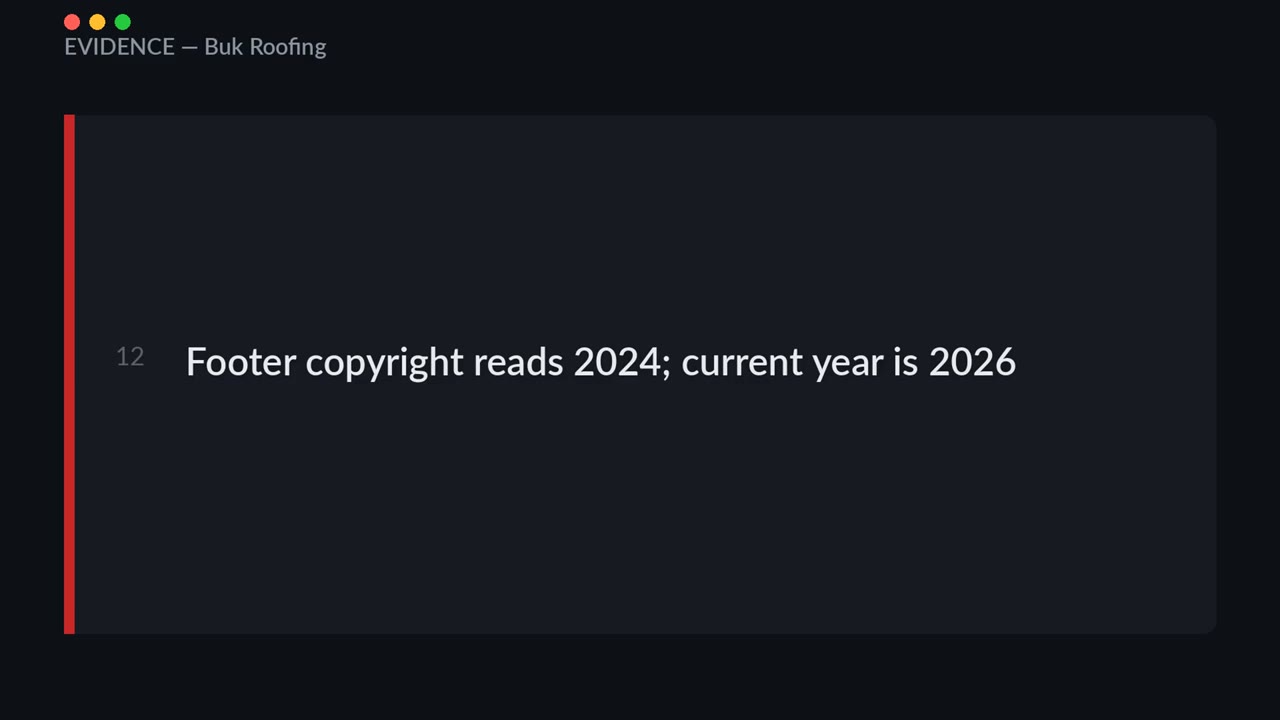
Think about who is on your website. Someone about to spend thousands of dollars on a roof. That person is careful. One of the quick checks they run is whether you are still in business, and an outdated year in the footer answers that question the wrong way. It quietly tells them the site is neglected. They do not email you to ask. They just bounce to the next guy.
The company is thriving. The site says otherwise. That mismatch costs trust, and it takes about a minute to fix.
No contact form means no way to reach you after hours
Next I looked for a contact form on the homepage. There is not a single form on the page.
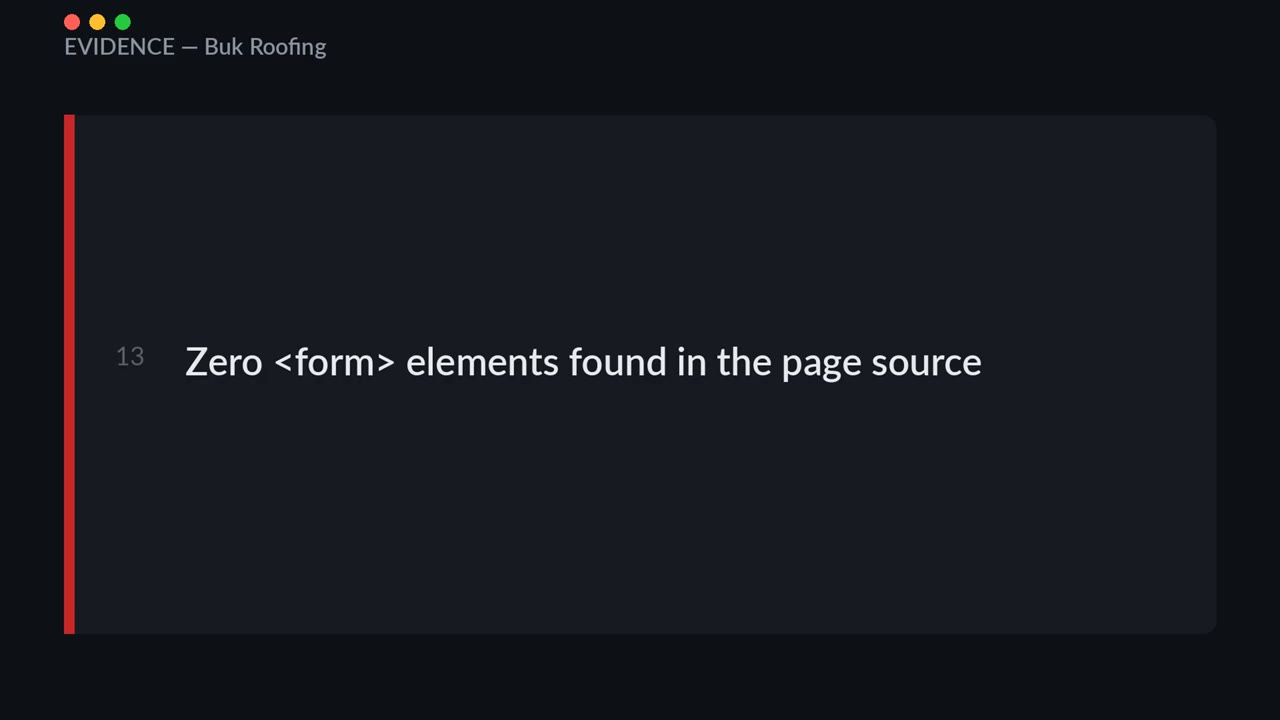
Picture a homeowner browsing roofers at 11 p.m. They are not going to call. It is too late and they know nobody will pick up. With no form, that entire after-hours, comparison-shopping crowd has no way to reach you. They do not wait until morning. They fill out the form on a competitor’s site instead.
A roof is a considered purchase. People research it, compare options and often do it at night. If your site only works for people ready to pick up the phone right now, you are filtering out a big chunk of real buyers.
No analytics: you are flying blind
Then I went looking for analytics, the software that tells you where your leads come from. I found none. No analytics at all.
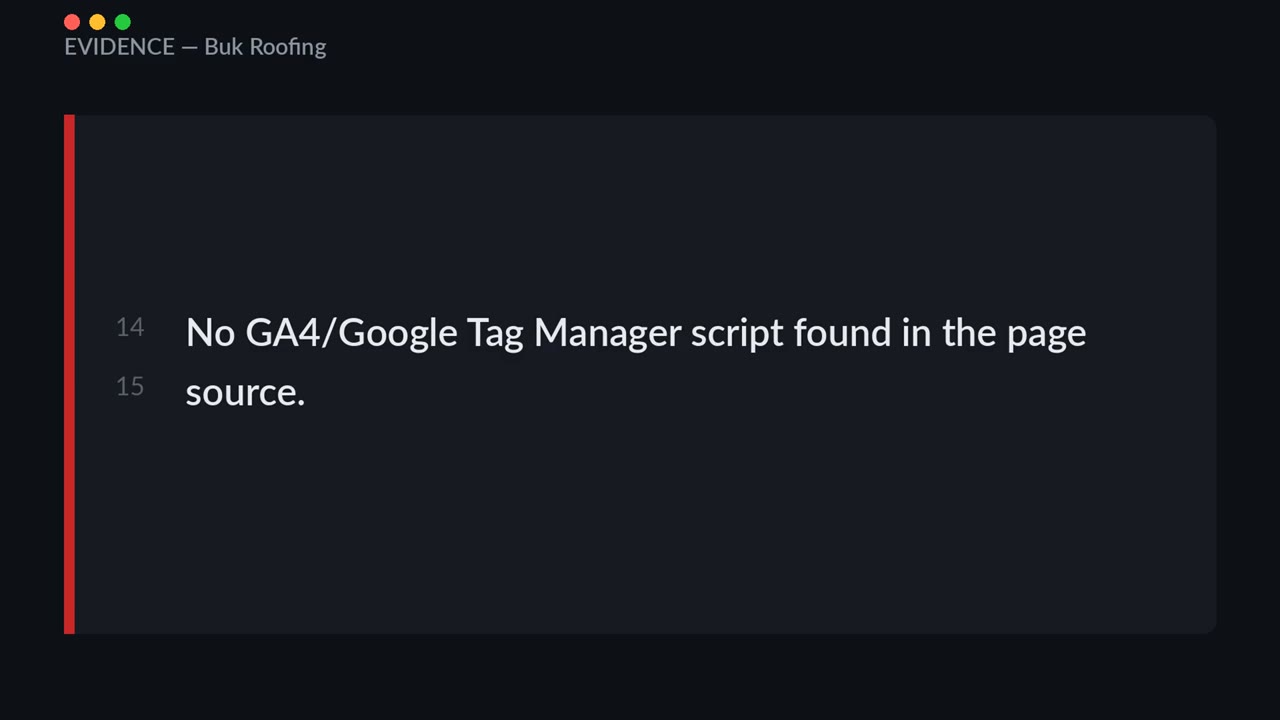
That means there is no way to know which marketing is producing jobs and which is just burning money. Is it the website, the reviews, an ad, a referral? You cannot tell. Every marketing decision becomes a guess, and guesses get expensive.
Ad tracking is missing too
It goes deeper. I checked for ad tracking and found no Google Ads conversion tag and no retargeting pixel anywhere in the code. If any money is being spent on ads, it is running completely blind. You cannot tell which clicks turned into calls or form fills, so you cannot cut the losers or scale the winners. Call tracking software (click here) closes that gap by tying every phone call back to the ad or page that produced it.
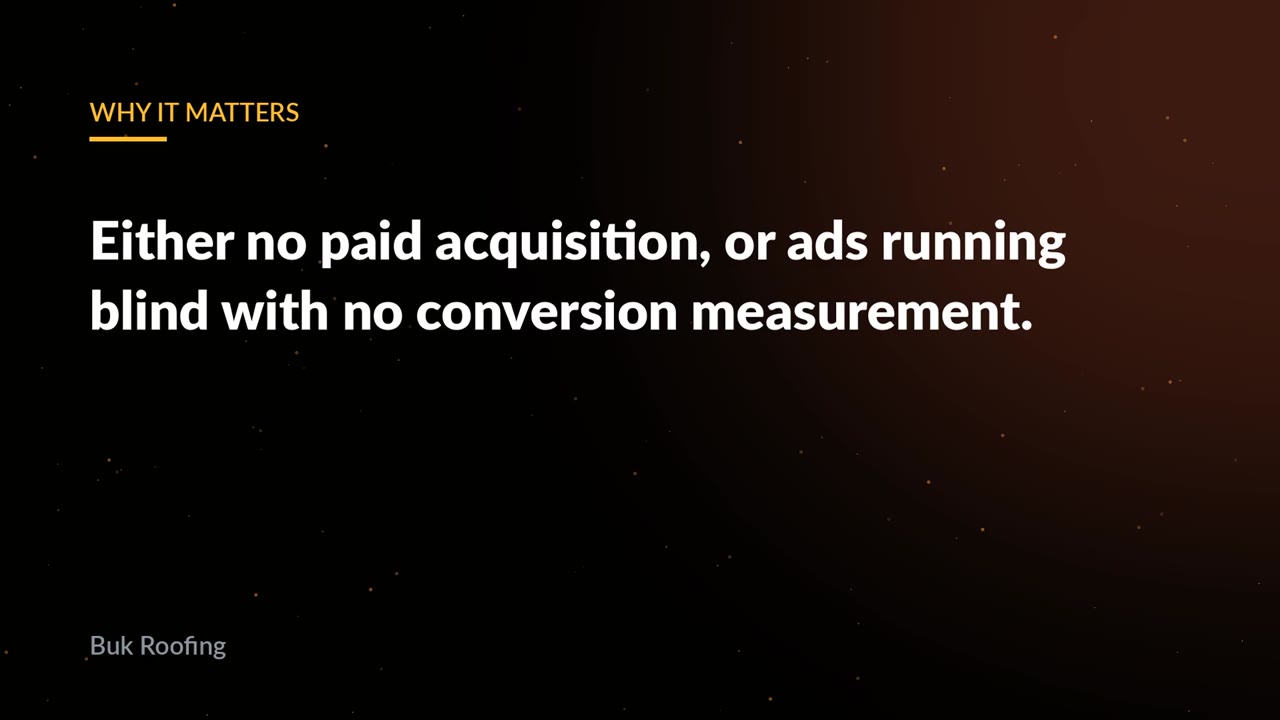
The missing pixel costs you twice. It is also what lets you show ads again to people who already visited your site. That is one of the cheapest ad channels there is, and right now it is sitting unused. Someone checks out your roofing site, gets distracted, and you have no way to put your name back in front of them. And once ads are running, click fraud protection software (click here) keeps competitors and bots from quietly burning through the budget.
If you are paying for ads and cannot say which ones produce booked jobs, you do not have a marketing strategy. You have a budget leak.
No structured data: Google has to guess
Here is a technical one that matters more than it sounds. I found no structured data on the site. That is the hidden code that hands Google your hours, your service area, your phone number and your rating on a plate.
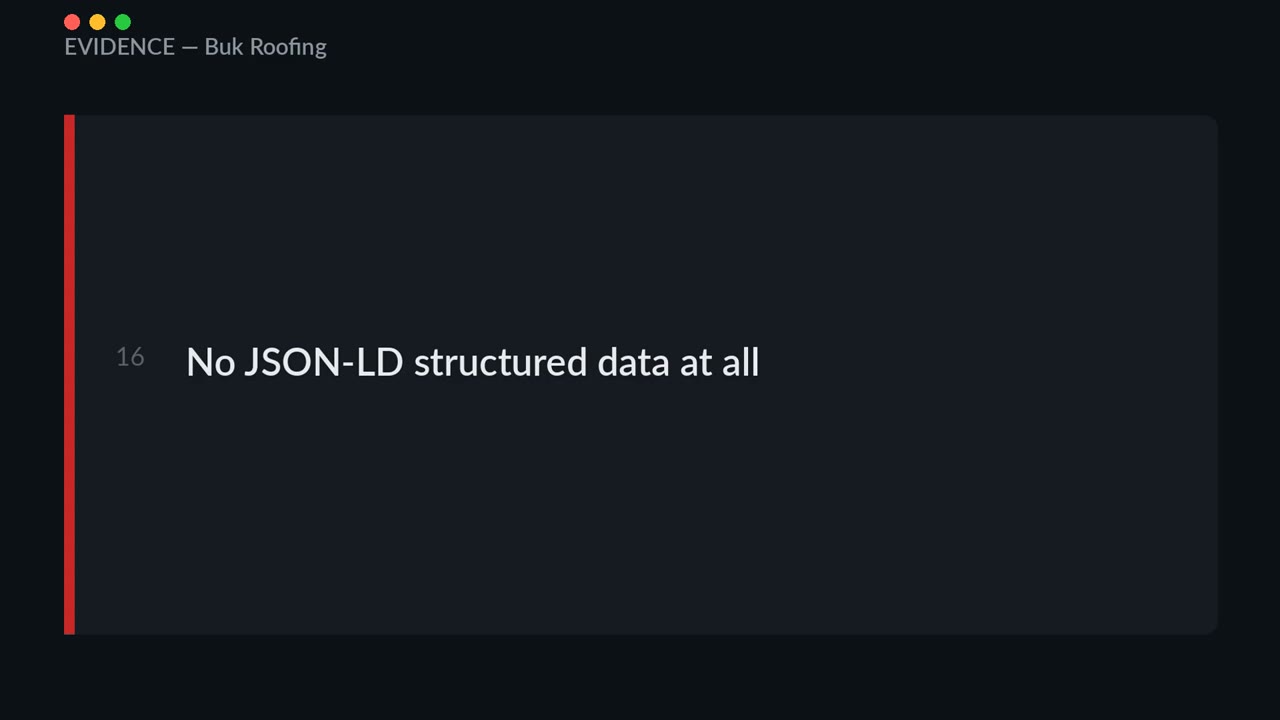
Without it, Google has to guess. And the competitor down the road who does publish it can get the fancy search result instead of you. This business has 216 five-star reviews, which is exactly the kind of asset that should show up in search. Structured data is how you make sure Google actually has the information to present it properly.
No video on the homepage
One more that is cheap to fix. There is no video anywhere on the homepage.
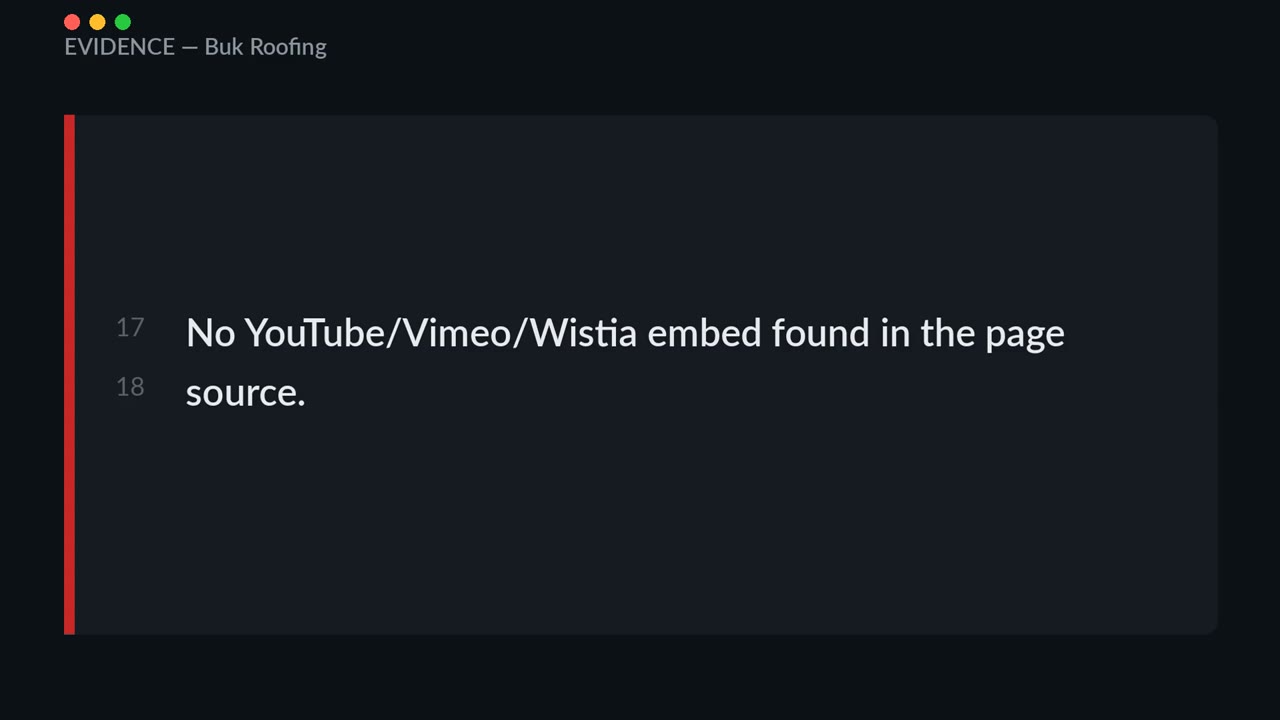
For a roofer, a short clip of the crew on a job, or the owner explaining what to expect, builds trust faster than any paragraph can. It also keeps people on the page longer. Right now that spot is empty. You are asking a stranger to trust you with their roof using nothing but text.
Why this stuff gets missed
Every one of these items is basic: ad tracking, a contact form, structured data. This is first-week stuff that any competent marketer should catch.

When it gets missed, it is usually because of how the traditional model works. Agencies collect the monthly retainer while junior staff juggle 80 accounts, and nobody actually opens the hood. Nobody checks the footer, the code or the tracking. The retainer keeps getting paid either way. If you have ever wondered what your home service marketing agency is actually doing each month, this is the kind of thing you should be asking about.
Great reviews build the reputation. A solid marketing foundation turns that reputation into booked jobs.
The fix: take control and run it in-house with AI
Here is what most owners do not know yet. With AI, these exact fixes can now run automatically. With a little guidance, you can take control, run this in-house, and own your marketing instead of renting it forever.

That is the whole idea behind what we do at Local Service Mastery. Owners should not need to depend on someone who never opens the hood. You should be able to see what is working, fix what is leaking, and keep the results.
Your own quick audit checklist

- Footer: is the copyright year current?
- Homepage form: can someone leave their name and details at 11 p.m.?
- Analytics: do you know where your leads come from?
- Ad tracking: is a conversion tag and a retargeting pixel installed?
- Structured data: does Google get your hours, service area, phone and rating directly?
- Video: is there a short clip of your crew or you on the homepage?
If you can not tick every box, you have found your first-week to-do list. Doing it well is the foundation of lead generation for contractors that you actually control.