 Local Service Mastery
“Is it okay to send my Local Service Ads calls to an AI phone agent when I miss them?” A home service owner asked me exactly that on one of our weekly group calls, and if you run a plumbing company or any other home service business, it is probably on your mind too.
I’m Lior Vaknin. I’ve spent 15 years running marketing for home service businesses, and every week I answer questions like this one live with our members. Below are five rules for choosing an answering service for plumbers and other trades, and the fifth one decides whether a backup helps you or hurts you, so read all the way to the end.
Asked on our weekly group call: “Is it okay to send my Local Service Ads calls to an AI phone agent when I miss them?”
Short answer: yes to a backup, but make the AI your last line, not your first. The best backup is a live human or a 24/7 dispatch that picks up within about 5 seconds. A dropped call hurts you with Google, so an AI that answers still beats a missed call.
How Local Service Ads decides who shows up first
Before the rules, you need to know why this matters. Google orders profiles in an auction, and it describes the process like this: “The auction is the process Local Services Ads uses to order profiles for a given search, taking into account bid and overall profile quality.” (Google Local Services Ads help)
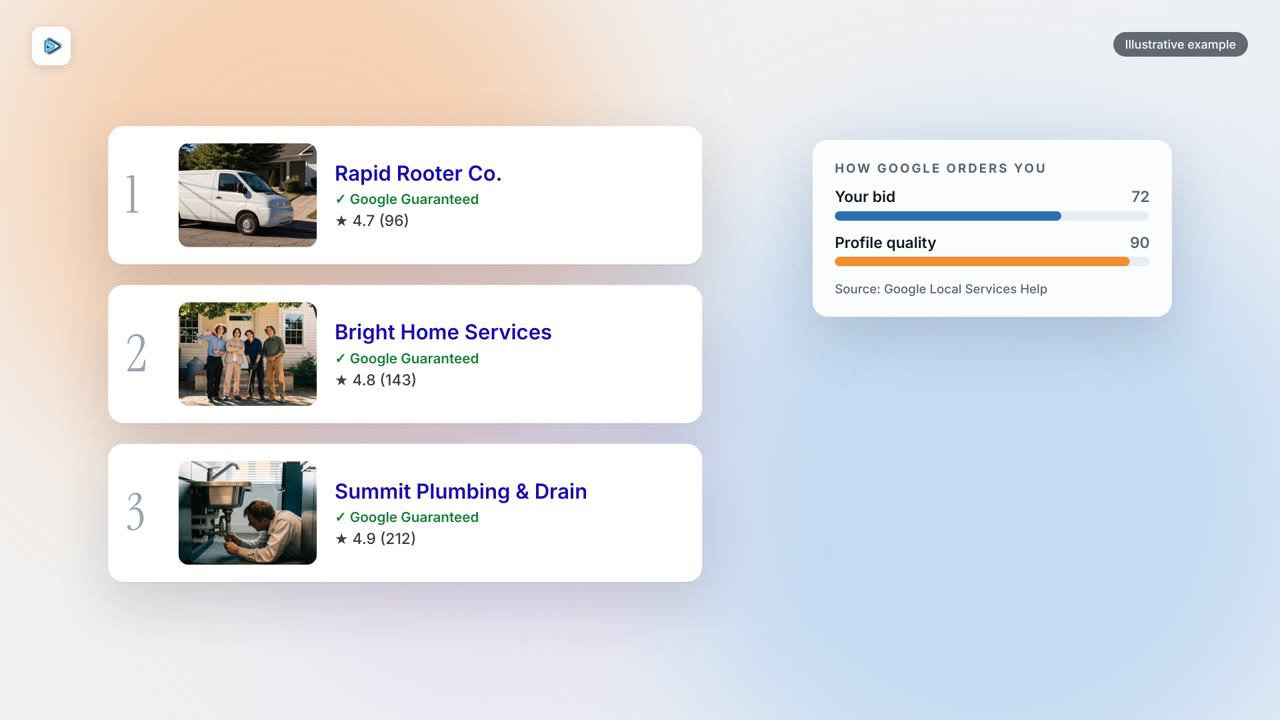
Profile quality is more than reviews. Google lists “Your rating, number of reviews, average response time” along with your images and the verification checks you have completed. Average response time sits right next to your ratings and reviews, which means how fast you answer is part of how you rank. So a question about missed calls is really a question about your ranking, and every rule below comes back to that.
Rule 1: Answer every call
This is the foundation. Google lists responsiveness as a factor in the auction and says plainly: “Your responsiveness to customer inquiries and requests: Missed calls may negatively affect your responsiveness.” (Google Local Services Ads help)
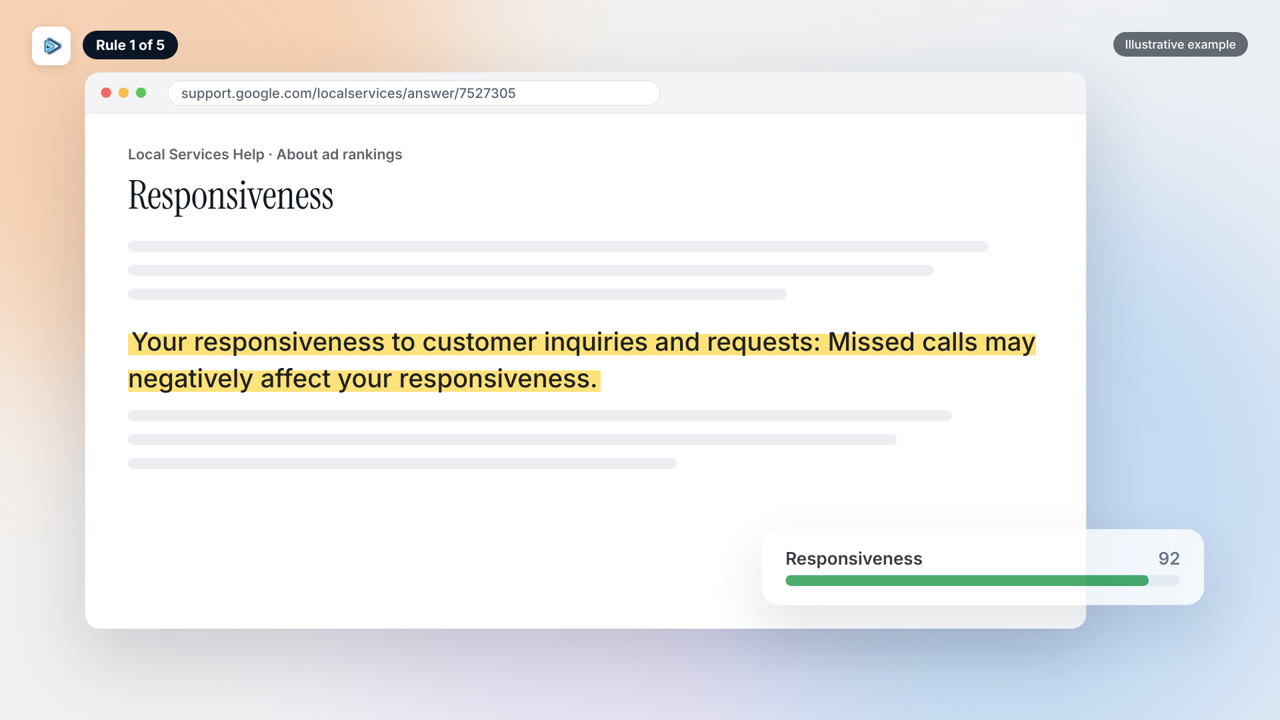
Google also says on its help page: “If you regularly fail to answer calls or respond to messages, your ad ranking may be affected.” (Google Local Services Ads help)
Google even points out that “Enabling message and/or booking leads means there are more ways for customers to reach you, which can increase the likelihood of receiving a lead.” (Google Local Services Ads help) The message is consistent: you want more ways for customers to reach you, and you do not want calls going nowhere. You are going to miss calls sometimes, since you are on a roof or under a sink, so a backup has to exist before the next missed call happens.
Rule 2: What you pay
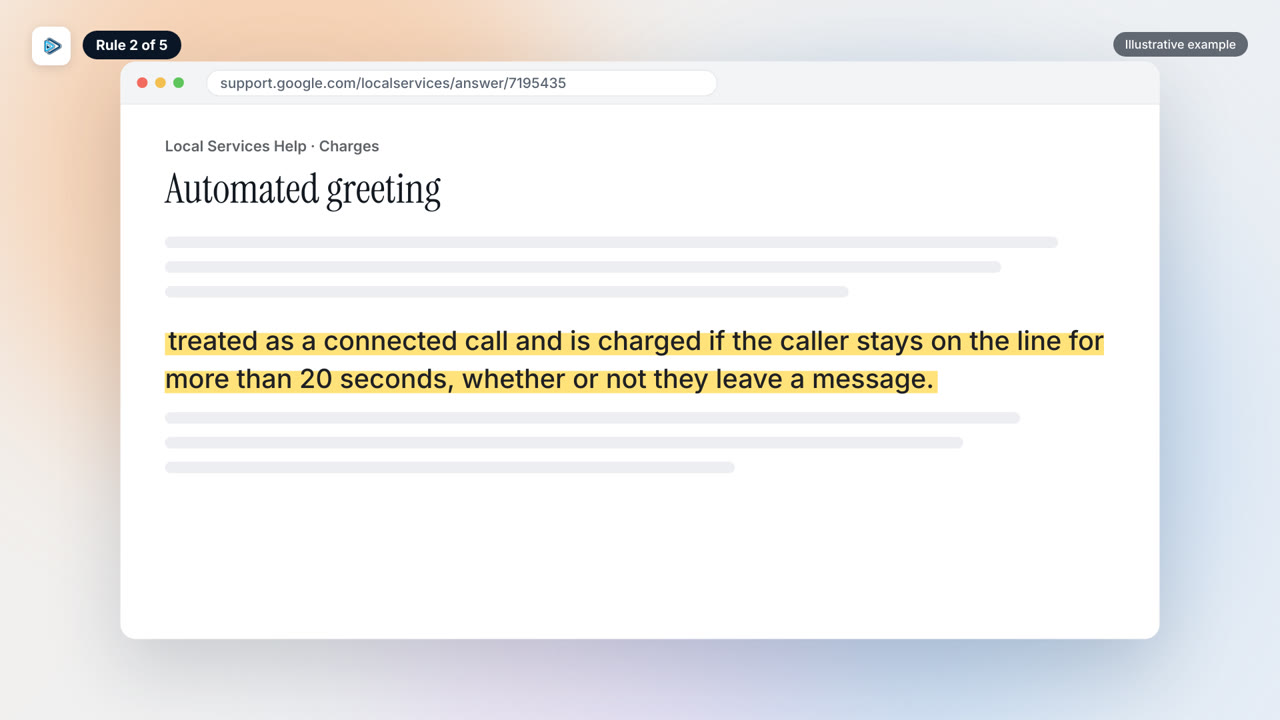
Here is the part many owners get wrong. An AI agent does not get you out of the bill. Google treats a call that goes to voicemail or an automated greeting during business hours as connected. In Google’s words, it is “treated as a connected call and is charged if the caller stays on the line for more than 20 seconds, whether or not they leave a message.” (Google Local Services Ads help) An AI agent that picks up is treated the same way.
A call you miss entirely can be billable too. Google lists this case: “You missed a phone call during your business hours and the customer stays on the line for more than 20 seconds.” (Google Local Services Ads help) So a missed call can cost you money and still not win you the job. That is why the backup you pick matters. You are paying for the call either way, so the real question is whether something useful happens on it.
Rule 3: Your forwarding number
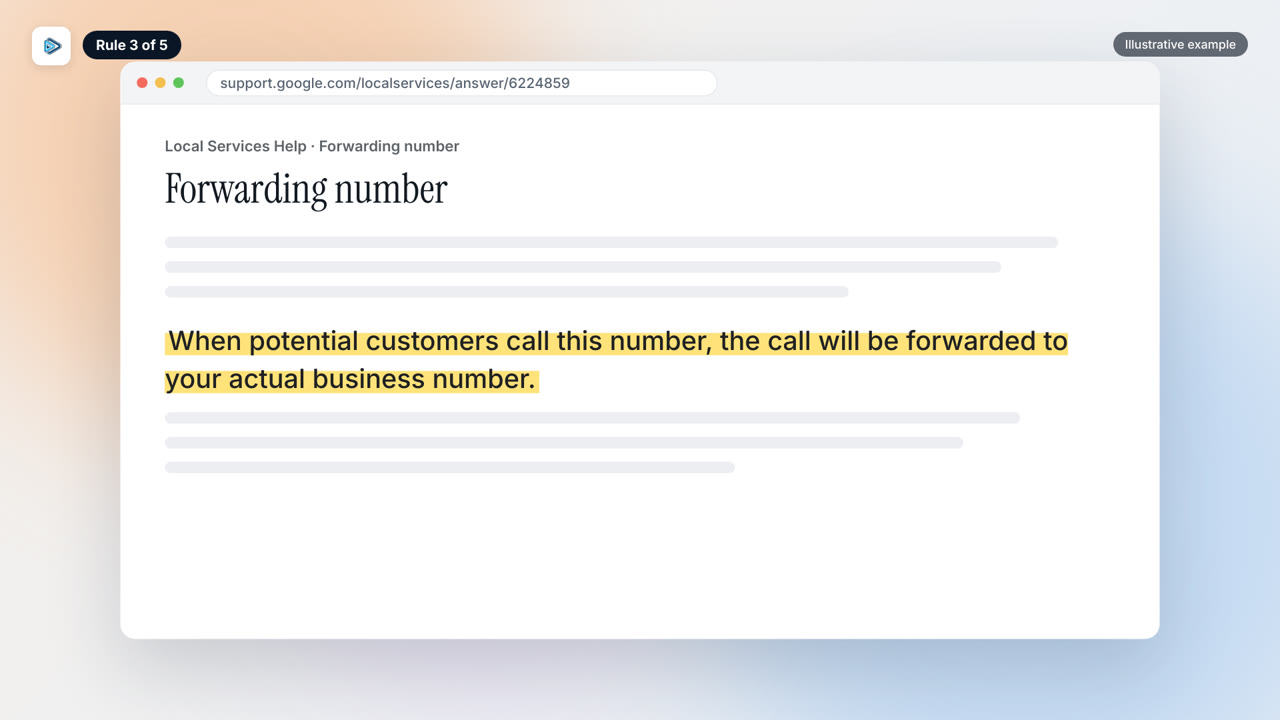
You need to understand where a backup actually sits. Customers do not dial your business number. They call a Google forwarding number, and Google passes the call along. Google says: “When potential customers call this number, the call will be forwarded to your actual business number.” (Google Local Services Ads help)
That means whatever answers behind your number, whether it is a person, a dispatch or an AI, is the voice of your business. If you set up LSA call forwarding to an answering service, that service is the first thing the customer hears from you.
There is one more detail. In the US and Canada, Google says that “all inbound calls from customers via the Google forwarding number are recorded by Google to improve quality and support policies and research.” (Google Local Services Ads help) So treat every handed off call as one Google can review, and only send it to something you would be comfortable having a customer hear.
Rule 4: AI as last resort
Now the AI agent itself, and I’ll be straight with you. I personally don’t think AI agents are good enough yet to hold a real exchange with a caller. Customers aren’t ready for it either. Someone with water on the floor wants a person who understands what is happening, not a script that tries to guess.
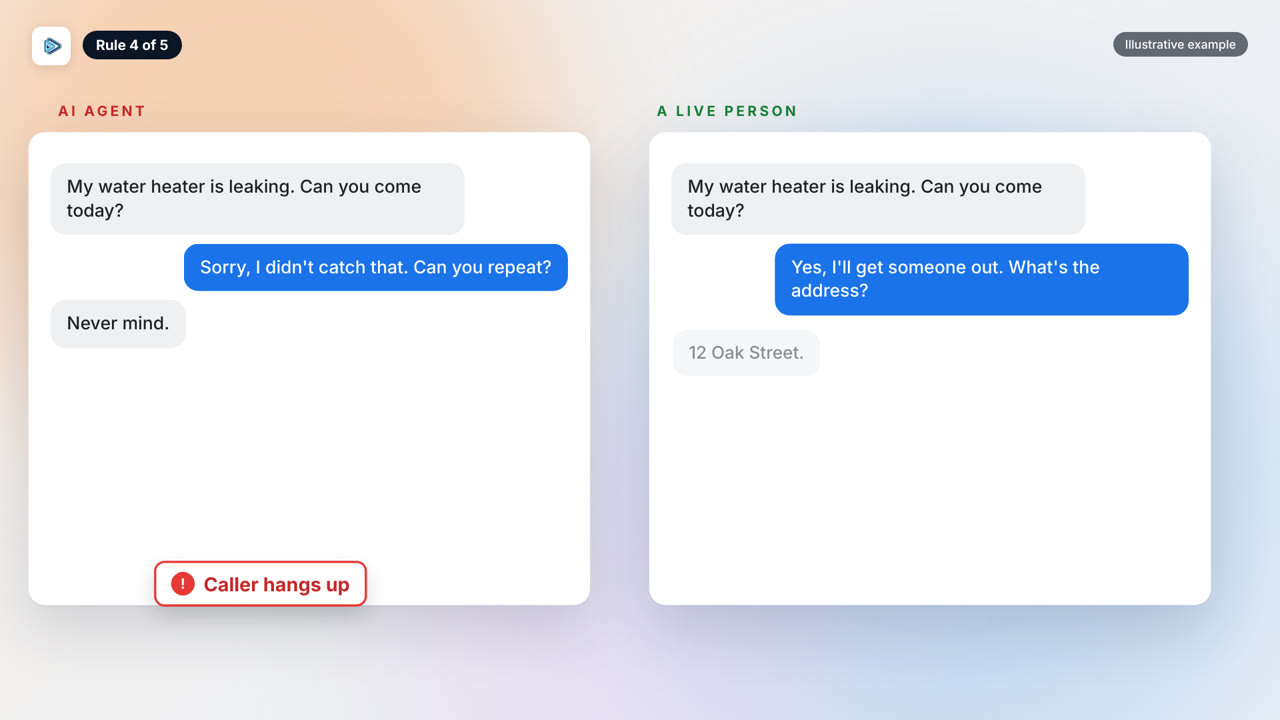
So if an AI phone agent for contractors picking up after a few rings is the only option you have, treat it as a last resort. It still beats a dropped call, because the goal is to not drop calls. Short calls hurt your standing with Google, and a caller who hangs up quickly is exactly the kind of call you want to avoid. An AI backup is better than silence, but it should not be the plan you are proud of.
Rule 5: A live human
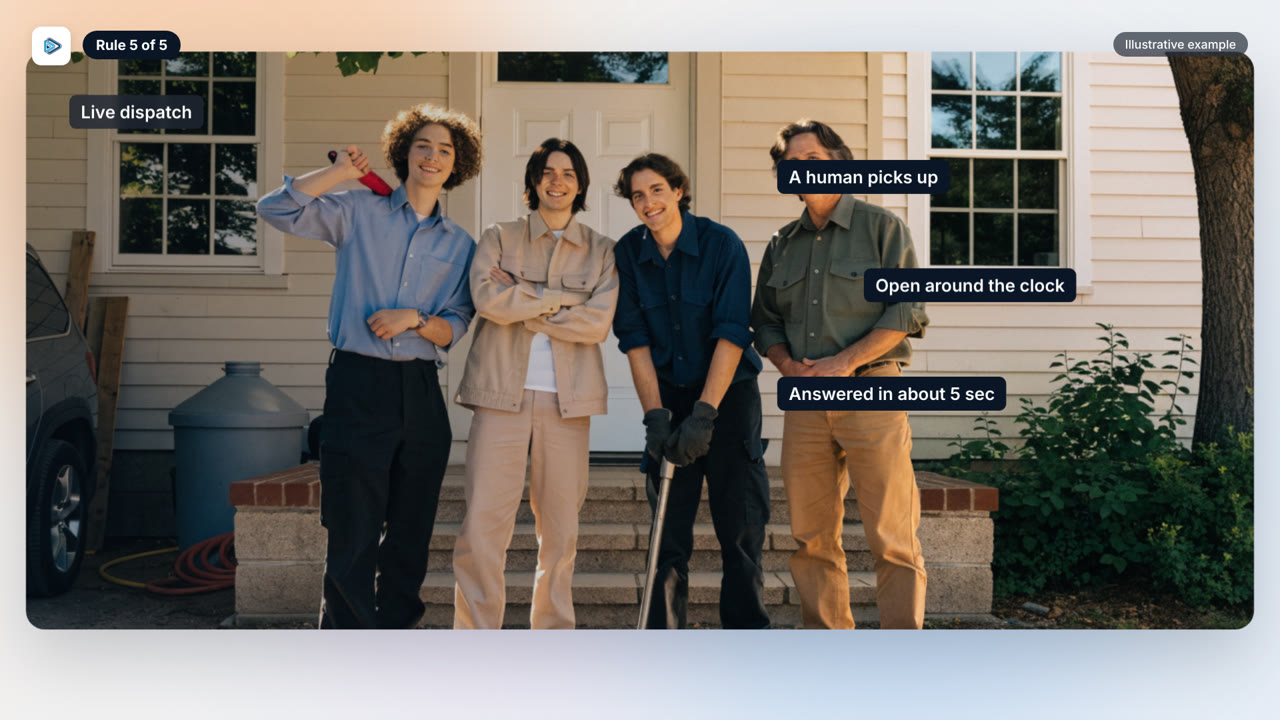
This is the rule I promised you, and it is the one that decides whether a backup helps or hurts. The best backup is a live human picking up, or a dispatch that works around the clock and answers every call within about 5 seconds. A real person can ask the right questions, calm the customer down and keep the call going, which is what keeps the caller on the line and the lead alive.
Google’s own guidance points the same way: “Answering potential leads quickly and consistently demonstrates reliability to both customers and Google. Improving your response rate can help improve your visibility.” (Google Business resources) A person on the line does exactly that, and does it at any hour.
So the answer to the question from our group call is yes to a backup, but build it in the right order. A live human or fast dispatch comes first, and the AI is your last line, not your first.