 Local Service Mastery
“I run a few different home service businesses. Should I market all of them at once or focus on just one?” A home service owner asked me exactly that on one of our weekly group calls, and if it sounds like your situation, this post is for you.
I’m Lior Vaknin. I’ve spent 15 years running marketing for home service businesses, and every week I answer questions like this one live with our members. Below are five rules for owners who run several businesses, and the last one is the one most owners get backwards when they split their attention.
Asked on our weekly group call: “I run a few different home service businesses. Should I market all of them at once or focus on just one?”
Short answer: Focus on one business until it is properly grown, and pick the one with the best potential to scale. Everything you learn about marketing carries over to your other businesses, but the campaigns still have to be run separately for each one.
How Google treats more than one business
Before the rules, you need to know how Google sees your businesses, because it shapes every decision below. Google’s guidelines say: “There should only be one profile per business, as this can cause problems with how your information displays on Google Maps and Search.” (Google Business Profile guidelines)
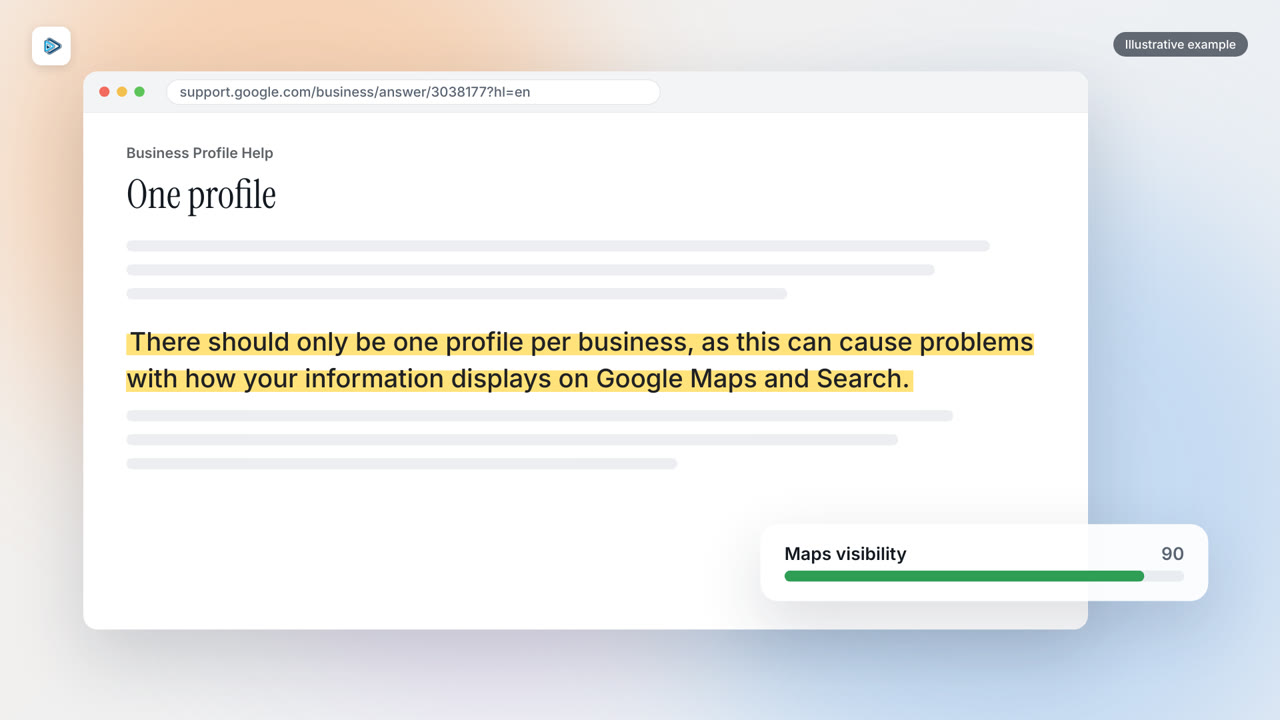
In plain terms, duplicate profiles for the same business can hurt how you show up on Maps. That is why the question of one brand or several matters so much. Every extra brand or profile you create is something you have to run properly, and something Google expects to be a real, separate business.
Rule 1: Focus on one
This is the hardest rule for owners who run a few businesses: stay focused on one of them until it is properly grown. It is tempting to push all of them forward at the same time, because each one feels like it deserves attention.
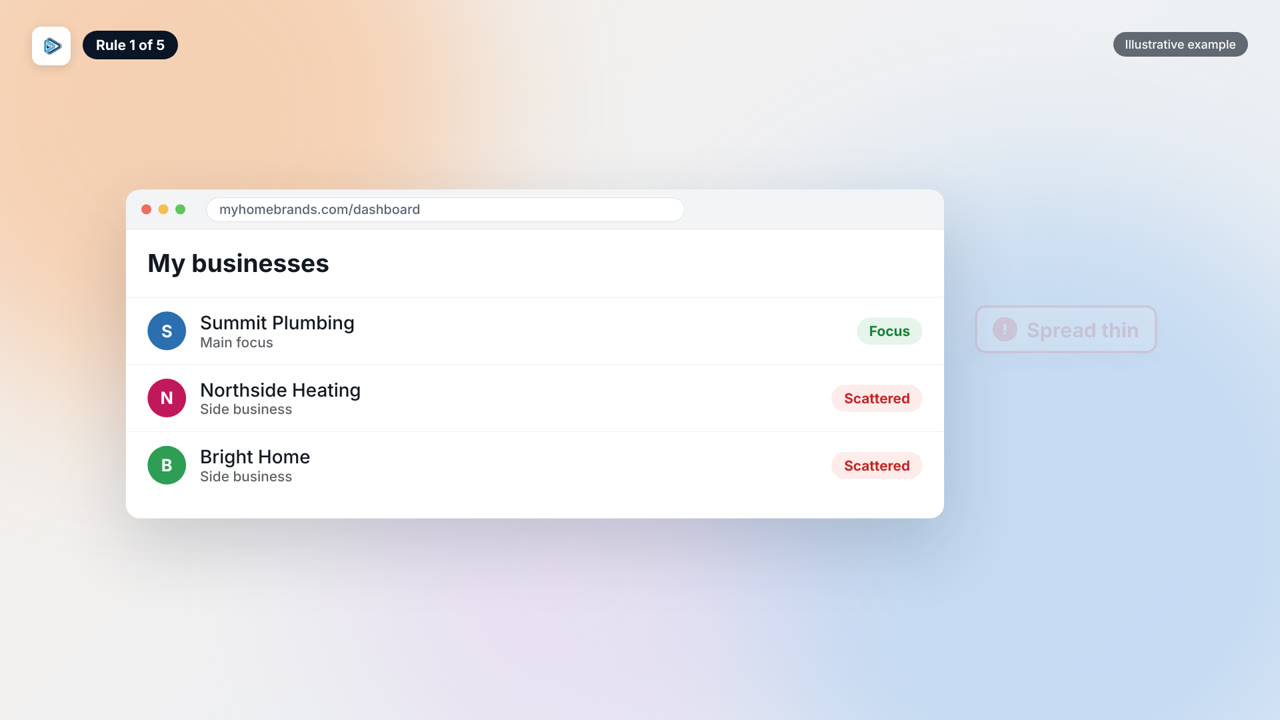
My rough benchmark is getting that one business to about $3 to $5 million a year. Until then, spreading yourself across several businesses means you end up all over the place. Your time, your budget and your attention get cut into pieces, and none of the businesses gets the full push it needs to break through.
Think about what a single business can do with your full focus. Better follow up, a tighter online presence, a stronger team around you. All of that takes time that you only have once. So the first move is a decision: choose one business and make it the priority until it is properly grown.
Rule 2: Pick your best bet
Which business should get the focus? Pick the one with the best potential to scale, even if another one is the one currently paying the bills.
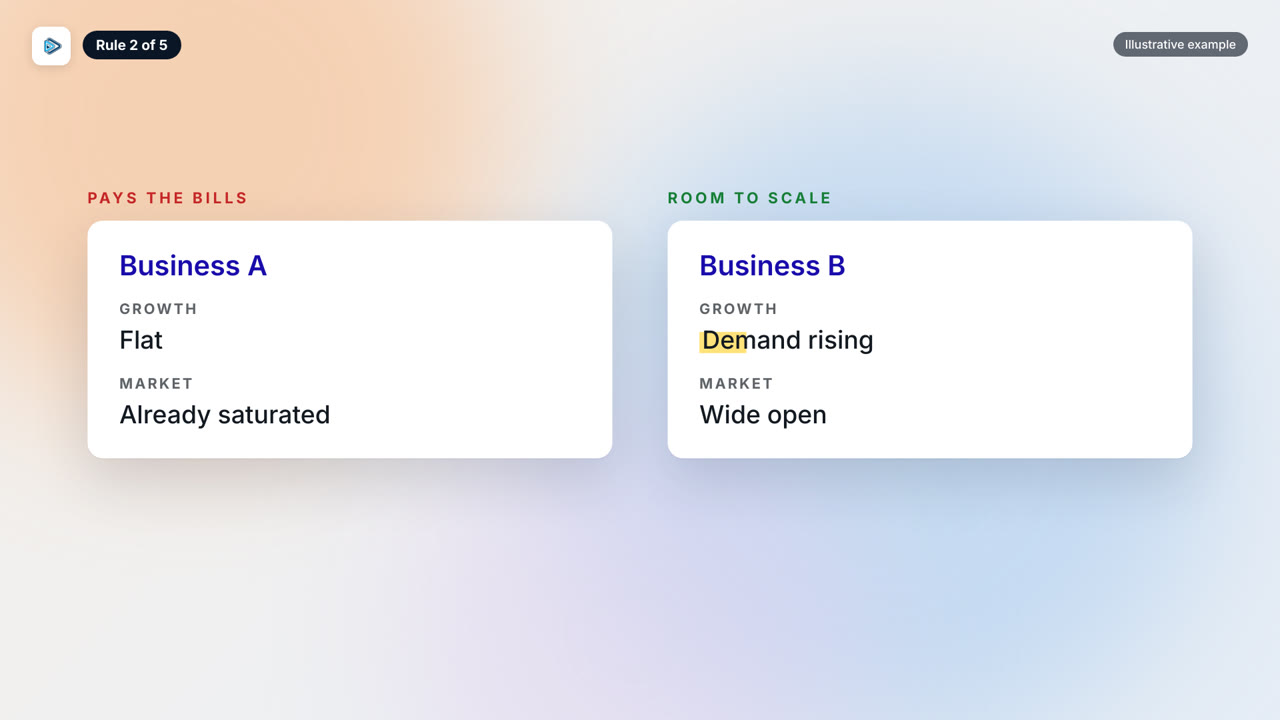
I know that feels risky. When one business covers your payroll and your personal income, putting your effort anywhere else seems like a gamble. But the business that pays the bills today is not always the one that changes your future. The one with room to scale is.
Ask yourself a few honest questions. Which business has the bigger market in your area? Which one could you imagine at several times its current size? Which one would you want to be running in five years? The answer to those questions usually points to your best bet. Put your marketing effort there, and let the other business keep doing what it already does while you build the one that can grow.
Rule 3: One brand, many cities
If you are expanding into new cities, run everything under one brand. It is simple, and you can expand across the whole country that way. Open more Google Business Profile locations under the same brand and the same business account, and build landing pages for each city you want to serve.
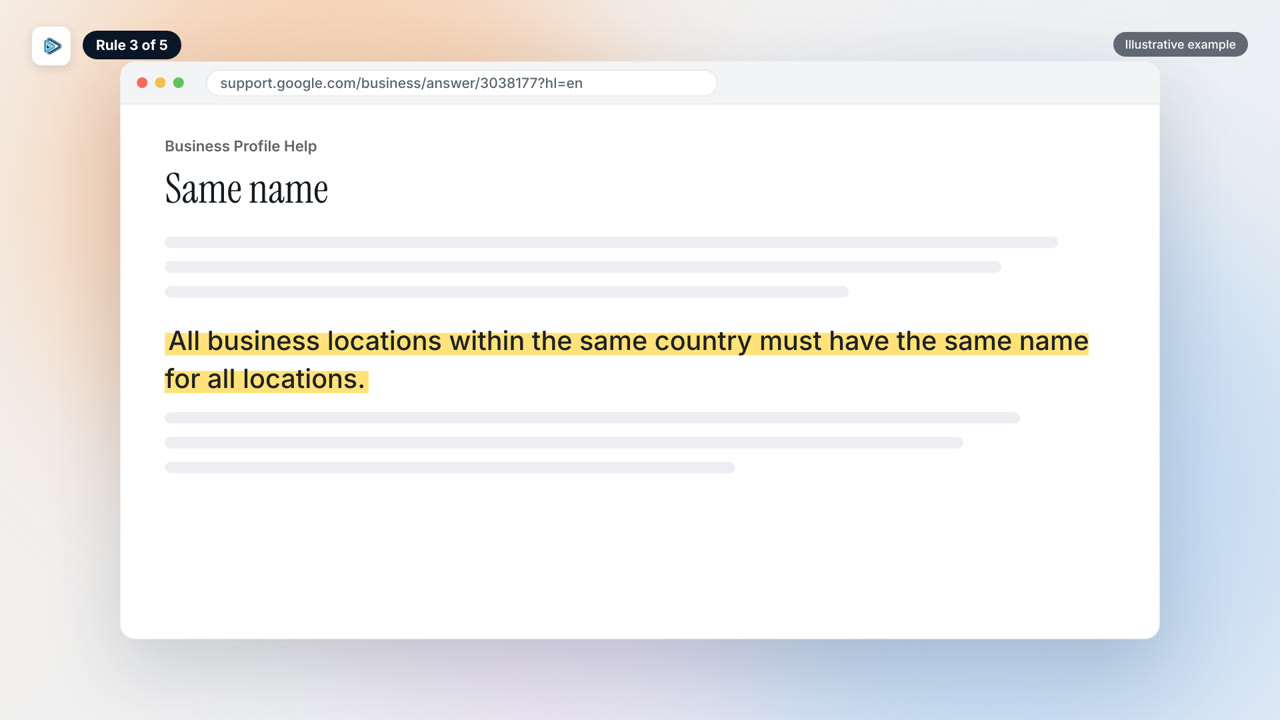
Google supports this approach. Its guidelines say: “All business locations within the same country must have the same name for all locations.” (Google Business Profile guidelines) Just know the limit: “If you have different locations for your service business, with separate service areas and separate staff at each location, you’re allowed one profile for each location.” Without that, one profile covers your whole service area.
Resist the urge to give every city its own website and Facebook page under a different name. Separate websites and Facebook pages for different brands turn into separate businesses and add complexity. Personally, I recommend running one brand and strengthening it.
Rule 4: Unrelated? Separate brand
Adding a second service line? First ask whether it is related to what you already do. If it is, like access control, it fits under the same brand.
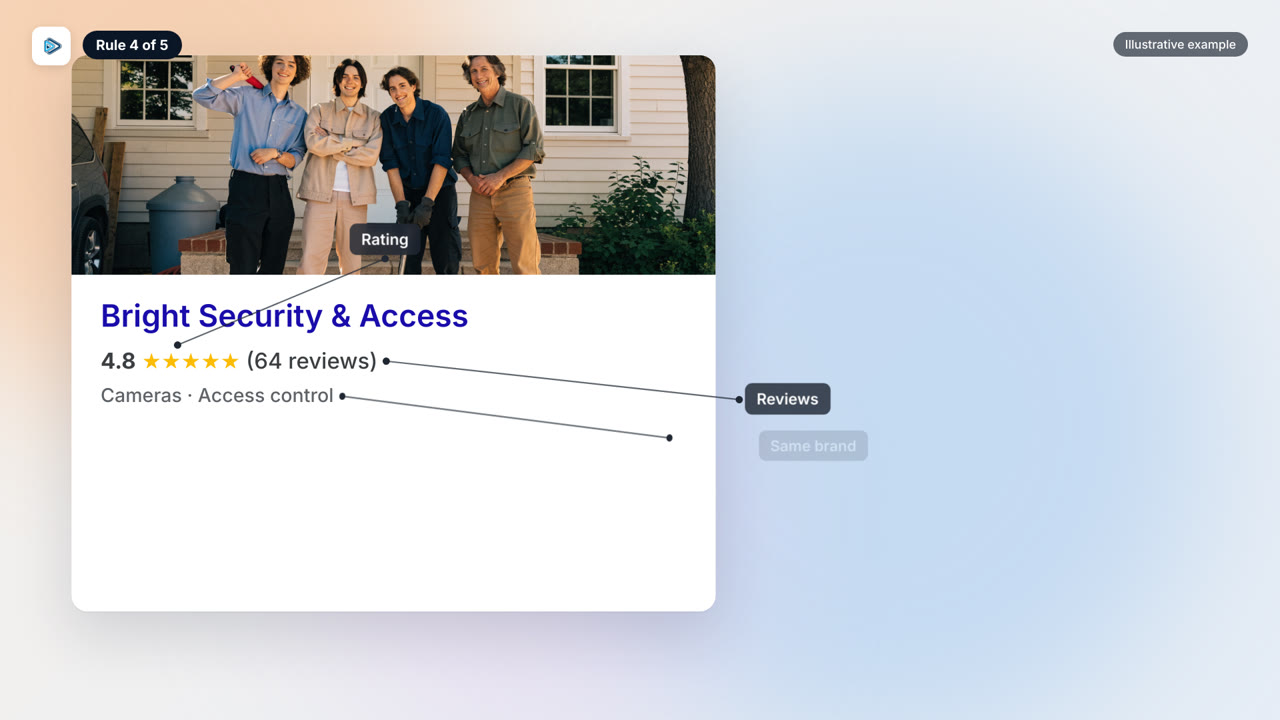
If it is unrelated, I would run it as a separate brand. Adding an unrelated service to the same Google Business Profile category can make that service harder to rank. Google says: “The categories you select affect your local ranking on Google.” (Google Business Profile help) And for unrelated categories at one location, Google’s guidelines say: “create two profiles instead. Be sure to use a different name for the second business.” (Google Business Profile guidelines)
A separate brand lets you specialize and be seen as the expert in that service. The cost is the extra headache of managing a second brand, so only take that step when the service is truly unrelated.
Rule 5: Separate campaigns
Here is the rule I promised you. The marketing you learn carries to every business, but running the campaigns is per business. In theory you can apply everything you learn about marketing to every business you own. The education transfers. The daily campaign management does not, and it still has to happen separately for each one.
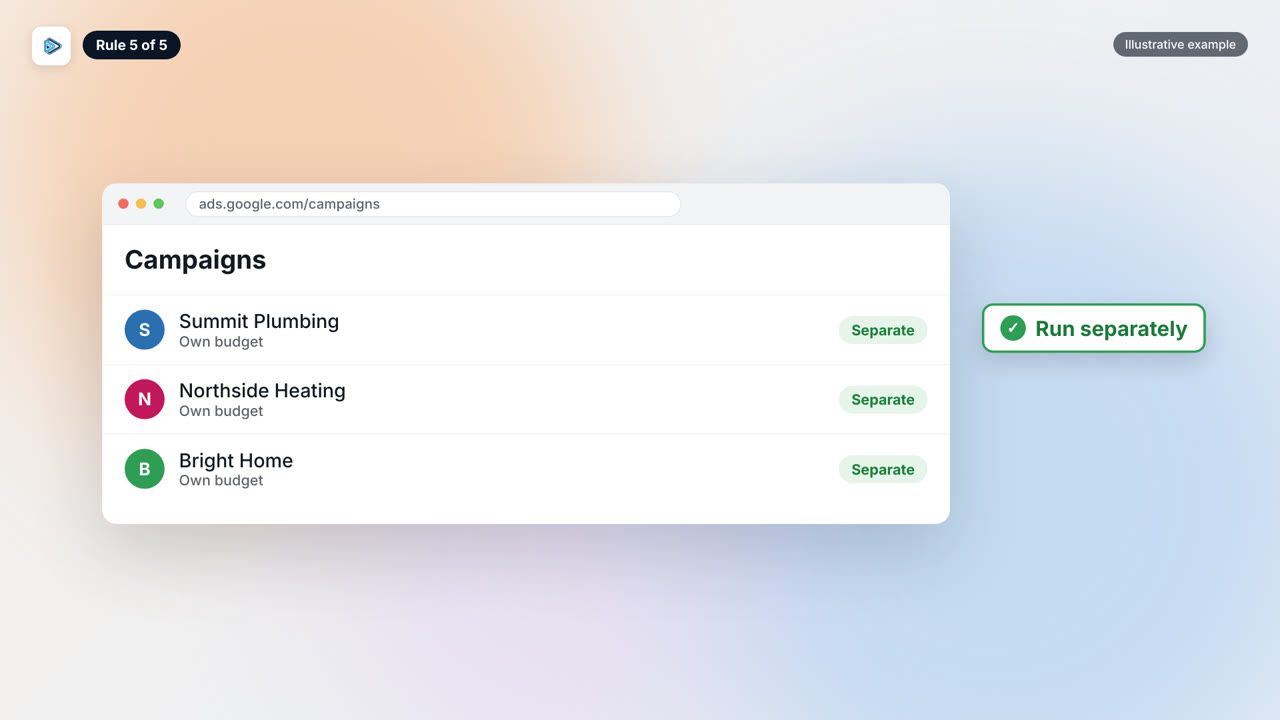
Google’s tools can help with the logistics. “A manager account may be a good option for advertisers with more than one Google Ads account.” (Google Ads Help) And inside one account, “You can create multiple campaigns in the same account without creating a new account.” (Google Ads manager accounts)
So a single login can oversee several accounts, but someone still has to build, watch and improve the campaigns for each business. That is why the earlier rules matter: bring the next business in only when the one you are growing is properly grown.