 Local Service Mastery
4.6 stars across 507 Google reviews. That is hundreds of customers who took the time to say thank you. You do not earn that by accident.
So I went through one family medicine clinic’s website, marketing side only, and wrote down what I would fix first. The business is not the point. The pattern is. Every one of these problems shows up in service businesses all the time, and every one of them is basic.
If you run an HVAC, plumbing, electrical, roofing or any other local service company, read this like it is your own site. Chances are a few of these apply to you.
| Finding | What the audit found | Why it matters |
|---|---|---|
| No contact form on the homepage | Zero <form> elements found in the page source | Anyone who isn’t ready to call has no way to reach you. That’s the entire after-hours and comparison-shopping audience gone. |
| No LocalBusiness structured data | No LocalBusiness schema in the page’s JSON-LD | Structured data is how Google reads your hours, service area, phone and rating. Without it Google guesses — and competitors who publish it get the rich result instead. |
| No paid-ads tracking detected at all | No Google Ads conversion tag, no Meta pixel in the page source. | Either no paid acquisition, or ads running blind with no conversion measurement. |
| No service+city pages | No internal links matching a service-in-city URL pattern | People search “emergency plumber in <city>”, not “Dallas Family Medical”. With one generic services page there’s nothing for Google to rank against those searches, and paid clicks land somewhere too generic to convert. |
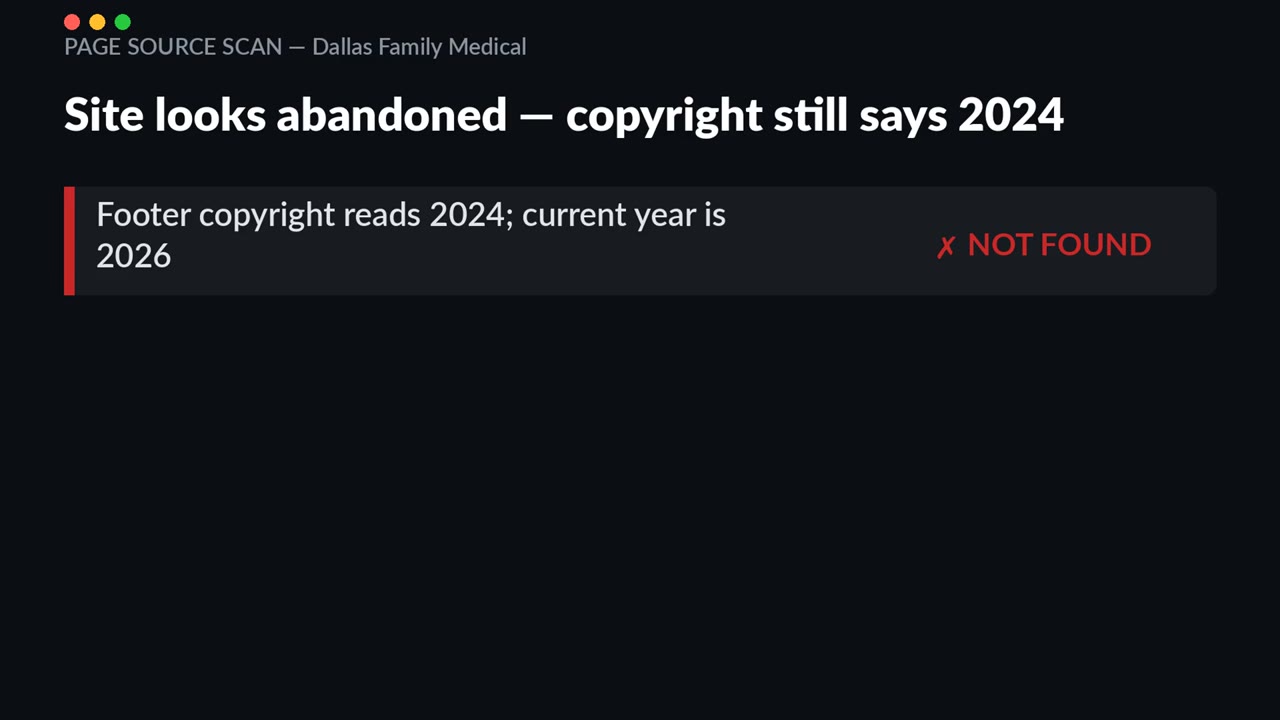
| Site looks abandoned — copyright still says 2024 | Footer copyright reads 2024; current year is 2026 | It is the first thing a careful customer checks to see if you are still in business. A stale year quietly tells them the site — and maybe the company — is neglected. |
| No analytics detected | No GA4/Google Tag Manager script found in the page source. | No way to know which marketing produces leads and which burns money. |
| No Facebook/Meta pixel detected | No fbq(‘init’) / connect.facebook.net script found in the page source. | Without a pixel, there’s no way to retarget people who already visited the site — one of the cheapest ad channels available goes unused. |
| Reviews shown but not marked up for Google | Review content on the page with no aggregateRating/review schema | Marked-up reviews can show star ratings directly in search results, which lifts click-through on a listing you already rank for — free clicks you’re currently leaving behind. |
Leak #1: Zero contact forms on the homepage
Picture a parent at 11 at night with a sick kid on the couch. They are not ready to call.
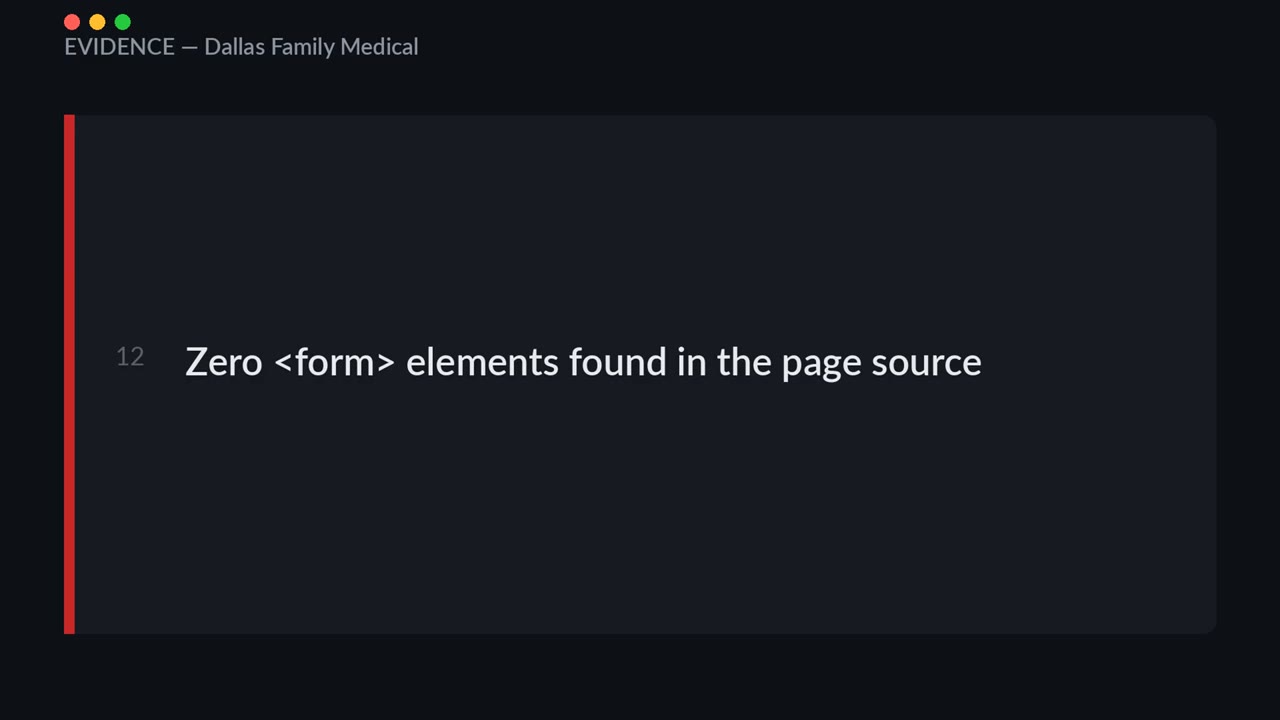
The site gives them nowhere to do that. So they go find a clinic where they can.
Now swap in your own customer. It is 10 PM, the water heater just died, or the AC quit and the house is hot. Plenty of people do not want to call a stranger at that hour. They want to type a few lines and know someone will get back to them. If your homepage has no form, you lose that person without ever knowing they were there.
Leak #2: Reviews that Google cannot read properly
This is the one that stings, because it is about those 507 reviews.
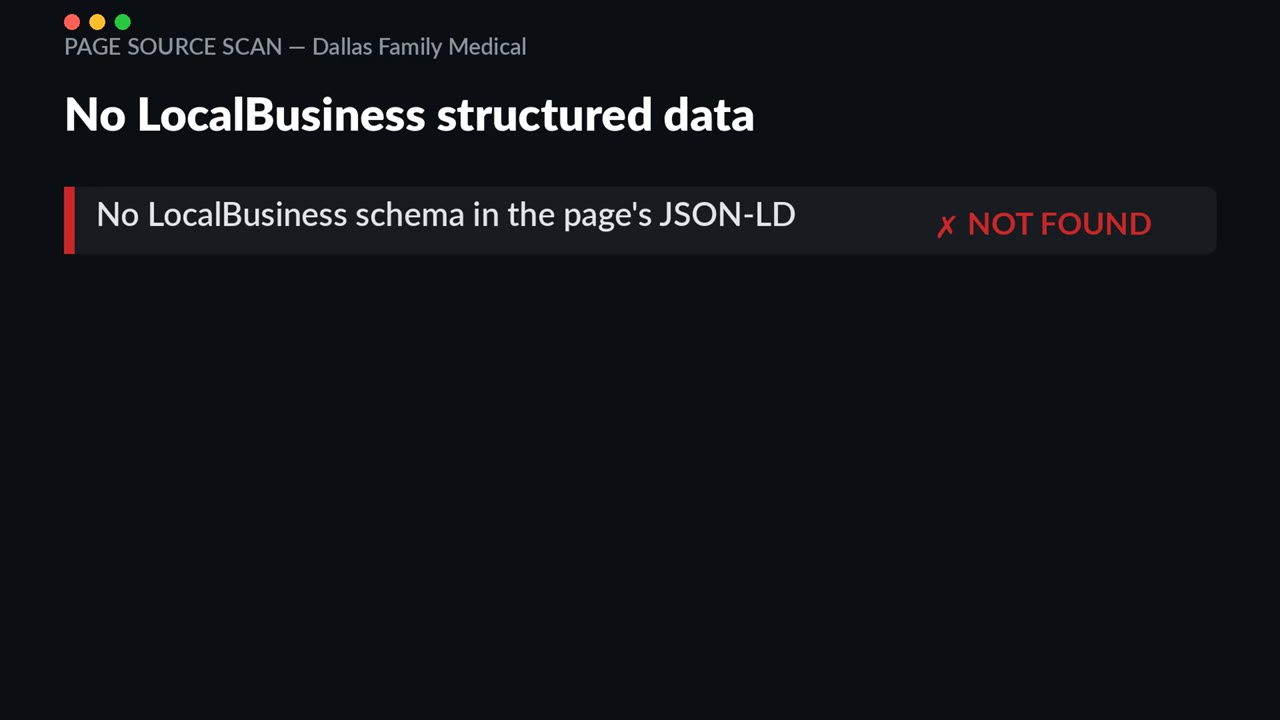
The site shows review content, but it is not marked up for Google. There is no local business structure data either. That is the behind-the-scenes code that tells Google your hours, your phone number and your rating. It is what can put your stars right in the search results.
Right now that is free clicks left on the table. You already did the hard part and earned the reviews. Not telling Google about them in a format it understands is like hanging your best award in a back room.
Why this matters for you: Stars in the search results make your listing stand out next to competitors who only show a plain blue link. The code that enables it is not expensive or complicated. It just has to be there.
Leak #3: No analytics, no conversion tag, no Meta pixel
Next, we found no analytics script, no Google Ads conversion tag and no Meta pixel in the page source. Three missing pieces, and each one costs you in a different way.
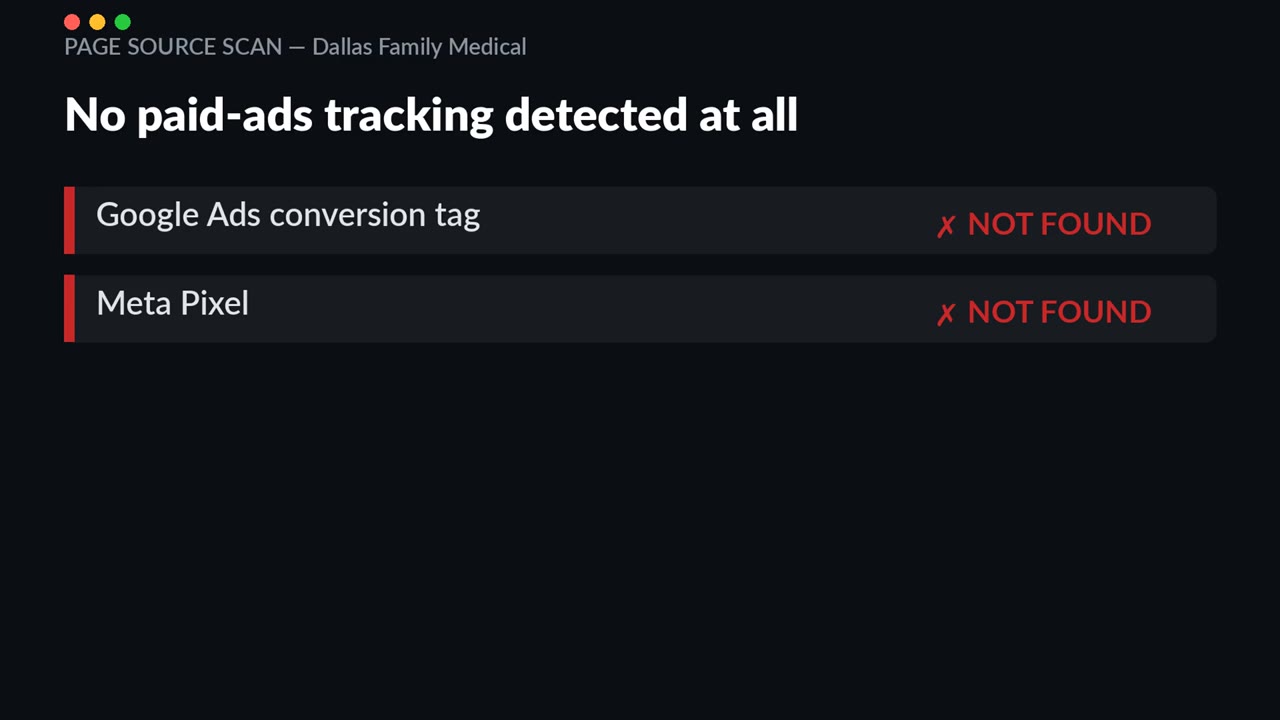
- No analytics: you cannot see where visitors come from or what they do on the site.
- No Google Ads conversion tag: if there is any ad spend, nobody can tell which dollars actually booked an appointment.
- No Meta pixel: you cannot show a reminder ad to someone who visited and almost booked.
If this were my account, I would install all three first. Before any new ads, new pages or redesigns. If you cannot measure it, you are guessing with your budget. And retargeting is one of the cheapest ways to win back people who already showed interest, but it only works if the pixel was there when they visited.
Leak #4: No service and city pages
We also did not find any service and city pages. People search for things like “family doctor in [city name],” and without a page built for that search, Google has nothing specific to rank.
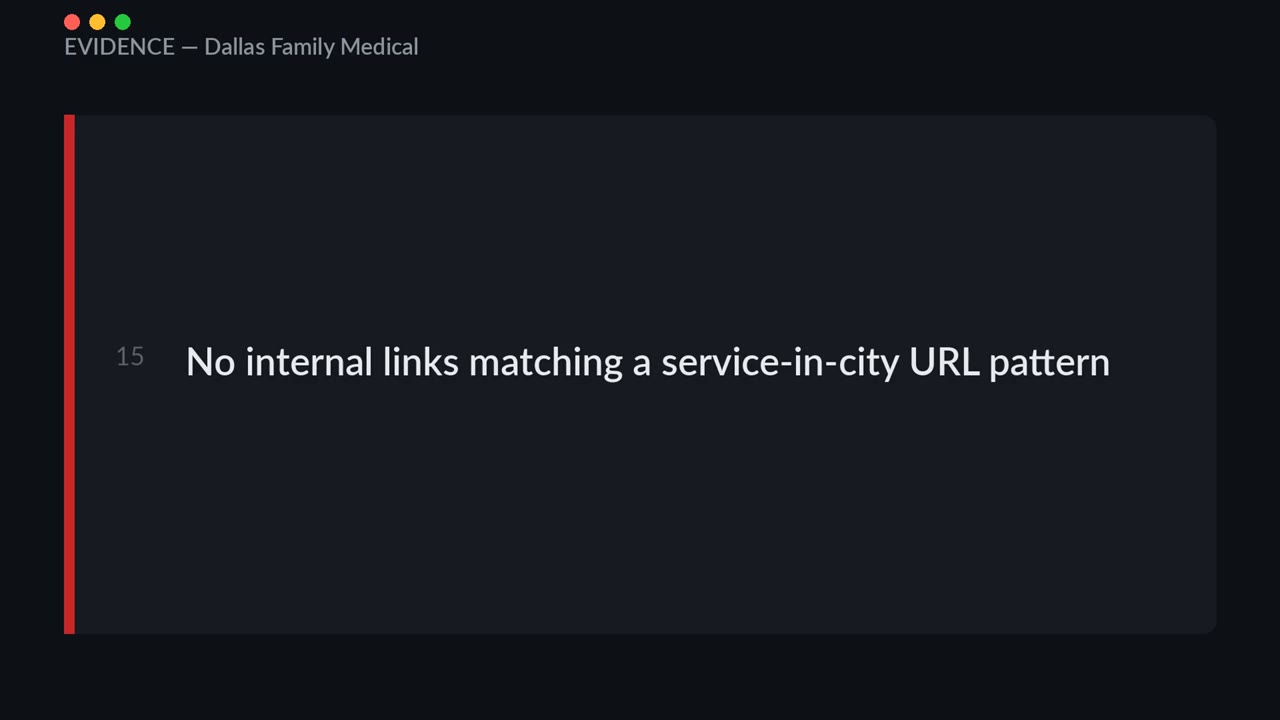
This is the same problem service businesses have. If someone searches for a plumber or an AC repair company in their city, Google looks for a page that clearly matches the service and the place. A single generic services page does not do that job. A dedicated page for each service and each area you cover gives Google something specific to show.
What a service and city page does for you
- It matches the exact phrase a customer types into Google.
- It gives Google a specific page to rank instead of a vague homepage.
- It shows the visitor right away that you handle their problem in their area.
Leak #5: The footer still says 2024
Small thing, but careful customers notice. An outdated year in the footer makes a busy business look quieter than it is. It is a trust signal, and a stale date quietly says nobody is paying attention here. It takes a minute to fix.
After reviewing hundreds of local service accounts, I would call every one of these basic.
Why basic problems like these survive
Here is what I see over and over. Most agencies collect a monthly retainer while junior staff juggle 80 accounts and nobody actually looks. If someone is being paid to run this marketing, they should have caught these things. None of them takes advanced skill to spot.

That is the real cost of the retainer model. You are paying for attention, and attention is spread so thin that the obvious stuff slips through. If you are weighing whether to hire a home service marketing agency, ask who exactly looks at your account, how many other accounts they handle, and how they would catch problems like the ones above.
The part most owners do not know yet
With AI, these exact fixes can now run automatically. Adding forms, installing tracking, building out the structured data and creating service and city pages used to mean a pile of billable hours. Now software can do much of it.

And with a bit of guidance, you can bring marketing in-house and own the whole thing without depending on an agency ever again. That is the whole idea behind what we teach at Local Service Mastery. You keep control, you see your own numbers, and you stop paying for work nobody checks.