 Local Service Mastery
A perfect five-star rating across 1,195 Google reviews does not happen by accident. That number is earned one customer at a time, one lockout at a time, one honest job after another. In this breakdown I looked at a locksmith company that has exactly that kind of reputation, and I’ll give credit where it’s due. That part is genuinely impressive.
This post is only about the marketing. And the marketing is where a business with a reputation like that is leaving money on the table. The reviews are doing the heavy lifting. Everything around them should be helping, and right now some of it is quietly working against them.
| Finding | What the audit found | Why it matters |
|---|---|---|
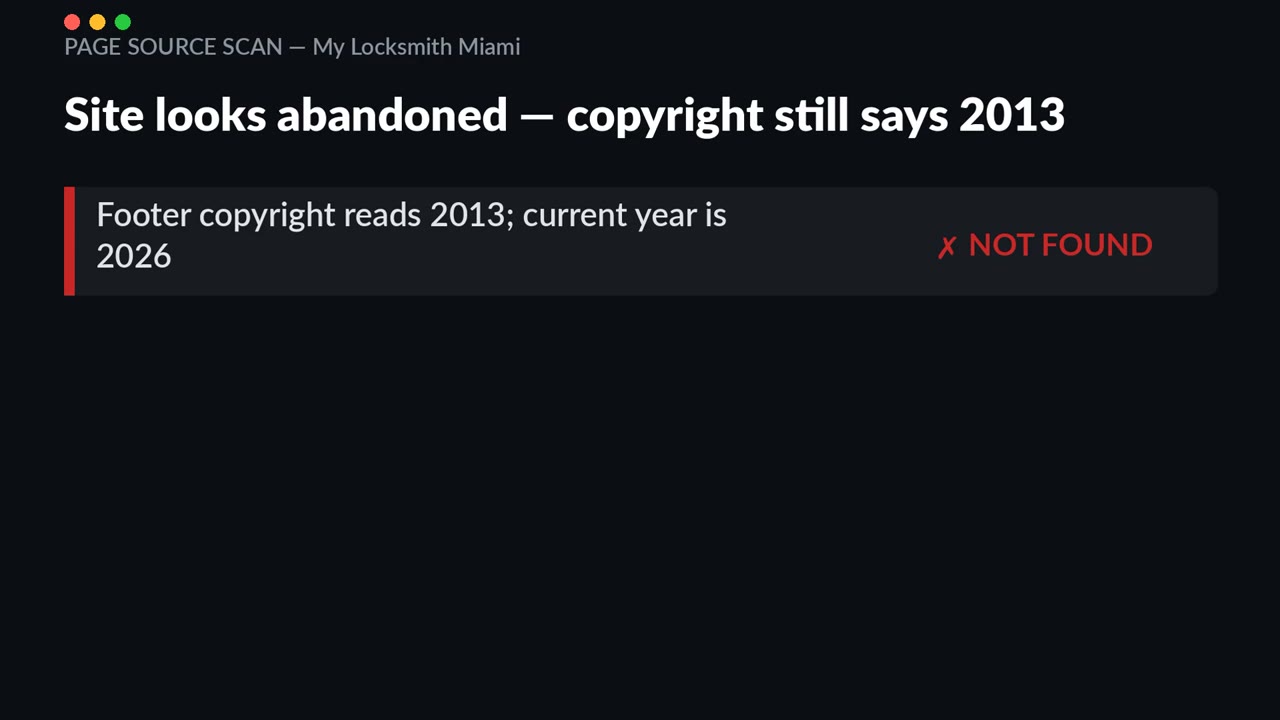
| Site looks abandoned — copyright still says 2013 | Footer copyright reads 2013; current year is 2026 | It is the first thing a careful customer checks to see if you are still in business. A stale year quietly tells them the site — and maybe the company — is neglected. |
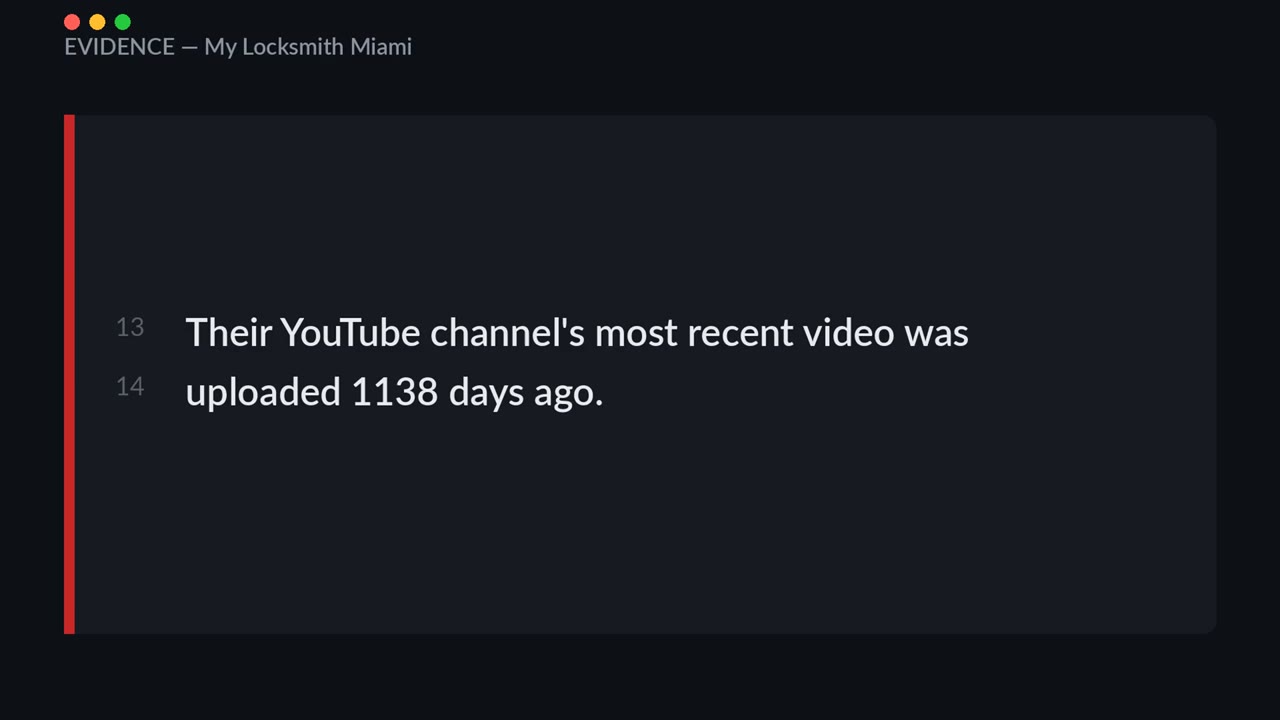
| YouTube channel inactive (37 months since last upload) | Their YouTube channel’s most recent video was uploaded 1138 days ago. | An inactive channel signals to both viewers and Google that the business isn’t actively investing in content. |
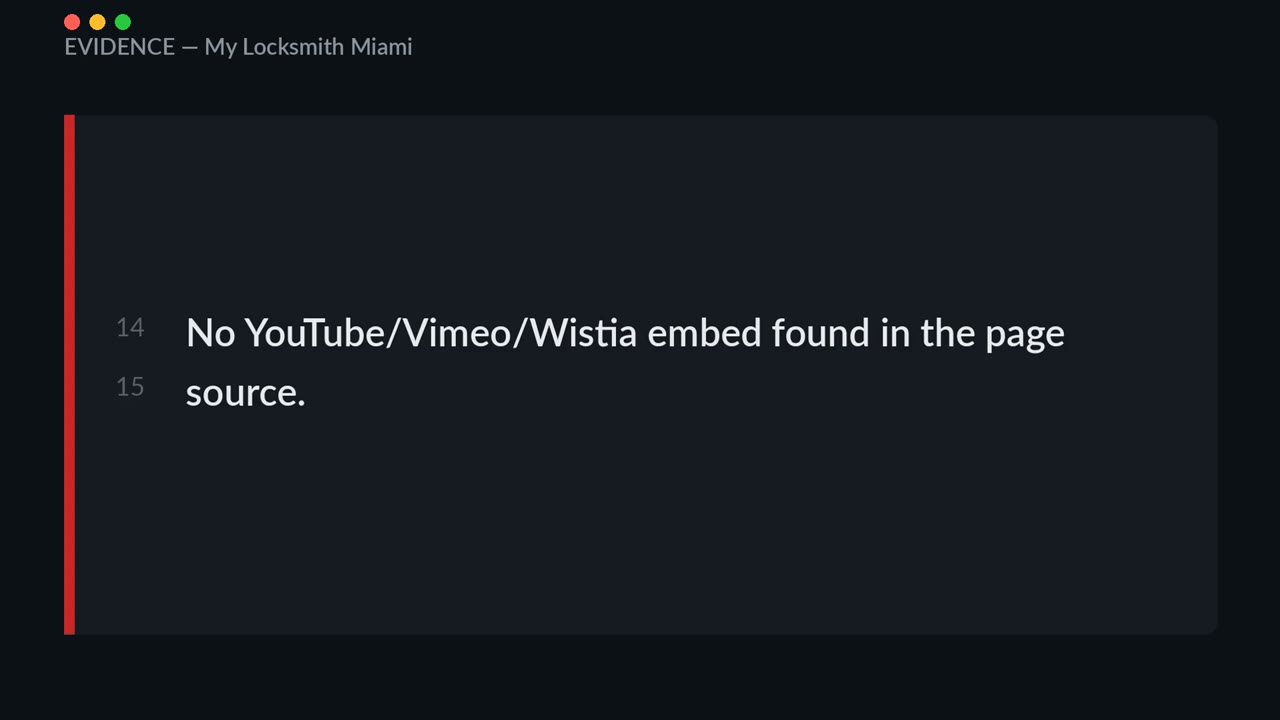
| No video content on the homepage | No YouTube/Vimeo/Wistia embed found in the page source. | Video builds trust fastest and keeps visitors on the page longer — a homepage with zero video is a missed, low-cost opportunity. |
| Multiple H1 tags on the homepage (2) | 2 <h1> tags found in the page source. | Multiple H1s dilute the page’s main topic signal instead of reinforcing one clear keyword focus. |
| No paid-ads tracking detected at all | No Google Ads conversion tag, no Meta pixel in the page source. | Either no paid acquisition, or ads running blind with no conversion measurement. |
| No Facebook/Meta pixel detected | No fbq(‘init’) / connect.facebook.net script found in the page source. | Without a pixel, there’s no way to retarget people who already visited the site — one of the cheapest ad channels available goes unused. |
The footer that says 2013 in 2026
Scroll to the very bottom of the website and the copyright still reads 2013. We’re in 2026. It sounds like a tiny detail. It isn’t.
Picture someone locked out of their car in a parking garage. Phone in hand. They’re comparing two locksmiths before they call one. A careful person looks for signs of life, and an old year in the footer quietly suggests nobody’s minding the site. That’s the exact doubt you don’t want to plant in someone who is deciding whether to let you near their car or their front door.
With 1,195 people vouching for this business, a stale footer is a strange thing to let undermine all that proof. It takes minutes to fix. It costs nothing. And it is the kind of thing a customer notices without being able to say why they hesitated.
A YouTube channel that went quiet for over three years
Next we checked the YouTube channel. The most recent video went up 1,138 days ago, a little over three years. To viewers and to Google, a channel that has gone quiet reads like a business that stopped investing in content.
You don’t need a studio or a production crew. You need to show up. A channel that’s active tells people you’re still operating, still caring, still putting your name on things. A dead one tells them the opposite.
No video on the homepage at all
The homepage itself has no video. We found no YouTube, Vimeo or Wistia embed anywhere on the page.
For a locksmith, this matters more than for almost any other trade. You’re asking a stranger to trust you with the keys to their home or their car. That’s a big ask. I’d want a short clip of a real technician right on that homepage, because video builds that trust faster than any paragraph can. People see a face, hear a voice, and get a feel for who is going to show up. That’s what turns a worried visitor into a phone call.
You’re asking a stranger to trust you with the keys to their home or car. Show them who’s showing up.
Two H1 tags: a smaller technical problem
This one is more technical, but it’s worth understanding. The homepage has two H1 tags. The H1 is the page’s main headline label for Google. It tells the search engine what the page is about.
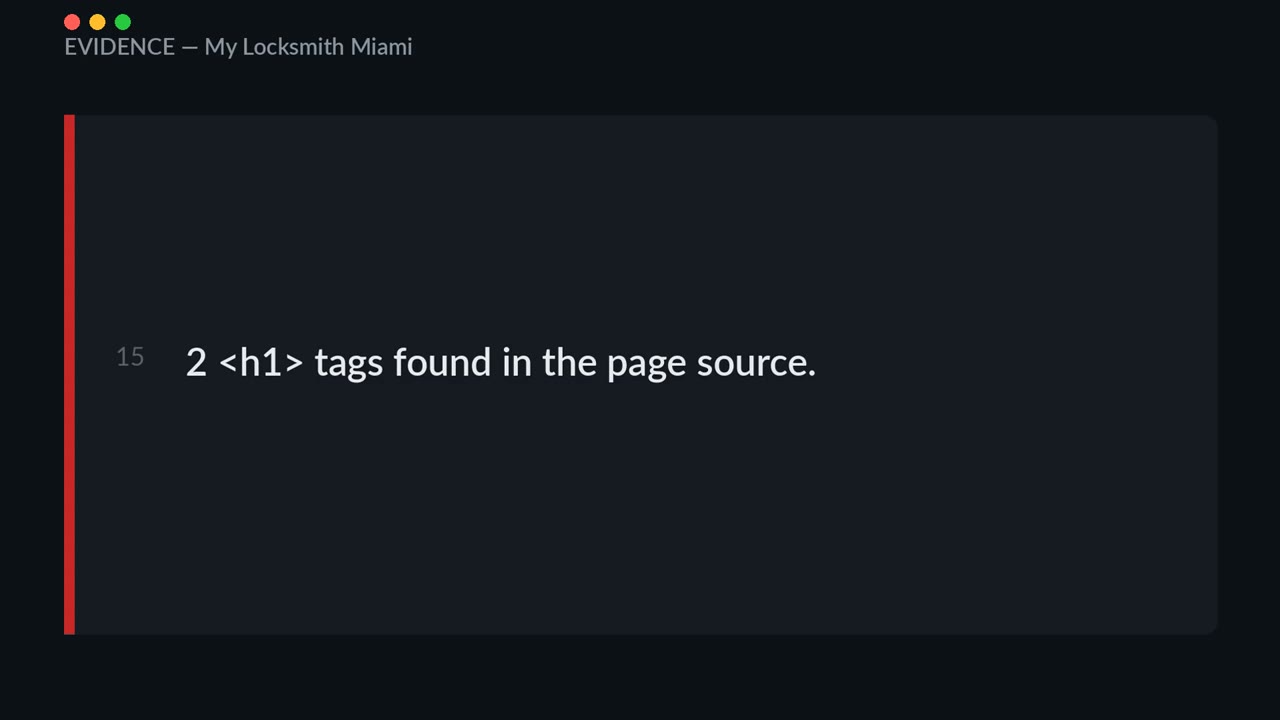
When there are two, the signal splits. Instead of telling Google clearly what this page is about, you’re giving it two competing answers. It’s an easy fix, and it’s exactly the kind of cleanup that should happen quietly in the background of any decent marketing setup.
The biggest leak: no tracking
Finally, tracking. This is where it gets serious. We found no Google Ads conversion tag. That’s the code that tells Google which clicks turned into customers. We also found no Meta pixel.
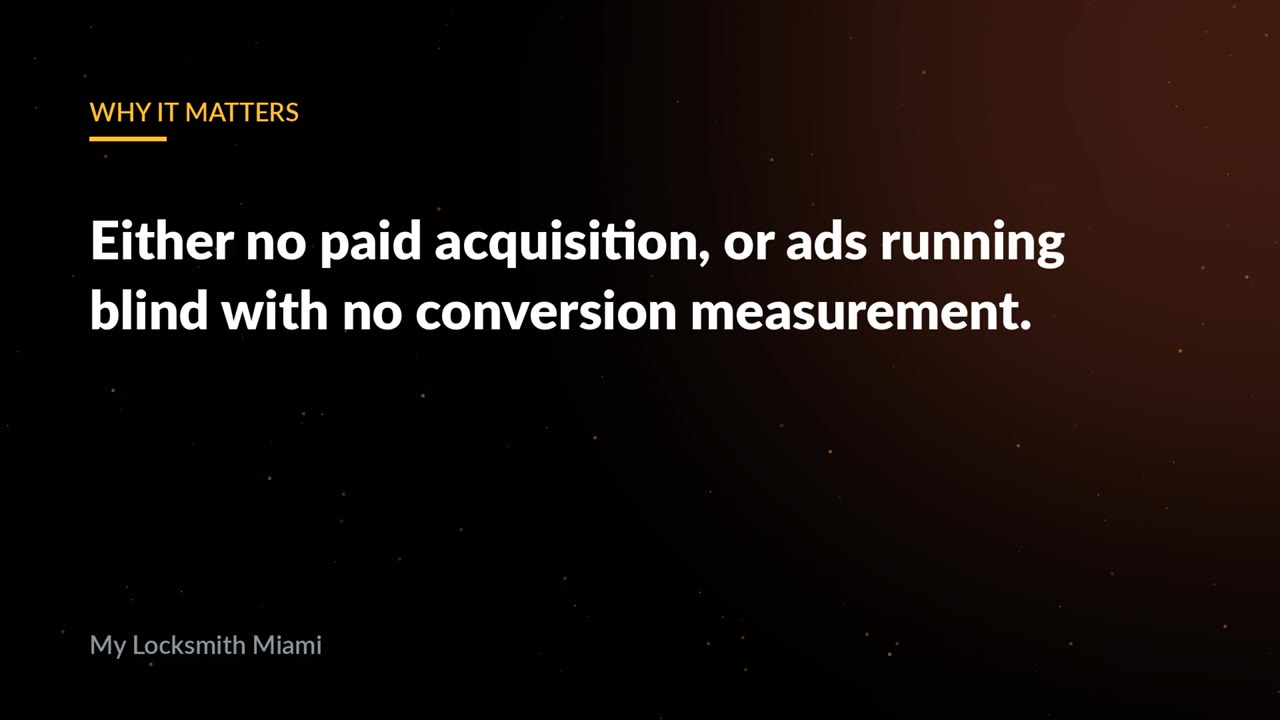
That leaves two possibilities. Either there’s no paid advertising happening at all, or ads are running with no way to see what’s actually booking jobs. Neither is good. If you’re spending money, you need to know what it produces. If you’re not spending, you’re giving up a channel your competitors are using.
No pixel means no retargeting
There’s a second cost. Without that pixel, there’s no way to show ads again to people who already visited the site and left. Retargeting is one of the cheapest ad channels available. Someone who visited your site already showed interest. Bringing them back costs far less than finding a brand-new customer.
If this were my account, tracking is the first thing I’d set up. Everything else you do with ads depends on it.
If you can’t tell which clicks turn into booked jobs, you can’t tell which part of your marketing is working. You’re guessing with real money.
These are basic things, and someone should have caught them
After reviewing hundreds of local service accounts, I can tell you these are basic things. A stale footer, a silent channel, no homepage video, duplicate H1s, missing tracking. None of it is advanced. If someone is being paid to run this marketing, they should have caught it.

Here’s what I see over and over. Most agencies collect monthly retainers while junior staff juggle 80 accounts and nobody actually looks. The owner pays every month and assumes somebody is watching. Often, nobody is. That’s the real reason a home service marketing agency model can fail the very businesses it’s supposed to help.
What most owners don’t know yet
Here’s the shift. With AI, fixes like these can now run automatically. With a bit of guidance, you can run your marketing in-house, own the whole thing and never depend on an agency again.

That’s what we teach at Local Service Mastery. You don’t need to become a marketer. You need a clear picture of what’s broken and a system that handles the routine work. The owner stays in control, and the basics get done instead of getting ignored.
If you want a deeper look at what a team that takes this seriously would do, that’s what marketing for contractors should look like: tracking first, trust signals next, and nothing left to a junior juggling dozens of other accounts.