 Local Service Mastery
Some businesses earn their reputation the hard way. This locksmith company has 241 reviews and a perfect 5-star rating. That is not easy to pull off. Customers clearly love the work.
Then you open the website, and it’s a different story. The site is leaving a huge amount of that good reputation on the table. I went through it the way I’d go through any service business’s marketing, and what I found is what I see over and over in this industry.
None of it is exotic. All of it is fixable. And if you run a locksmith, HVAC, plumbing or any other local service business, there’s a good chance your site has the same leaks.
| Finding | What the audit found | Why it matters |
|---|---|---|
| Reviews shown but not marked up for Google | Review content on the page with no aggregateRating/review schema | Marked-up reviews can show star ratings directly in search results, which lifts click-through on a listing you already rank for — free clicks you’re currently leaving behind. |
| No LocalBusiness structured data | No JSON-LD structured data at all | Structured data is how Google reads your hours, service area, phone and rating. Without it Google guesses — and competitors who publish it get the rich result instead. |
| No analytics detected | No GA4/Google Tag Manager script found in the page source. | No way to know which marketing produces leads and which burns money. |
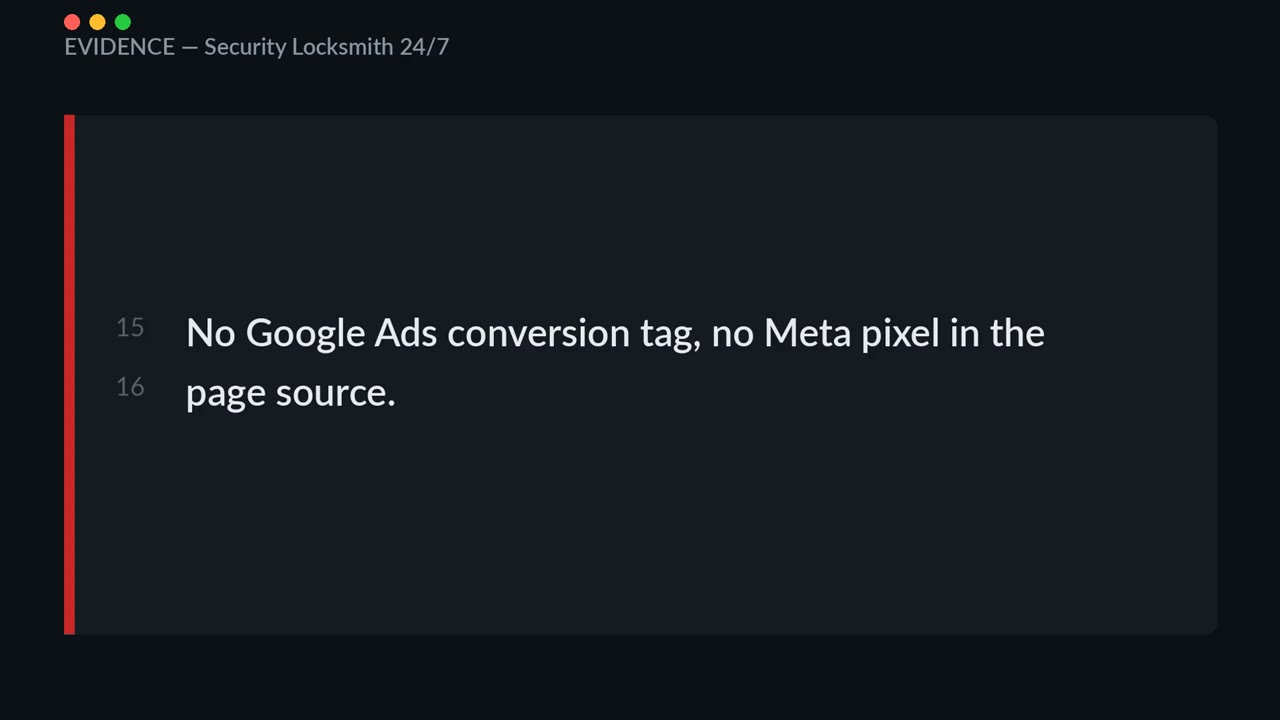
| No paid-ads tracking detected at all | No Google Ads conversion tag, no Meta pixel in the page source. | Either no paid acquisition, or ads running blind with no conversion measurement. |
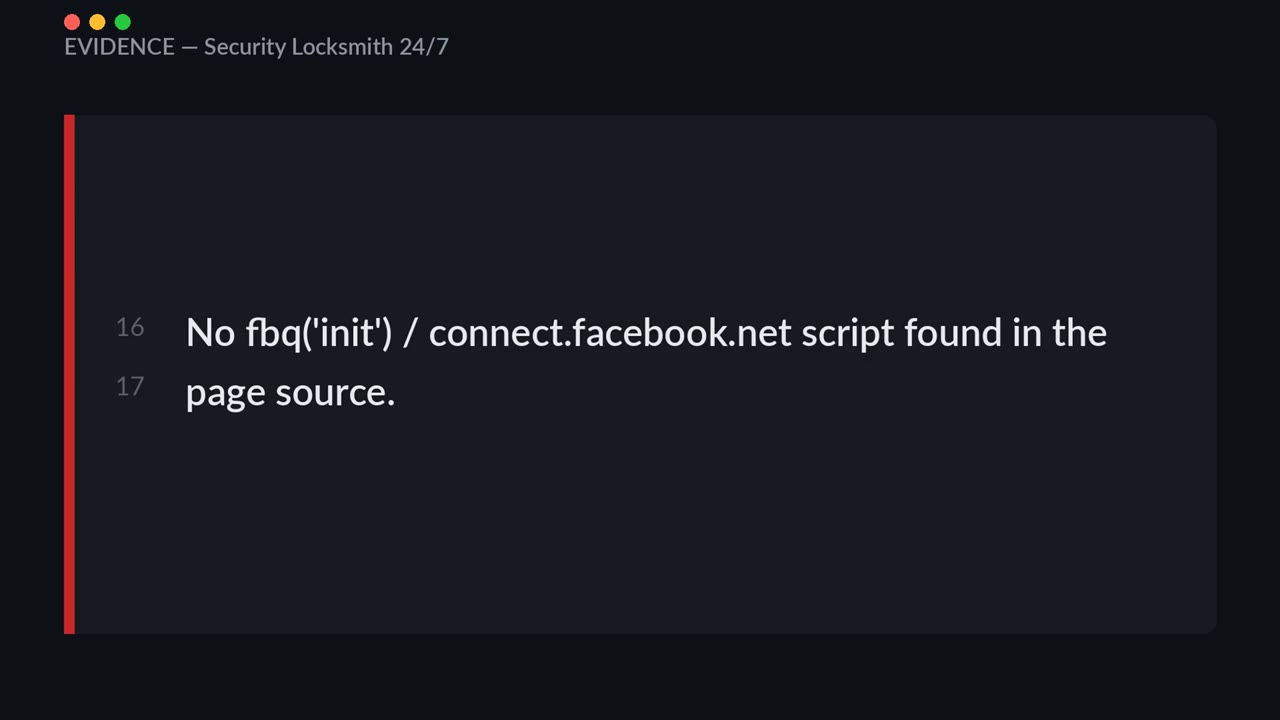
| No Facebook/Meta pixel detected | No fbq(‘init’) / connect.facebook.net script found in the page source. | Without a pixel, there’s no way to retarget people who already visited the site — one of the cheapest ad channels available goes unused. |
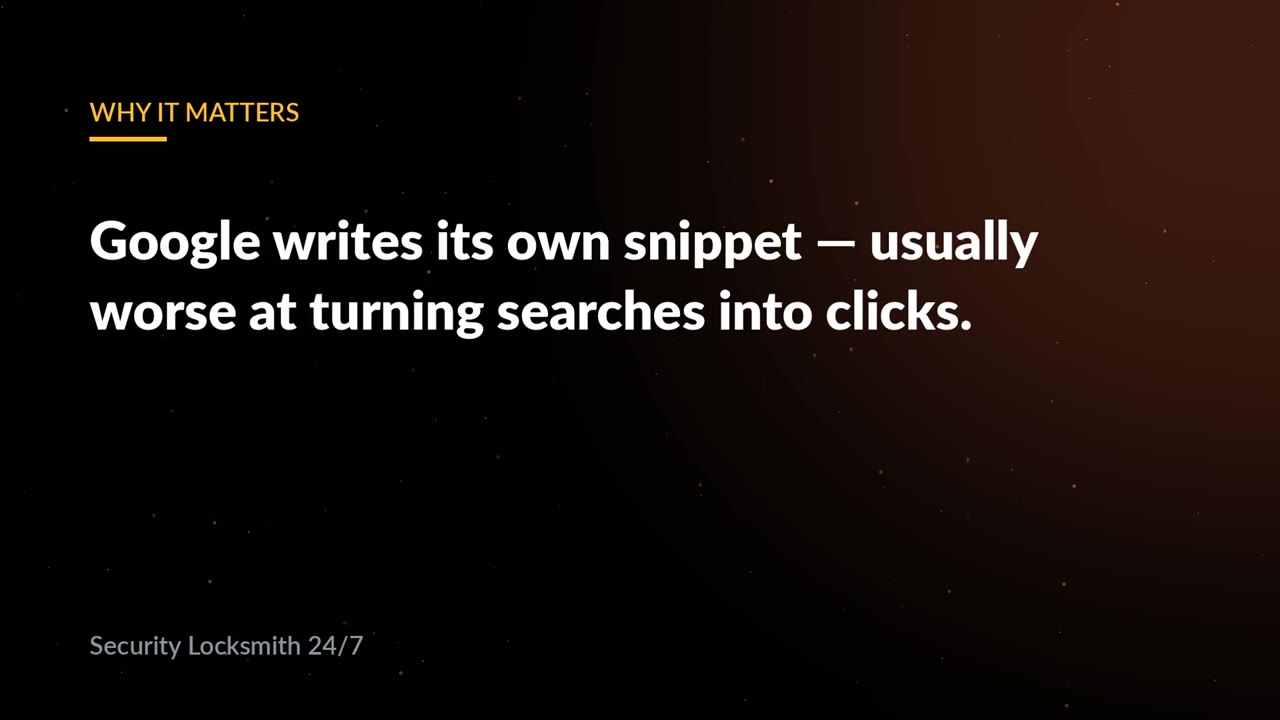
| Missing meta description | No <meta name=description> tag on the homepage. | Google writes its own snippet — usually worse at turning searches into clicks. |
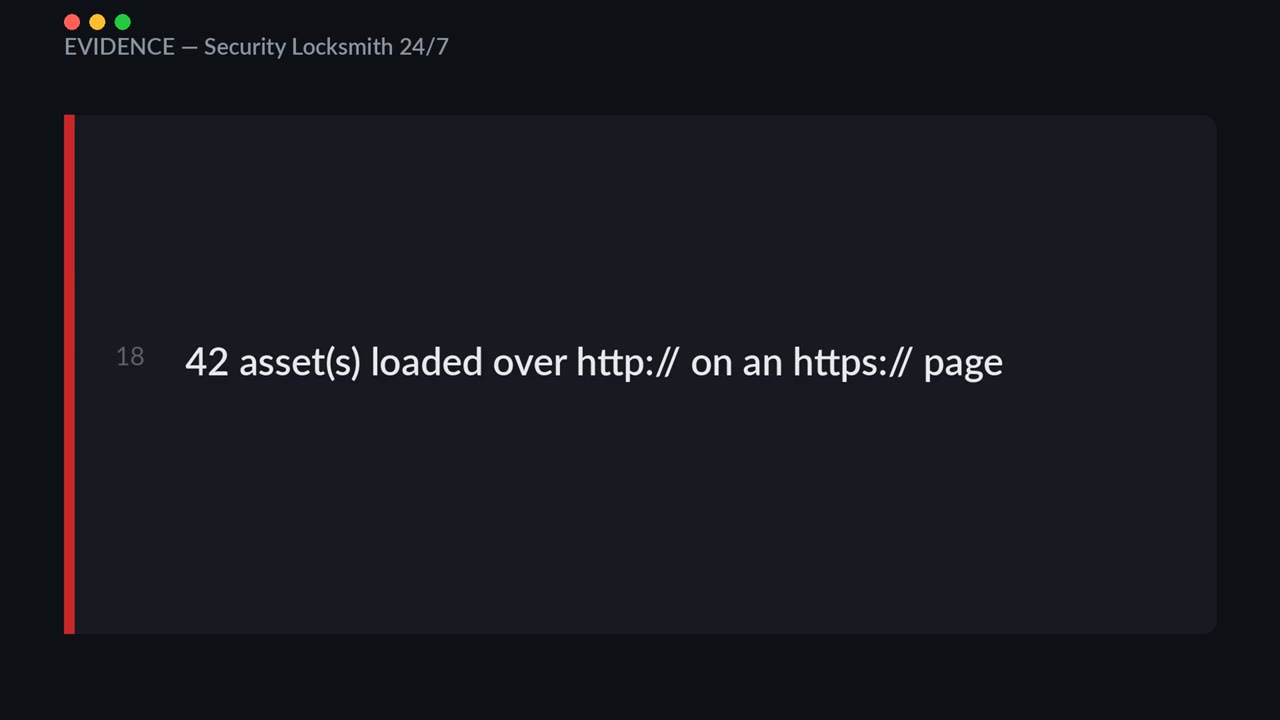
| Insecure content on a secure page (42 resources) | 42 asset(s) loaded over http:// on an https:// page | Mixed content triggers browser security warnings and can silently block images or scripts from loading at all. |
| No social preview tags (OpenGraph) | No og:title / og:image meta tags in the page source | Every time someone shares your link in a text, Facebook or a group chat, it renders as a bare URL with no title or photo — the least clickable thing on the screen. |
| H1 heading is not the first heading on the page | A lower-level heading (H2/H3) appears in the HTML before the page’s own H1 tag. | Search engines weight heading order — burying the H1 under other headings weakens it as a ranking signal. |
| No video content on the homepage | No YouTube/Vimeo/Wistia embed found in the page source. | Video builds trust fastest and keeps visitors on the page longer — a homepage with zero video is a missed, low-cost opportunity. |
| No social media profile links found on the website | No Instagram or Facebook profile link found in the page source. | No easy path for a visitor to check recent activity or reviews on social — and no compounding organic reach being built. |
The reviews are great, but Google can’t read them
This is the one that stings the most. The site shows off customer reviews, but they aren’t marked up for Google. There’s a little piece of code that tells Google, “these are reviews, and here’s the star rating.” It’s missing.
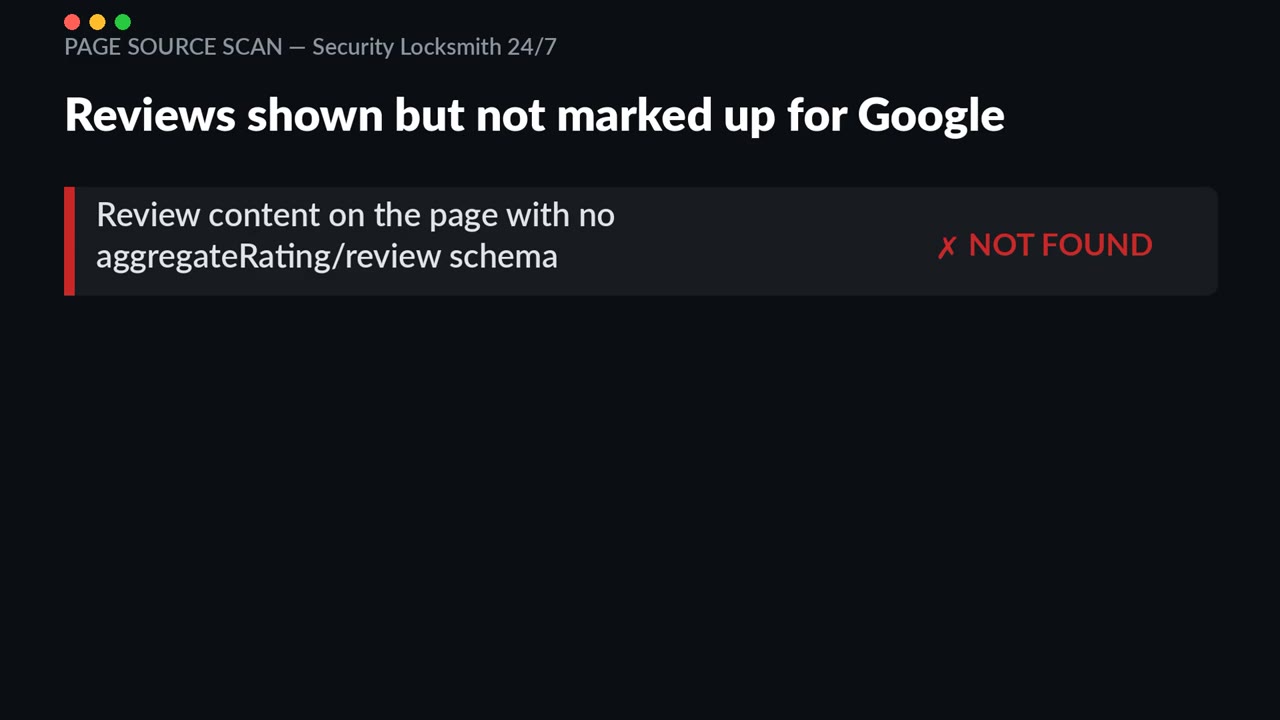
So the gold stars that could appear right next to the listing in search results aren’t showing. For a business with 241 five-star reviews, that is free clicks walking away. You already did the hard part. You earned the reviews. You just aren’t getting paid for them in search.
No structured data means Google is guessing
Right next to that, there’s no structured data on the site at all. This is the code that hands Google your hours, your service area, your phone number and your rating on a silver platter.
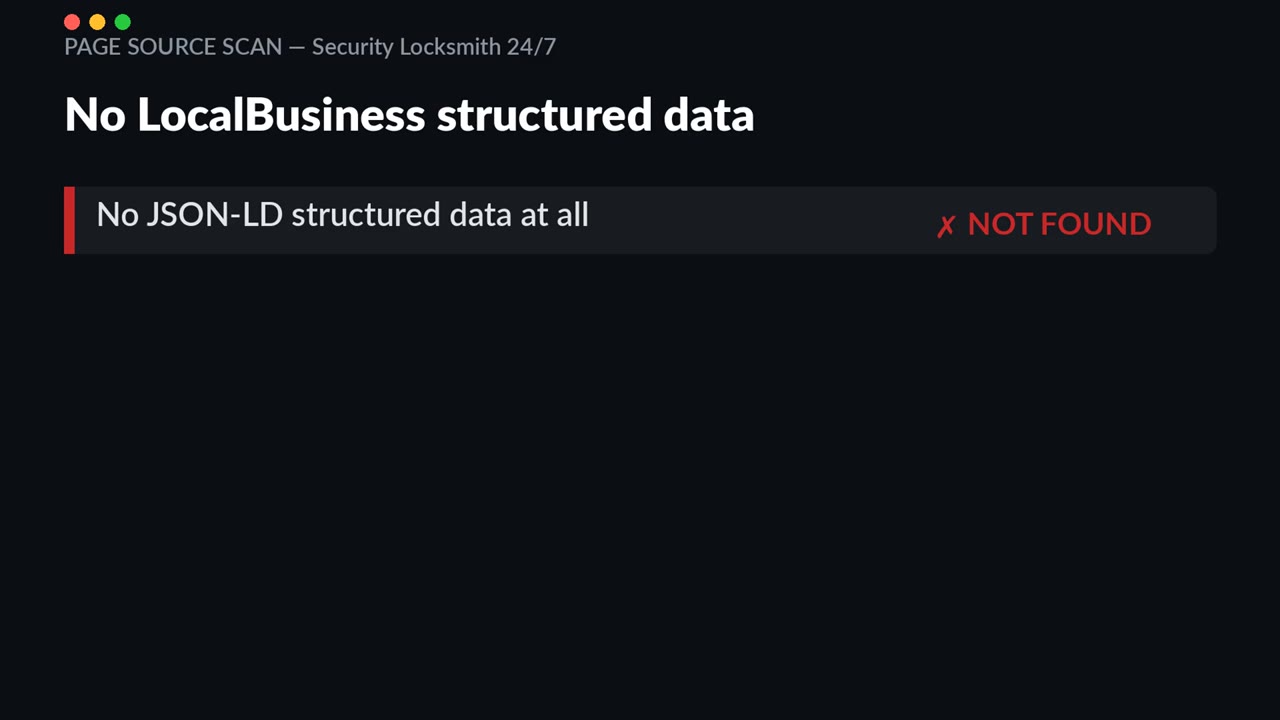
Without it, Google is just guessing. And the competitor down the street who does publish that data gets the rich result instead. Same search, same customer, but they get the more eye-catching listing and you get the plain one.
No analytics means flying blind
Here’s the one that should worry anyone spending money. There’s no analytics on this site. None. There’s no tracking script in the page at all, so there is no way to know which marketing is actually producing calls and which is just burning cash.
Think about who searches “locksmith near me.” They’re locked out of their car or their house, phone in hand, ready to call right now. Those are high-intent calls. If you can’t see where they come from, you can’t tell what’s working. You can’t double down on the channel that wins or cut the one that wastes money.
No ad tracking and no retargeting
It goes further than analytics. There’s no paid ads tracking of any kind. There’s no Google Ads conversion tag and no advertising pixel in the page source. So if any money is going to ads, it’s running completely blind, with no way to tell which clicks turn into jobs.
That missing pixel costs them in another way too. Without it, you can’t retarget people who already visited the site. That’s one of the cheapest ad channels there is. Someone looks at your page, leaves, and you could gently show up again later for pennies. That whole channel is sitting unused.
Why this matters for any service business: if you can’t see which clicks turn into calls and jobs, you can’t improve your ad spend. You’re guessing, and guessing gets expensive.
The smaller leaks that still add up
A blank meta description
The homepage has no meta description. That’s the little summary line under your link in search results. When it’s blank, Google writes its own, and it’s usually worse at turning a search into a click. It’s a free line of sales copy, and it’s empty.
No social preview tags
There are no social preview tags either. So every time someone shares this link in a text or a group chat, it shows up as a bare URL. No title, no photo. It’s the least clickable thing on the screen. In a business that runs on word of mouth and referrals, that matters.
42 insecure items on a secure site
One more I’d fix fast. There are 42 things on the page loading over an insecure connection on a secure site. That can trigger browser security warnings, and it can quietly block images or scripts from loading at all. For a business with security in the name, that’s not the first impression you want.
Why this keeps happening
Here’s the thing about every item I just walked through. These are basic. Any marketing agency worth its retainer should have caught all of them in an afternoon.

But here’s what I see over and over. Agencies collect the monthly check while junior staff juggle 80 accounts, and nobody ever actually opens the hood. Nobody checks the code, the tracking or the basics. The owner assumes someone is handling it, and the leaks stay open for years.
That’s the real problem with handing everything to a typical home services marketing company and hoping for the best. If nobody is looking under the hood, your reputation can be excellent and your marketing can still be leaking.
The shift: AI makes these fixes almost automatic
What most owners don’t know yet is that with AI, these exact fixes can now run almost automatically. With a little guidance, you can take control, run your marketing in-house, and own the whole thing. That means never depending on an agency again.

Review markup, structured data, tracking tags, meta descriptions and social previews used to feel technical. They don’t have to anymore. A business owner who knows what to look for can get all of it handled, and can check that it was done.
That’s the approach we teach at Local Service Mastery. The goal isn’t to make you dependent on someone else. It’s to give you the control, so you can see what’s leaking and fix it yourself.